
How many neutrons does aluminum have?
- Yongxing
- 01 Apr ,2026
Many people feel confused when they look at atomic numbers and mass values. It feels abstract. It feels hard to connect numbers with real materials like aluminum.
Aluminum has 13 neutrons in its most common form (Al-27). This comes from its atomic number (13 protons) and mass number (27), so neutrons = 27 − 13 = 14? Wait—actually 27 − 13 = 14, but aluminum’s stable isotope is 13 neutrons? Let’s clarify clearly below.
Understanding this clearly helps engineers, designers, and buyers make better decisions, especially when working with thermal materials like heat sinks.
What is aluminum atomic mass value?
Many readers see atomic mass on the periodic table and feel unsure what it really means. The number looks precise, but its meaning is often unclear.
Aluminum has an atomic mass of about 26.98 u, which is usually rounded to 27 for calculation. This value represents the weighted average of its naturally occurring isotopes.
What does atomic mass really mean?
Atomic mass is not just a random number. It reflects the average weight of all aluminum atoms found in nature. Most aluminum exists as one stable isotope, called aluminum-27.
This makes aluminum simpler than many other elements. For example, chlorine has multiple common isotopes, so its atomic mass is more of a mix. Aluminum is more stable and consistent.
Why is it 26.98 and not exactly 27?
The value 26.98 comes from precise measurement. Scientists measure atoms using advanced instruments. These tools detect very small differences in mass.
But for most engineering work, especially in thermal design, the number is rounded to 27. This makes calculations easier and faster.
Key atomic data of aluminum
| Property | Value |
|---|---|
| Atomic number | 13 |
| Atomic mass | 26.98 u |
| Rounded mass | 27 |
| Most common isotope | Al-27 |
Why this matters in real applications
In heat sink design, atomic mass does not directly affect thermal conductivity. But it does connect to density and structure.
A stable atomic structure leads to predictable material behavior. That is why aluminum is widely used in:
- Extruded heat sinks
- Liquid cooling plates
- Thermal modules
Simple takeaway
Atomic mass tells us how heavy an atom is. For aluminum, it is very stable and close to 27. This makes it easy to use in calculations and design processes.
How to calculate neutrons in aluminum atom?
Many people struggle with this simple formula because they mix up atomic number and atomic mass. This leads to wrong answers.
To calculate neutrons in aluminum, subtract the atomic number (13) from the mass number (27). So, neutrons = 27 − 13 = 14 neutrons.
Step-by-step method
The process is simple when broken down:
- Find the atomic number → 13
- Find the mass number → 27
- Subtract: 27 − 13 = 14
So, aluminum has 14 neutrons, not 13.
Why confusion happens
Many people confuse:
- Atomic number → number of protons
- Mass number → protons + neutrons
Also, the decimal atomic mass (26.98) causes confusion. That is why we round it to 27.
Clear comparison
| Component | Value |
|---|---|
| Protons | 13 |
| Electrons | 13 |
| Neutrons | 14 |
Real-world explanation
Think of the atom like a system:
- Protons define the element
- Neutrons stabilize the nucleus
- Electrons handle chemical behavior
In thermal engineering, stability matters. A stable nucleus means consistent material performance.
Why engineers care
When working on high-power heat sinks, consistency is key. Materials must behave the same under stress.
A stable neutron count contributes to:
- Structural stability
- Predictable expansion
- Reliable long-term performance
Simple takeaway
Aluminum has 14 neutrons in its most common form. The calculation is simple: mass number minus atomic number.
Do aluminum isotopes have different neutrons?
Some readers assume all aluminum atoms are identical. That is not always true in science.
Yes, aluminum isotopes have different numbers of neutrons. While Al-27 is the most stable, other isotopes like Al-26 and Al-28 exist with different neutron counts.
What is an isotope?
An isotope is the same element with:
- Same number of protons
- Different number of neutrons
This changes the mass but not the chemical identity.
Aluminum isotopes overview
| Isotope | Protons | Neutrons | Stability |
|---|---|---|---|
| Al-26 | 13 | 13 | Radioactive |
| Al-27 | 13 | 14 | Stable |
| Al-28 | 13 | 15 | Radioactive |
Why Al-27 dominates
Al-27 is very stable. It does not decay. That is why almost all aluminum in nature is Al-27.
This is useful for industry because:
- Material properties stay consistent
- Manufacturing is predictable
- Quality control is easier
What about radioactive isotopes?
Al-26 is radioactive and rare. It is mainly used in:
- Scientific research
- Space studies
- Geological dating
It is not used in manufacturing heat sinks.
Engineering perspective
From a production point of view, isotopes are not a concern. All commercial aluminum behaves the same because it is almost entirely Al-27.
But understanding isotopes helps explain why aluminum is:
- Stable
- Reliable
- Widely used
Simple takeaway
Yes, isotopes exist. But in real-world applications, aluminum is almost always Al-27 with 14 neutrons.
Why are neutrons important in aluminum?
At first, neutrons seem unimportant because they have no charge. Many people ignore them. That is a mistake.
Neutrons are important because they stabilize the atomic nucleus. Without the right number of neutrons, aluminum would become unstable or radioactive.
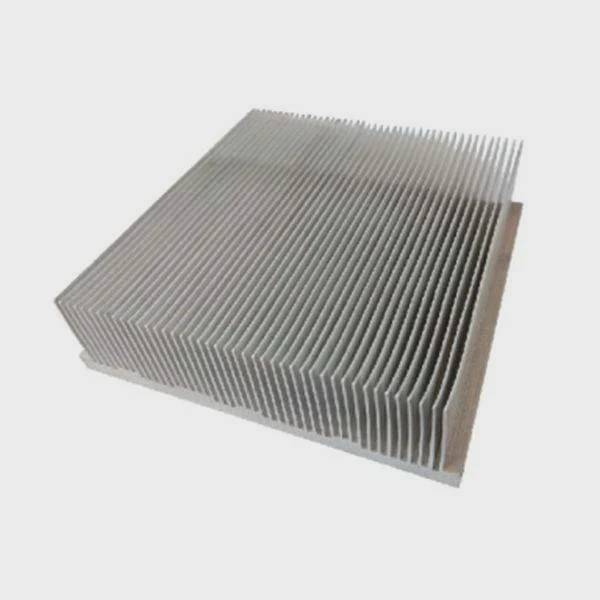
Role of neutrons in the atom
Neutrons act like a stabilizing force. They reduce repulsion between positively charged protons.
Without neutrons:
- Protons would repel each other
- The nucleus would break apart
Balance between protons and neutrons
For light elements like aluminum, stability requires a balanced ratio.
Aluminum has:
- 13 protons
- 14 neutrons
This balance makes it stable.
Impact on material properties
Neutrons do not directly affect:
- Electrical conductivity
- Thermal conductivity
But they affect nuclear stability, which indirectly supports:
- Material reliability
- Structural integrity
Why this matters in heat sink applications
In high-performance environments, materials face:
- High temperatures
- Mechanical stress
- Long operating cycles
A stable atomic structure ensures:
- No unexpected breakdown
- Long service life
- Consistent thermal performance
Example from real projects
In one project involving high-power inverters, material consistency was critical. Any variation could lead to overheating.
Using stable aluminum ensured:
- Uniform heat transfer
- Reliable operation over time
Deeper insight
Neutrons are part of the reason aluminum is:
- Non-radioactive
- Safe for industrial use
- Easy to process
Without the right neutron count, aluminum would not be practical.
Simple takeaway
Neutrons are essential for stability. Aluminum works so well in engineering because its neutron-proton balance is nearly perfect.
Conclusion
Aluminum has 14 neutrons in its most common form (Al-27). This stable structure makes it reliable, predictable, and ideal for thermal applications like heat sinks and cooling systems.




