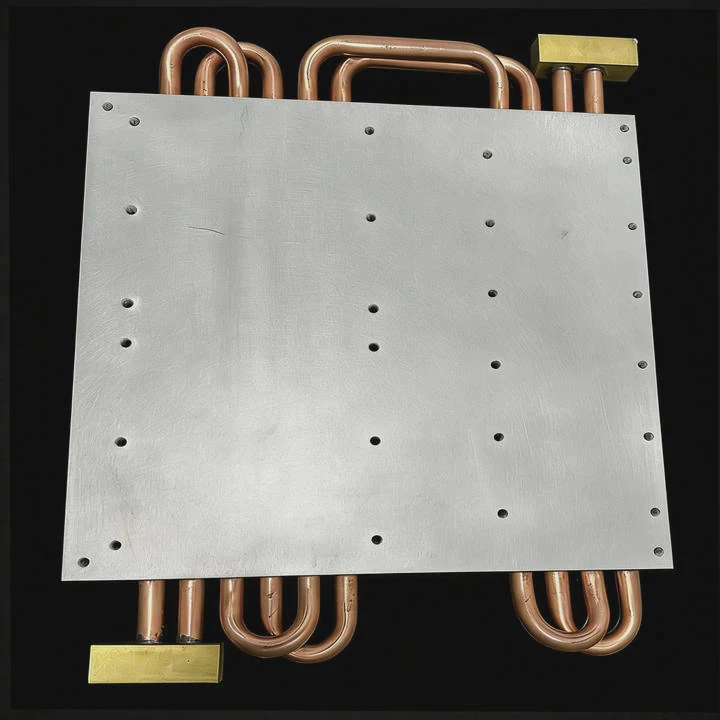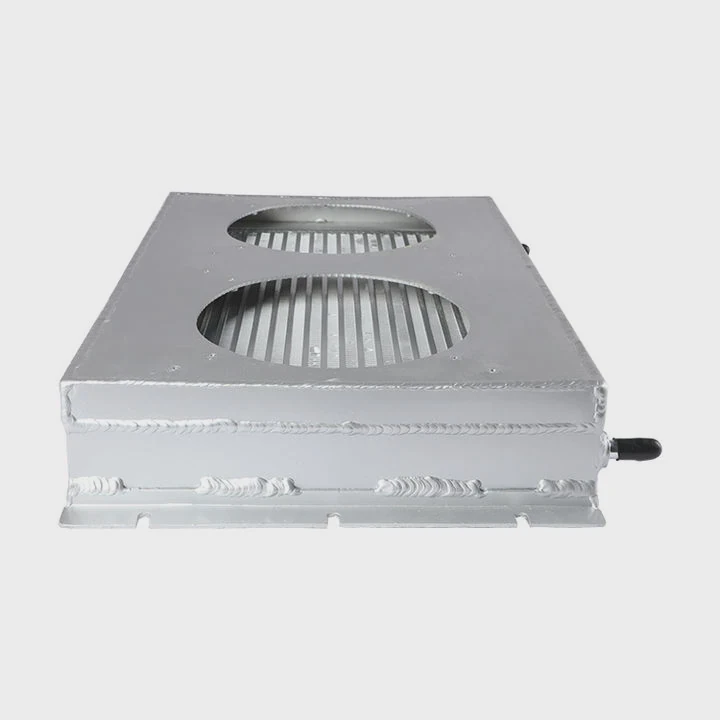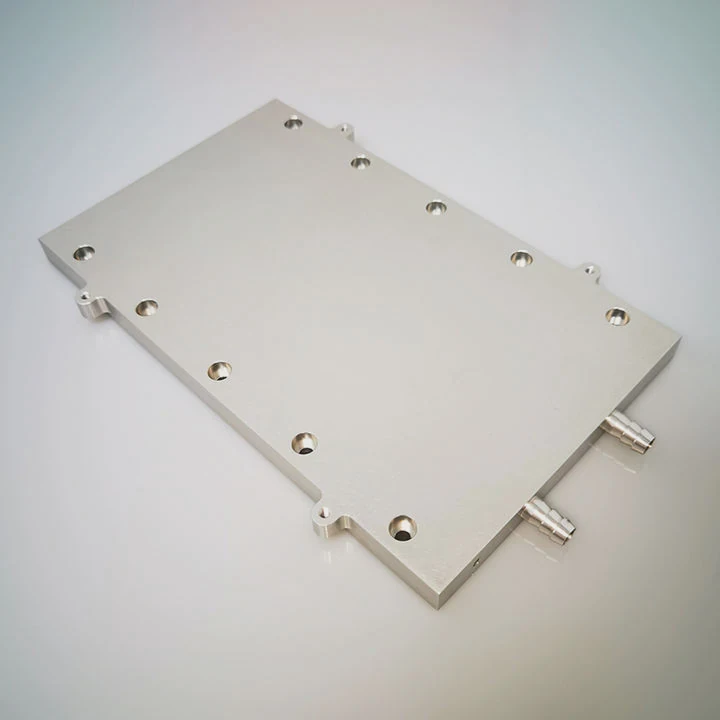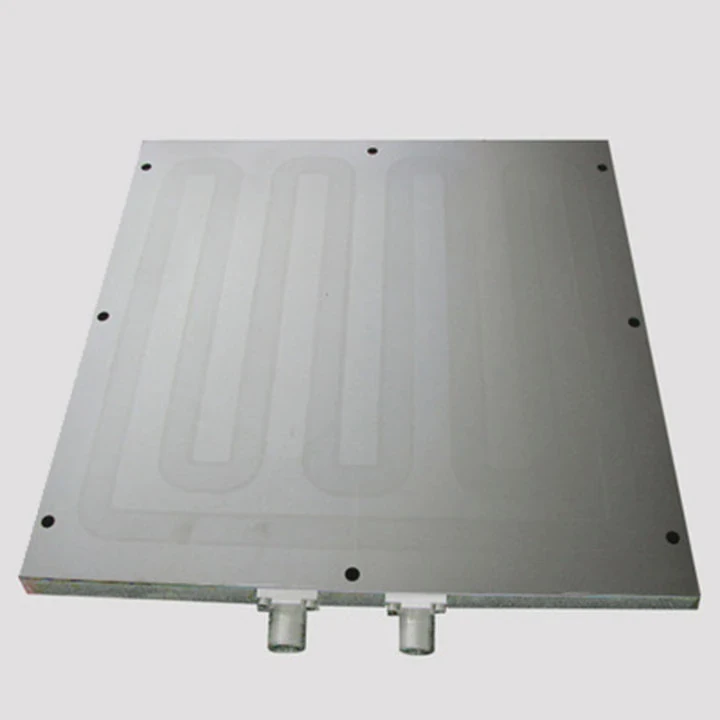
Products Details
| application | Heater Parts |
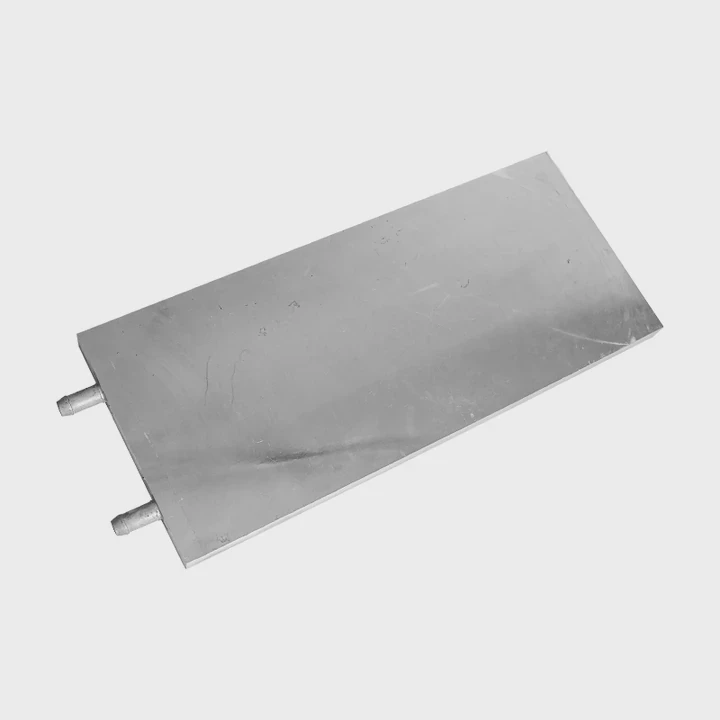
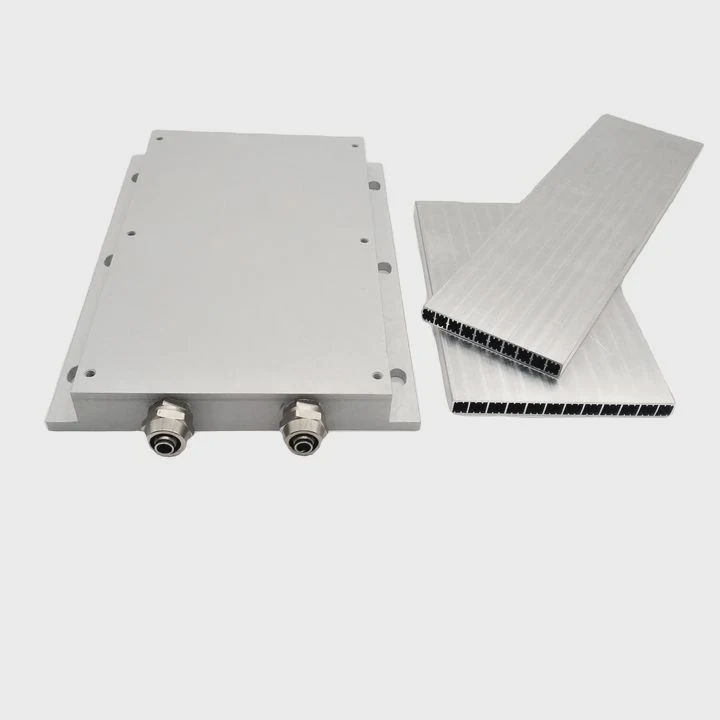
| type | Liquid Cold Plate |
| warranty | 1 Year |
| machinery test report | Provided |
| video outgoing-inspection | Provided |
| weight (kg) | 5 |
| Material | Aluminum alloy |
| Dimension(L*W*H) | Up to 3.8*1.1 L*W |
| Surface roughness | 1.2 um |
| Surface flatness | Below 0.005 cm/cm |
| Main technique | CNC machining |
| Bonding technique | Vacuum brazing |
| Working pressure | 1.2 to 5 bars |
| Fluid | Water or suitable coolant |
| Application | Water cooling block for lasers, IGBT modules and EV power battery. |
| Certification | CE |
| Selling Units | Single item |
| Package size per batch | 50X30X15 cm |
| Gross weight per batch | 9.900 kg |
 +
+
FAQ
1. What is a cold plate?
A cold plate is a component used in thermal management to dissipate heat from electronic devices.
2. How does die casting improve cold plates?
Die casting provides precise manufacturing for complex geometries, enhancing thermal performance.
3. Why choose aluminum for cold plates?
Aluminum offers excellent thermal conductivity and is lightweight, ideal for heat dissipation.
4. Can OEM cold plates be customized?
Yes, OEM cold plates can be tailored to meet specific design and performance requirements.
5. What applications benefit from cold plates?
Cold plates are used in high-performance computing, automotive, and industrial electronics for efficient cooling.
6. How do cold plates prevent overheating?
Cold plates distribute heat evenly, reducing hotspots and maintaining optimal operating temperatures.
7. Are cold plates compatible with liquid cooling?
Yes, cold plates are designed to work seamlessly with liquid cooling systems for enhanced heat removal.
8. Is rapid prototyping possible with cold plates?
Yes, die cast aluminum cold plates can be rapidly prototyped for quick testing and iteration.