How to Apply Heat Sink Compound?
- Yongxing
- 06 Jun ,2026
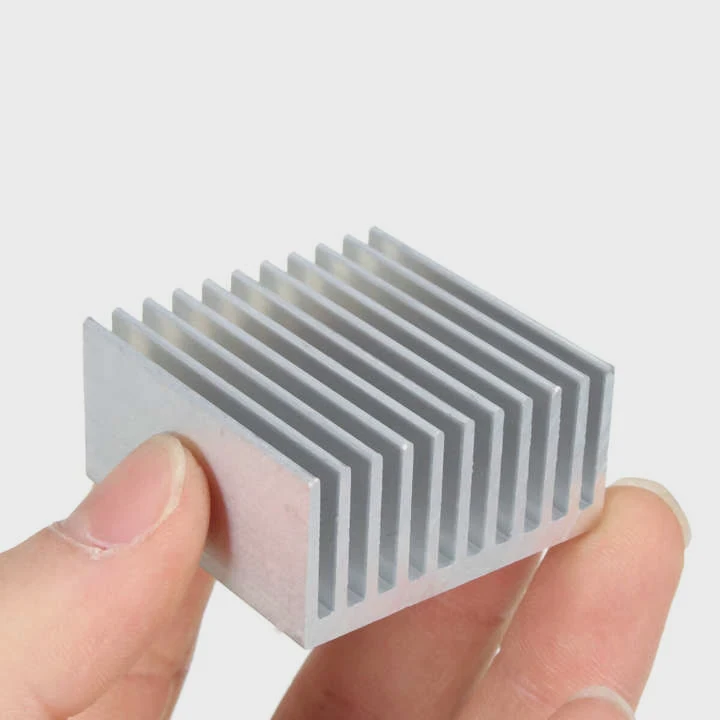
Installing a heat sink incorrectly can lead to poor cooling and overheating. Applying thermal compound properly ensures your devices run safely.
Heat sink compound improves heat transfer between chips and heat sinks by filling microscopic gaps, allowing efficient conduction and lowering temperatures.
Even small mistakes during application can reduce performance. Learning the right method ensures maximum efficiency and protection for your components.
What is the correct amount of compound to use?
Using too much or too little thermal compound can hinder cooling, leading to higher temperatures and possible throttling.
The correct amount of compound is a thin, pea-sized or rice-grain-sized layer that covers the chip surface without overflowing the edges.
Why Size Matters
Too little compound leaves air gaps, reducing heat transfer. Too much spreads outside the chip, wasting material and potentially insulating instead of conducting.
Tips for Applying
- Squeeze a small dot onto the center of the chip.
- Spread evenly if needed, but thinness is key.
- Aim for 0.1-0.2 mm thickness.
Example Table: Compound Amount Guide
| Chip Size | Recommended Dot Size | Notes |
|---|---|---|
| Small CPU/GPU | Pea-sized | Covers most small chips |
| Medium CPU | Rice-grain-sized | Avoid excess spread |
| Large CPU/GPU | Line or thin layer | Spread thinly with plastic card |
A proper layer ensures maximum surface contact between chip and heat sink.
Why does compound improve heat transfer?
Even perfectly flat chips and heat sinks have tiny gaps that trap air. Thermal compound fills these gaps to improve heat conduction.
Compound improves heat transfer by eliminating air pockets, increasing contact between the heat sink and chip, allowing heat to flow efficiently into the sink.
How it Works
- Chips and heat sinks have microscopic unevenness.
- Air is a poor conductor.
- Compound fills gaps and conducts heat better than air.
Types of Compound
- Ceramic-based: Affordable, good conductivity, electrically safe.
- Metal-based: Higher conductivity, slightly riskier if it spills.
- Carbon-based: High performance, used in gaming or overclocked systems.
Example Table: Compound Thermal Conductivity
| Compound Type | Thermal Conductivity (W/m·K) | Electrical Conductivity | Best Use Case |
|---|---|---|---|
| Ceramic | 1-4 | No | General use |
| Metal | 8-12 | Yes | High-performance CPUs |
| Carbon | 8-10 | No | Overclocking/gaming |
Correct choice depends on workload and sensitivity to spills.
Where should compound be applied on chips?
Placement ensures heat sinks touch chips fully, maximizing cooling performance.
Thermal compound should be applied to the top surface of CPUs, GPUs, or other heat-generating chips where the heat sink will make direct contact.
Placement Tips
- Center of the chip for small CPUs.
- Spread as a thin layer for larger chips.
- Avoid applying to edges where it may spill onto the board.
Step-by-Step Approach
- Clean chip and heat sink surface with alcohol.
- Apply the recommended dot size to the chip center.
- Place heat sink carefully and press slightly.
- Secure the heat sink according to the manufacturer instructions.
Additional Notes
Some prefer spreading the compound with a plastic card. Others let the heat sink pressure spread it naturally. Both methods work if the layer remains thin.
Which mistakes reduce compound effectiveness?
Even small errors can prevent proper heat transfer, raising temperatures and risking damage.
Common mistakes include applying too much or too little, not cleaning surfaces, or allowing compound to spread onto the PCB, all of which reduce thermal performance.
Mistakes to Avoid
- Too much compound: Insulates instead of conducting heat.
- Too little compound: Leaves air gaps, reducing contact.
- Dirty surfaces: Oil or dust prevents proper adhesion.
- Spillover: Can short circuits if metal-based.
Best Practices
- Use minimal, controlled amounts.
- Always clean both surfaces before application.
- Check the compound spread after heat sink placement.
- Avoid using old or dried-out compound.
Example Table: Common Application Errors
| Mistake | Effect on Cooling | How to Avoid |
|---|---|---|
| Too much compound | Insulation, higher temps | Use pea-size amount |
| Too little compound | Air gaps, reduced transfer | Measure small dot carefully |
| Dirty surfaces | Poor adhesion, uneven contact | Clean with isopropyl alcohol |
| Spilling onto PCB | Electrical risk, wasted paste | Center dot and align heat sink |
Following proper technique ensures maximum heat transfer and keeps your hardware safe during intensive use.
Conclusion
Applying heat sink compound correctly is essential. Use a thin, centered layer, clean surfaces, and avoid common mistakes. Proper application ensures effective heat transfer, optimal cooling, and stable device performance.