Is aluminum a metalloid?
- Yongxing
- 28 Mar ,2026
Many people feel confused when they see aluminum in different contexts. Some sources call it a metal, while others hint at mixed behavior. This creates doubt and leads to wrong assumptions in material selection.
Aluminum is not a metalloid. It is a metal, specifically a post-transition metal, because it shows clear metallic properties such as high conductivity, malleability, and metallic bonding behavior.
This topic matters more than it seems. When engineers or buyers misunderstand aluminum’s classification, they may choose the wrong material for heat transfer, structure, or electronics. Let’s break it down step by step.
Why is aluminum classified as a metal?
Many readers struggle with this question because aluminum sometimes shows traits that seem less “metal-like.” This confusion can lead to poor design choices, especially in thermal management systems.
Aluminum is classified as a metal because it conducts heat and electricity well, forms positive ions, has metallic bonding, and shows ductility and malleability.
To understand this clearly, it helps to look at how scientists define metals. Aluminum fits these rules very well. It behaves like a typical metal in both physical and chemical ways.
Key metallic properties of aluminum
Aluminum shows all the classic signs of a metal:
- It conducts heat efficiently
- It conducts electricity
- It is easy to shape (ductile and malleable)
- It has a shiny surface when polished
- It forms cations (Al³⁺) in reactions
These features are critical in industries like electronics, transportation, and thermal engineering.
Why this matters in real applications
In heat sink design, aluminum is widely used because of its thermal conductivity and light weight. A metalloid would not perform the same way under thermal stress or mechanical load.
Here is a simple comparison:
| Property | Aluminum | Typical Metalloid |
|---|---|---|
| Electrical conductivity | High | Moderate / low |
| Thermal conductivity | High | Low |
| Malleability | High | Brittle |
| Bonding type | Metallic | Mixed |
Practical insight from engineering
In real projects, aluminum is often chosen over other materials because it offers a balance between cost and performance. For example, in cooling systems, it spreads heat quickly and can be formed into complex shapes.
This is why aluminum is used in:
- Heat sinks
- Electronic enclosures
- Automotive parts
- Aerospace structures
A metalloid would fail in many of these roles due to brittleness or lower conductivity.
Conclusion of this section
Aluminum is not just labeled as a metal by theory. Its real-world performance proves it. Its structure and behavior match metallic standards in every practical way.
What defines a metalloid element?
Many people hear the term “metalloid” but do not fully understand what it means. This creates confusion when comparing elements like aluminum, silicon, or boron.
A metalloid is an element that has properties between metals and nonmetals, often showing mixed conductivity and semi-metallic behavior.
Metalloids sit in a unique position in chemistry. They are not fully metallic, but they are not fully nonmetal either. This makes them useful in special applications like semiconductors.
Core characteristics of metalloids
Metalloids share a set of distinct features:
- Moderate electrical conductivity
- Brittle structure (not malleable)
- Semiconductor behavior
- Mixed chemical bonding
- Often form covalent bonds
Common metalloids include silicon, boron, germanium, arsenic, and antimony.
Why metalloids are important
Metalloids play a key role in electronics. Silicon, for example, is the base material for semiconductors and chips. This is because its conductivity can be controlled.
Comparison with metals
Metalloids differ from metals in several ways:
| Feature | Metals | Metalloids |
|---|---|---|
| Conductivity | High | Moderate |
| Mechanical behavior | Malleable | Brittle |
| Electron behavior | Free moving | Controlled |
| Typical use | Structure & heat | Electronics |
Understanding the “middle behavior”
Metalloids behave differently depending on conditions. For example, they may conduct electricity under certain temperatures or doping conditions. This is why they are used in transistors and sensors.
Why confusion happens
Aluminum sometimes forms oxide layers and shows corrosion resistance. This may look like nonmetal behavior. But this does not make it a metalloid. Many metals form oxides. This is normal.
Key takeaway
A metalloid must show mixed behavior consistently. Aluminum does not. It behaves like a metal in almost all cases.
How does aluminum differ from metalloids?
This is where most confusion becomes clear. At first glance, aluminum and metalloids may seem similar in some chemical reactions, but their core behavior is very different.
Aluminum differs from metalloids because it has strong metallic bonding, high conductivity, and ductility, while metalloids are brittle and have controlled or limited conductivity.
To fully understand the difference, we need to compare them from multiple angles: structure, bonding, and real-world use.
Structural differences
Aluminum atoms form a metallic lattice. In this structure:
- Electrons move freely
- Atoms are arranged in a uniform pattern
- Bonds are strong but flexible
Metalloids do not have this structure. Their atomic arrangement is more rigid and directional, which leads to brittleness.
Electrical behavior
Aluminum is a good conductor. It allows electrons to move freely. This is why it is used in power lines and heat sinks.
Metalloids behave differently:
- They are semiconductors
- Their conductivity depends on temperature or impurities
- They do not allow free electron flow like metals
Mechanical properties
This is one of the biggest differences:
- Aluminum can be bent, stretched, or shaped
- Metalloids will break under stress
This matters a lot in manufacturing. For example, extruded aluminum heat sinks require high ductility. A metalloid would crack during this process.
Application differences
Let’s compare where each is used:
| Application Area | Aluminum | Metalloids |
|---|---|---|
| Heat dissipation | Excellent | Poor |
| Structural parts | Widely used | Not suitable |
| Electronics chips | Limited | Essential |
| Mechanical forming | Easy | Difficult |
Real engineering perspective
In thermal design, aluminum is chosen for its ability to transfer heat quickly and evenly. Metalloids cannot compete in this area. However, metalloids dominate in microelectronics because of their controlled conductivity.
Important insight
Sometimes people confuse aluminum oxide with semiconductor materials. But aluminum itself is still a metal. Its oxide layer only protects it from corrosion.
Final thought on differences
Aluminum and metalloids serve completely different purposes. One is for structure and heat. The other is for controlled electrical behavior.
Where is aluminum on periodic table?
Many misunderstand aluminum’s classification because they do not look at its position on the periodic table. This position explains a lot about its behavior.
Aluminum is located in Group 13 and Period 3 of the periodic table, placing it firmly among metals, specifically post-transition metals.
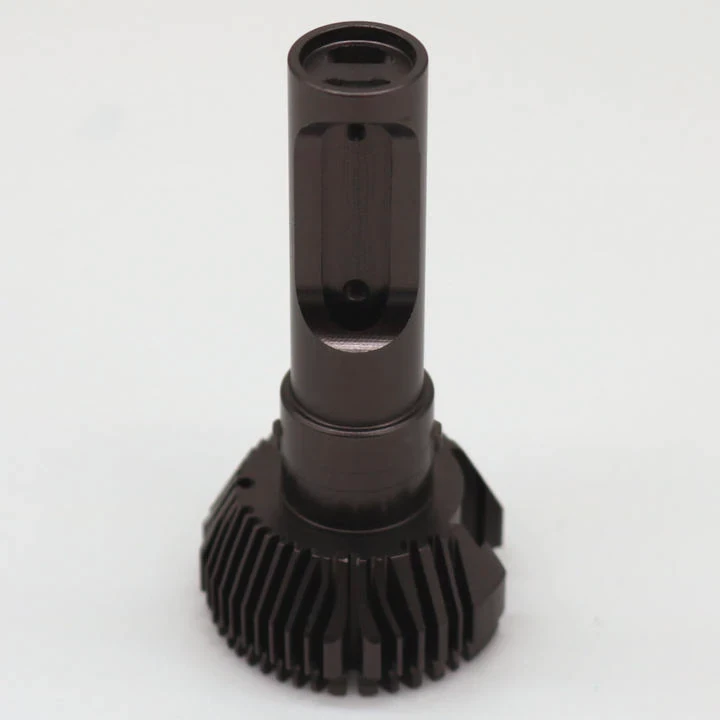
Understanding its position helps explain why aluminum behaves the way it does.
Aluminum’s exact position
- Group: 13
- Period: 3
- Atomic number: 13
This places aluminum to the left of the metalloid “staircase” line on the periodic table.
What is the “metalloid staircase”?
On the periodic table, there is a zigzag line. Elements along this line are metalloids. Elements to the left are metals. Elements to the right are nonmetals.
Aluminum sits clearly on the metal side of this line.
Neighboring elements
Looking at nearby elements helps:
- Magnesium (metal)
- Silicon (metalloid)
- Phosphorus (nonmetal)
Aluminum is closer in behavior to magnesium than to silicon.
Why location matters
The periodic table is arranged by electron structure. Aluminum has three valence electrons, which it tends to lose. This is typical metal behavior.
Metalloids, on the other hand, tend to share electrons instead of losing them.
Visual classification logic
Here is a simple way to see it:
| Position Relative to Staircase | Element Type |
|---|---|
| Left side | Metals |
| On the line | Metalloids |
| Right side | Nonmetals |
Aluminum is clearly on the left side.
Engineering implication
Knowing aluminum’s position helps engineers predict its behavior:
- Good conductor
- Forms metallic bonds
- Suitable for thermal systems
This is why it is trusted in high-performance cooling solutions.
Final clarity
If aluminum were a metalloid, it would not behave the way it does in manufacturing, forming, and heat transfer. Its position on the periodic table confirms its identity as a metal.
Conclusion
Aluminum is a true metal, not a metalloid. Its structure, properties, and periodic position all confirm this, and its real-world performance in heat and structural applications proves it clearly.