What Aluminum Heat sink alloys suit high power electronics?
- Yongxing
- 04 Feb ,2026
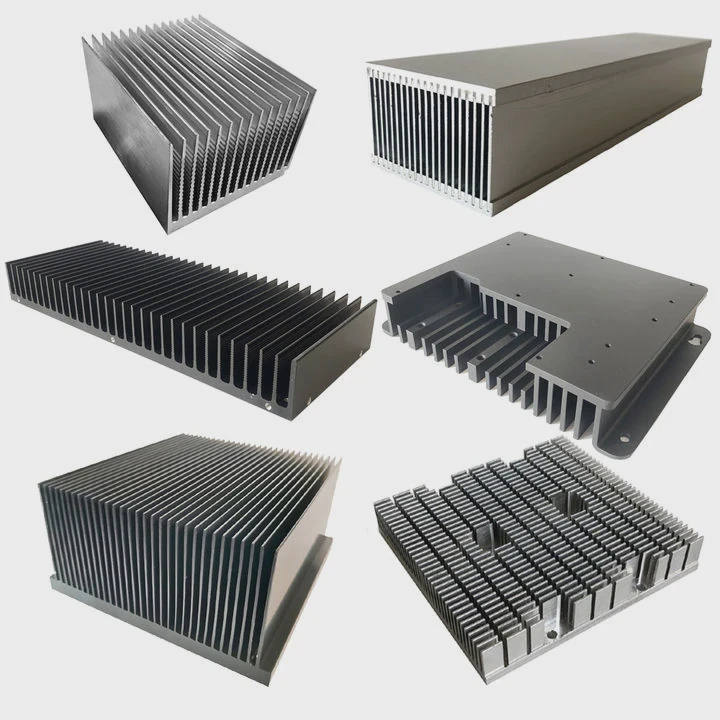
Many engineers struggle with selecting the right aluminum alloy for heat sinks in high-power electronics. Choosing wrong leads to overheating, shorter lifespan, and failed systems.
6061 and 6063 alloys dominate the market, but different applications require different balances of conductivity, strength, and processability.
Not all aluminum is the same. If you’re building power devices, the alloy type you choose will determine thermal performance, cost, and manufacturability. Let’s break down the options and clear up the confusion.
Which alloy provides the best thermal conductivity?
Too much heat in power electronics causes system failure. Without the right alloy, a heat sink might trap more heat than it removes.
The best thermal conductivity among common aluminum alloys comes from 1050 and 1100, reaching around 225 W/m·K.
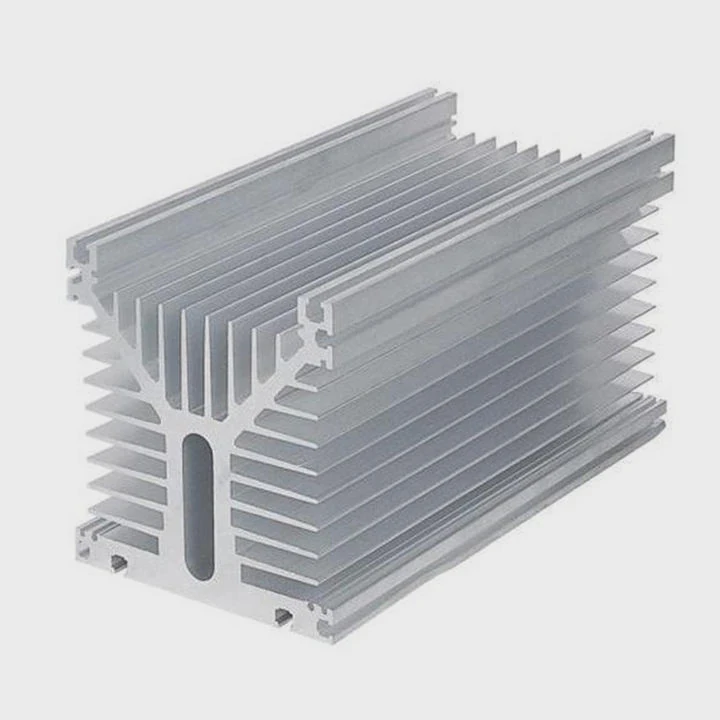
Understanding thermal conductivity of alloys
Aluminum is well-known for its high thermal conductivity, but not all grades perform the same. The table below shows the typical conductivity values for key aluminum alloys:
| Alloy | Thermal Conductivity (W/m·K) | Notes |
|---|---|---|
| 1050 | 229 | High purity, soft, ductile |
| 1100 | 222 | Corrosion-resistant |
| 6063 | 201 | Popular in extrusion |
| 6061 | 167 | Stronger, slightly lower TC |
| A356 | ~130 | Used in castings |
High-purity aluminum like 1050 and 1100 has the best heat conductivity. These are nearly pure aluminum grades and contain few alloying elements that interfere with heat flow.
But there’s a trade-off. These pure grades are soft. They deform easily and are hard to machine or extrude into precise heat sink shapes.
When conductivity is king
In ultra-high power or passive cooling applications—such as laser modules, power amplifiers, or semiconductor devices—thermal conductivity must come first. For those, using a 1050-based baseplate with other structural reinforcements is a good solution.
But in cases where mechanical strength and complex shapes matter—like LED fixtures, inverters, or server cooling fins—slightly lower conductivity from 6063 or 6061 is usually an acceptable compromise.
How does alloy composition affect electrical insulation?
Electronics need thermal pathways—but not electrical shortcuts. Heat sinks that conduct electricity can cause short circuits if not properly designed.
Aluminum itself is conductive, and no alloy provides electrical insulation without surface treatments.
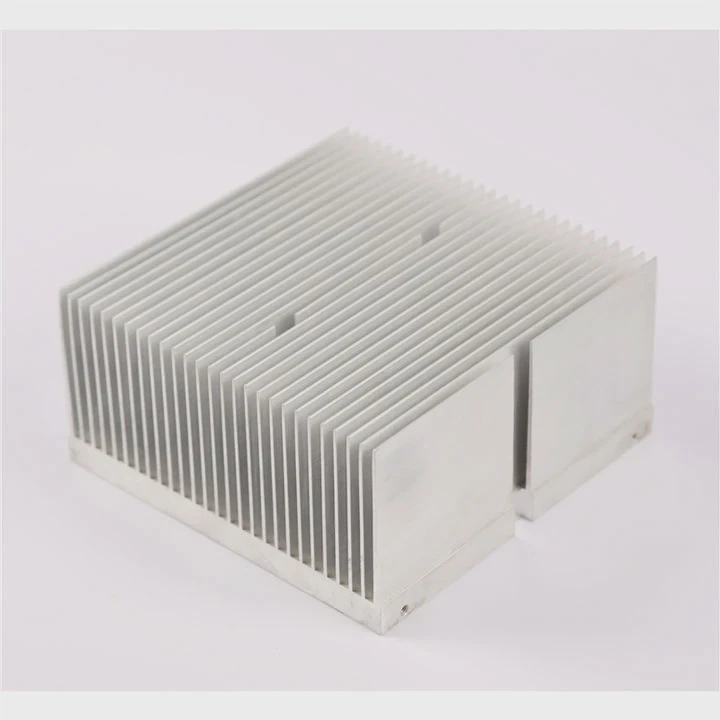
Surface treatment is critical
All aluminum alloys conduct electricity. The composition doesn’t make an alloy insulating by itself. However, different alloys respond differently to insulating surface treatments.
The most common method is anodizing, which creates a non-conductive oxide layer. Here’s how typical alloys behave under anodizing:
| Alloy | Anodizing Suitability | Surface Quality | Insulation Performance |
|---|---|---|---|
| 6063 | Excellent | High | High |
| 6061 | Good | Medium | Good |
| 1050 | Fair | Poor | Moderate |
Alloys and oxide layer integrity
6063 is well-suited for anodizing and forms a smooth, consistent oxide layer. This is why it’s widely used in architectural and electronic applications that require insulation.
6061 also anodizes, but the finish can be less even, especially after machining. Surface porosity and microstructure affect how well the oxide layer insulates and adheres.
Pure aluminum (like 1050) forms a soft and less durable oxide layer. That layer may chip or wear off during assembly, exposing conductive aluminum beneath.
For reliable insulation in high-voltage or sensitive electronics, choose alloys with stable anodizing response and complement them with high-dielectric coatings or interface films.
What are the pros and cons of 6061 vs 6063 alloys?
Many power heat sinks use either 6061 or 6063. But each alloy has trade-offs. Pick wrong, and you may waste machining time or sacrifice cooling efficiency.
6061 is stronger and better for machining; 6063 offers better surface finish and slightly higher thermal conductivity.
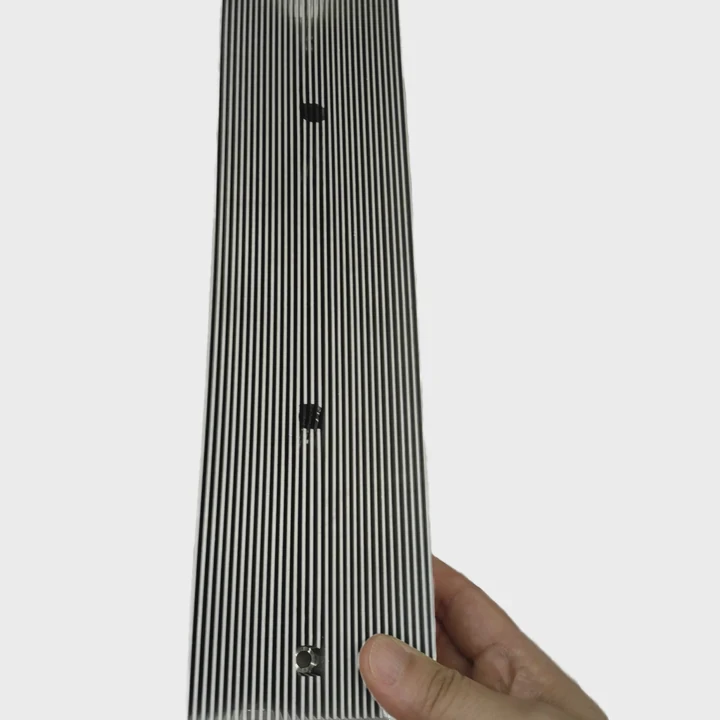
A direct comparison
| Feature | 6061 | 6063 |
|---|---|---|
| Thermal Conductivity | ~167 W/m·K | ~201 W/m·K |
| Strength (T6 temper) | Higher | Lower |
| Machinability | Excellent | Good |
| Surface Finish | Moderate (prone to streaks) | Excellent (clean extrusions) |
| Anodizing Quality | Good | Excellent |
| Cost | Slightly higher | Slightly lower |
Choose based on priorities
Use 6061 when:
- The heat sink requires high mechanical strength
- Threaded holes or CNC machining is needed
- The structure supports heavy components
Use 6063 when:
- Extrusion finish matters
- Better heat transfer is needed
- Parts are anodized for insulation or aesthetics
One example: in inverter enclosures or automotive controller units, I often use 6061 for the base structure to carry weight and secure connectors. For the cooling fins or housings, I prefer 6063 because it gives cleaner anodized surfaces and better heat spread.
Choosing between the two depends on what matters more: mechanical performance or thermal and surface quality.
Can recycled aluminum alloys be used in power heat sinks?
There’s growing interest in using recycled aluminum to cut costs and environmental impact. But does recycled alloy compromise performance?
Yes, recycled aluminum can be used, but only if it meets strict purity and mechanical standards.
What affects performance in recycled alloys
Recycled aluminum usually comes from post-consumer or post-industrial sources. It is re-melted and cast into new forms. But during this process, contamination risks increase. Here’s what matters most:
- Iron content: Too much iron lowers thermal conductivity and can cause brittleness
- Silicon balance: Needed for casting flow, but too much can weaken structure
- Porosity: Recycled castings often have more air pockets, affecting strength
Ensuring quality
Some suppliers now offer certified recycled alloys that maintain consistent composition. For example:
| Recycled Alloy | Typical Use Case | Purity Level | Suitability for Heat Sinks |
|---|---|---|---|
| A356-R | Die-cast LED heat sinks | High | Moderate |
| 6063-R | Extruded profiles | Very High | Good |
| AC2B-R | Automotive castings | Medium | Conditional |
Using recycled aluminum is realistic for non-critical parts, like heat sink fins or mounting frames. For baseplates or high-heat areas, verify thermal and structural performance with data.
Always request a material certificate or perform conductivity tests if your supplier uses recycled material. That’s especially true in B2B systems where failure is not an option.
Conclusion
Selecting the right aluminum alloy for heat sinks depends on your priorities: conductivity, strength, insulation, or environmental impact. Alloys like 1050, 6061, and 6063 serve different needs. Surface treatments and process control are just as critical as the alloy itself. When performance matters, choose based on data—not habit.
- Pre Sorry!
- Next: Maximum Aluminum Heat sink size for automotive battery cooling?