Maximum Aluminum Heat sink size for automotive battery cooling?
- Yongxing
- 04 Feb ,2026
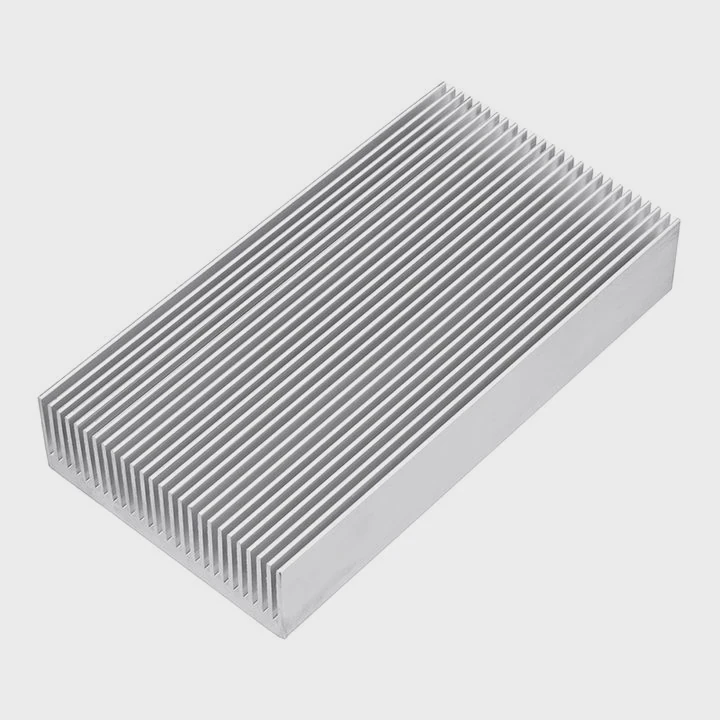
Battery heat builds up quickly during charging and discharging. If the heat sink is too small, the battery overheats. If it’s too big, it may not work as expected or may not even fit.
There is a practical maximum size for aluminum heat sinks due to manufacturing limits and system design constraints.
Size matters—but bigger isn’t always better. In automotive battery cooling, finding the right heat sink size means balancing thermal needs, manufacturing capability, and system design. Let’s explore what defines the maximum size.
What size limits exist in die casting or extrusion?
Engineers often dream of a single, giant heat sink. But in practice, factory tooling and process limits set hard boundaries on size.
Die casting and aluminum extrusion have clear dimensional limits due to press size, tooling stress, and deformation control.
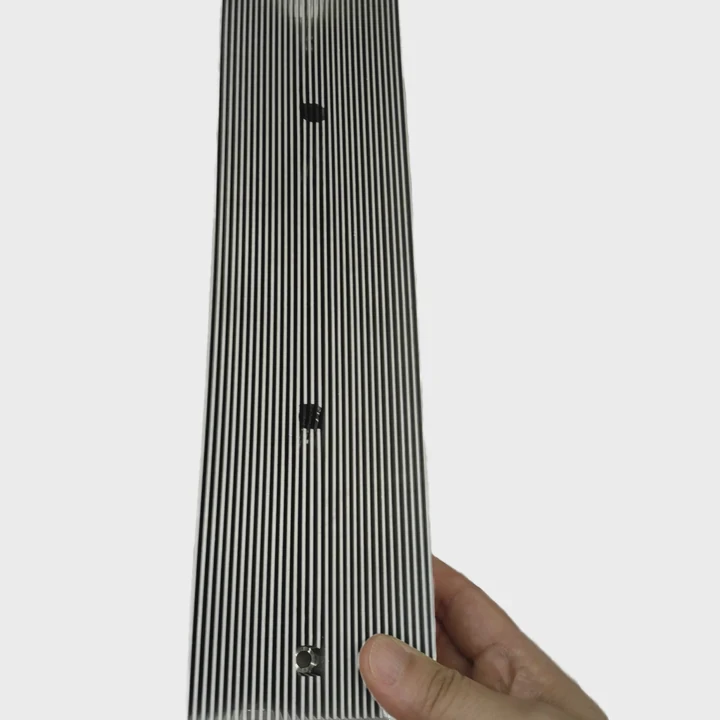
Process limits by method
| Process | Max Width (mm) | Max Length (mm) | Common Application |
|---|---|---|---|
| Extrusion | ~500 | ~6,000 | Fins, enclosures, baseplates |
| Die Casting | ~700 | ~800 | Complex-shaped heat sinks |
| CNC Machining | Unlimited | Unlimited | Limited by raw block size |
| Friction Stir Welding | Modular | Modular | For joining extruded sections |
Extrusion is ideal for long and narrow parts, like battery tray cooling fins. The press determines the shape’s width. Cross-sections above 500 mm are rare and costly.
Die casting allows more complex shapes but is limited in size and thickness uniformity. High-pressure dies don’t scale well beyond 800 mm in one axis.
CNC machining can remove material from a large billet, but this is slow, expensive, and wasteful—especially when aluminum is removed in bulk.
For massive battery cooling plates, a common method is joining multiple extruded pieces using friction stir welding (FSW) or vacuum brazing to form one continuous plate.
Real-world constraint examples
If you’re sourcing from a Tier 1 thermal manufacturer, expect extrusion width limits around 450–500 mm. Anything wider often comes in two parts and is joined.
A 2000 mm × 1000 mm one-piece battery cooler is not realistic. But a 1000 mm × 500 mm section joined modularly is.
How does size affect thermal performance in EV systems?
We all assume a larger heat sink means better cooling. But it’s not that simple. Size changes how heat moves and how airflow behaves.
Thermal performance improves with size—but only to a point. Larger areas face heat spreading losses and airflow challenges.
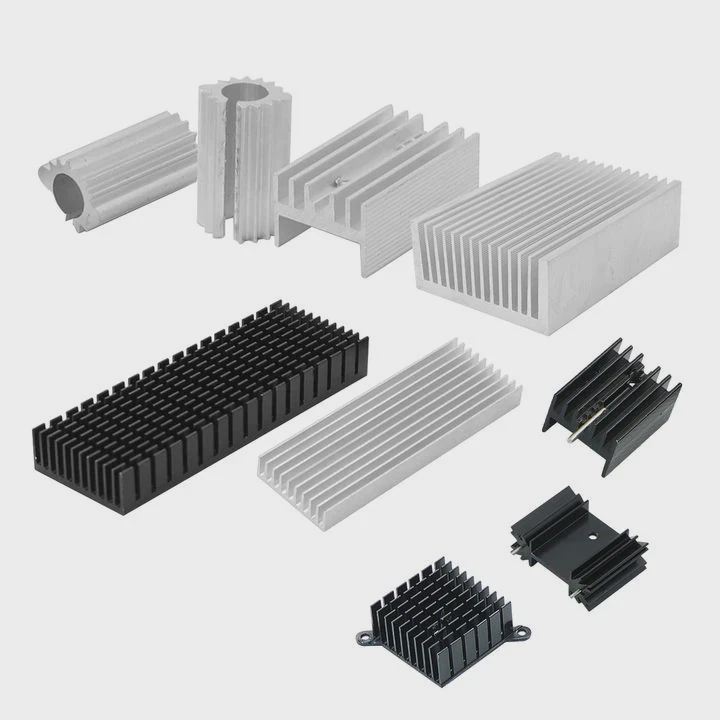
Key factors in thermal behavior
When heat moves through a sink, it spreads out from localized sources (battery cells or modules). A larger sink must handle:
- Longer heat path: Heat must travel farther to reach the edges
- Spreading resistance: Wider plates need better conduction across the plane
- Air or coolant distribution: Large areas need balanced flow to prevent hotspots
A single aluminum plate over 1000 mm long might see the far-end stay significantly hotter if heat cannot spread fast enough or if coolant is unevenly distributed.
Heat transfer equations at scale
The larger the surface area, the more heat you can reject—up to the point where conduction limits inside the plate start to dominate. For example:
Q = k × A × ΔT / d
Where:
- Q = heat transferred
- k = thermal conductivity
- A = area
- ΔT = temperature difference
- d = thickness
As A increases, d must stay optimized. A thin, large plate risks heat bottlenecks unless material quality and layout are tuned carefully.
Large plates must use high-conductivity alloys (6063, 1050) and often include internal cooling channels or phase-change material layers.
Practical application
In battery EV systems, 600 mm × 400 mm cooling zones are common. Larger packs use several zones with dedicated coolant paths.
Trying to stretch beyond this may yield worse performance due to poor fluid flow or slow lateral conduction.
Can oversized heat sinks reduce cooling efficiency?
Bigger is better—until it isn’t. Oversizing causes unexpected problems: more thermal lag, uneven flow, and poor mechanical integration.
Yes, oversized heat sinks can lower efficiency due to poor heat spreading, thermal delay, and design mismatches.
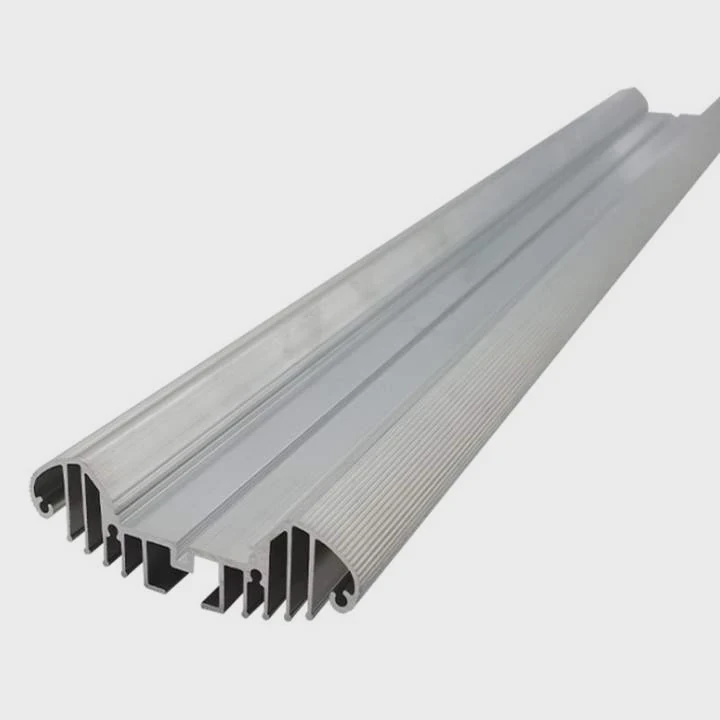
Why too big is not always better
At first, it seems logical: more surface = more cooling. But in real-world EV systems, large heat sinks may perform worse:
1. Uneven temperature distribution
If coolant or air doesn’t reach the entire surface evenly, some areas stay hot. This causes:
- Thermal gradients
- Module imbalance
- Reduced battery life
2. Heat spreading delay
In larger aluminum plates, heat takes longer to reach the surface. Especially with lower-conductivity alloys, this causes time lag and thermal resistance.
3. Structural deformation
Large thin plates may bend under thermal stress. Warping reduces contact with battery cells and hurts thermal interface performance.
4. Added mass and cost
Oversized components use more aluminum, weigh more, and require more machining. In automotive design, every gram counts.
Best practices
Instead of going big, go smart:
- Use multiple optimized sinks
- Add coolant channels
- Choose high-conductivity alloys
- Consider phase-change layers for passive heat handling
Is modular design better for large battery packs?
EV battery packs are growing. More cells, more heat. A single plate seems convenient—but modularity brings serious benefits.
Yes, modular heat sink design is better for large packs. It improves assembly, repairability, thermal control, and manufacturability.
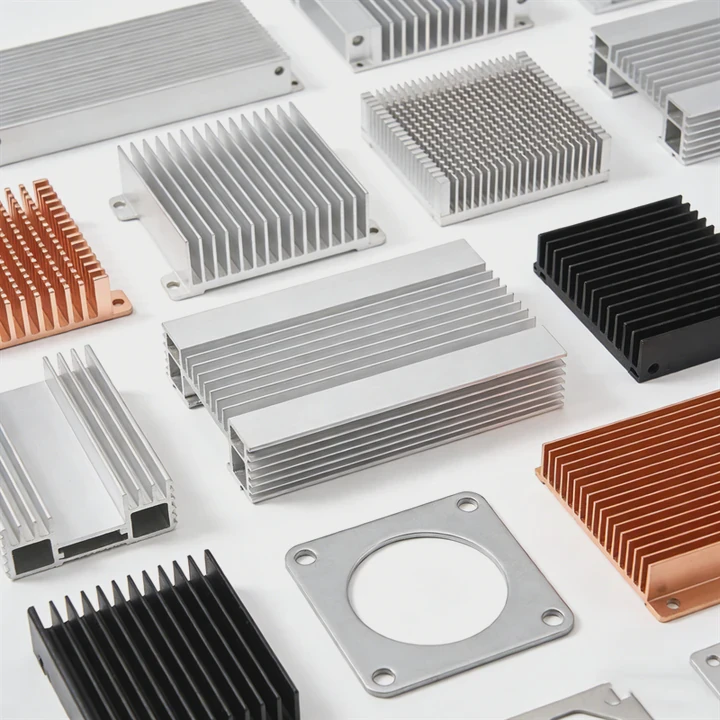
Benefits of modular cooling structures
Let’s break down what modular design actually means. Instead of one giant sink, use several smaller ones. Each connects to a section of the battery pack.
Key benefits:
| Feature | Modular Heat Sinks | One-Piece Heat Sink |
|---|---|---|
| Cooling control | Precise | Hard to balance |
| Repair/replacement | Easy | Needs full removal |
| Manufacturing yield | Higher | Lower (more scrap risk) |
| Customization | Flexible | Rigid |
| Shipping/handling | Easier | Bulky |
Thermal performance tuning
In a modular system, each plate can be optimized for its load. You can:
- Use thicker plates where cells are denser
- Add extra cooling fins or channels locally
- Split coolant flow by zone
This ensures no energy is wasted on overcooling low-load areas while high-heat zones stay safe.
Examples in real EV packs
Many Tier 1 battery suppliers use modular cooling trays. Each tray holds one battery module and connects to a main coolant rail. This also improves serviceability—swap one plate, not the whole pack.
Conclusion
Aluminum heat sink size in EV battery cooling is limited by both manufacturing and thermal performance. Going too large can hurt efficiency and increase risk. Modular designs using extruded or welded segments offer the best balance of scalability, cost, and real-world function. Always size smart, not just big.