Who discovered aluminum?
- Yongxing
- 27 Mar ,2026
Aluminum is everywhere today. But few people know it was once rare and hard to make. That gap creates curiosity and confusion.
Aluminum was not discovered by one single person. It was identified as a new metal in the early 1800s, mainly by scientists like Hans Christian ?rsted and Friedrich W?hler, who helped isolate it for the first time.
Now the story becomes more interesting. Aluminum moved from a lab curiosity to a core industrial metal. Let’s break down how that happened.
When was aluminum first discovered?
Aluminum feels modern. But its roots go far back in science history. Many people assume it is a recent invention.
Aluminum was first identified as a unique element in the early 19th century, around 1808-1825, when scientists began isolating it from alum compounds.
The story starts with a material called alum. People used alum for thousands of years. It helped in dyeing cloth and treating water. But no one knew it contained a metal.
Early scientific steps
In 1808, Humphry Davy tried to extract aluminum. He did not fully succeed. But he gave the element its name. First “alumium,” then later “aluminum.”
Then in 1825, Hans Christian ?rsted made a key move. He produced a small amount of aluminum. It was not pure. But it proved the metal existed.
Two years later, Friedrich W?hler improved the process. He created better samples. His work helped confirm aluminum as a real element.
Timeline of early discovery
| Year | Scientist | Contribution |
|---|---|---|
| 1808 | Humphry Davy | Named the element |
| 1825 | ?rsted | First isolation attempt |
| 1827 | W?hler | Improved purity |
Why discovery took time
Aluminum does not exist freely in nature. It is always bonded with other elements. This made it hard to isolate.
Also, early chemistry tools were limited. Scientists did not yet have strong methods for separating metals from compounds.
My perspective from industry
In heat sink manufacturing, this early struggle still matters. Aluminum’s strong bond with oxygen is why it resists corrosion today. That same challenge made discovery slow.
So, aluminum was not “found” in one moment. It was built step by step through experiments.
How was aluminum originally produced?
Early aluminum production was slow and costly. The methods were complex and not practical for large scale.
Originally, aluminum was produced through chemical reduction using potassium or sodium, which was expensive and inefficient.
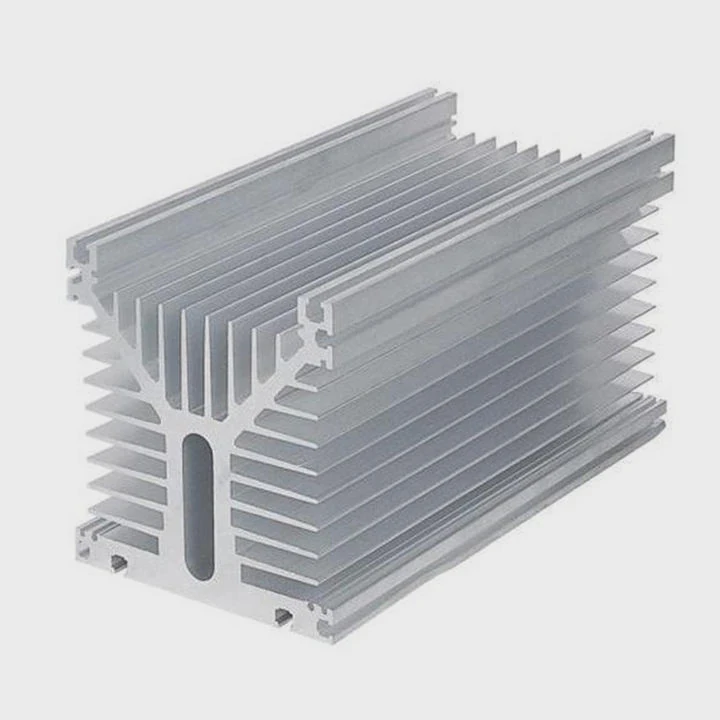
The first methods relied on chemical reactions. Scientists used rare metals like potassium to pull aluminum out of compounds.
The chemical reduction method
Friedrich W?hler used potassium to reduce aluminum chloride. This produced small particles of aluminum.
Later, Henri Sainte-Claire Deville improved this method. He used sodium instead of potassium. That made it slightly cheaper.
Still, the process had limits:
- It required expensive materials
- It produced small amounts
- It was hard to control
Process breakdown
| Step | Description |
|---|---|
| Raw material | Aluminum chloride |
| Reducing agent | Potassium or sodium |
| Reaction | Chemical separation |
| Output | Small aluminum particles |
Production challenges
The process needed high temperatures. It also required pure chemicals. That increased cost.
Also, the yield was low. You could not produce large blocks of aluminum easily.
Industrial limitations
At that time, aluminum was more like a lab product. It was not yet an industrial material.
Even when Deville scaled production in France, output was still very limited.
My experience connection
In modern heat sink production, efficiency is everything. Looking back at these early methods, the gap is huge.
Today we produce thousands of aluminum components per day. Back then, even grams were valuable.
This contrast shows how far manufacturing has evolved.
Why was aluminum once expensive?
Today aluminum is cheap. But in the 19th century, it was more valuable than gold.
Aluminum was expensive because it was difficult to extract, required rare materials, and had no efficient industrial process.

One famous example often surprises people. Napoleon III reserved aluminum cutlery for special guests. Others used gold utensils.
Key reasons for high cost
1. Complex extraction
Aluminum is locked inside ores like bauxite. Early methods could not extract it easily.
2. Expensive chemicals
Potassium and sodium were costly. Using them in production increased price.
3. Low production volume
Small output meant high cost per unit.
Cost comparison (historical)
| Material | Relative Value (1800s) |
|---|---|
| Gold | High |
| Aluminum | Very high |
| Iron | Low |
Limited supply chain
There were few producers. Most aluminum came from small labs or early factories.
Also, transport and storage added cost. Aluminum was rare and fragile in early forms.
Symbol of status
Because of its rarity, aluminum became a luxury item. It was used in jewelry and royal displays.
Industrial impact
High cost prevented widespread use. Engineers could not rely on aluminum for large projects.
My view from thermal design
This part always fascinates me. Today aluminum is the top choice for heat sinks because it is cheap and effective.
But back then, no engineer would even consider it for cooling systems.
The price barrier delayed innovation in many fields.
Who improved aluminum extraction methods?
The real turning point came with a breakthrough in the late 1800s. This changed everything.
Charles Hall and Paul Héroult independently developed the Hall-Héroult process in 1886, which made aluminum production efficient and affordable.
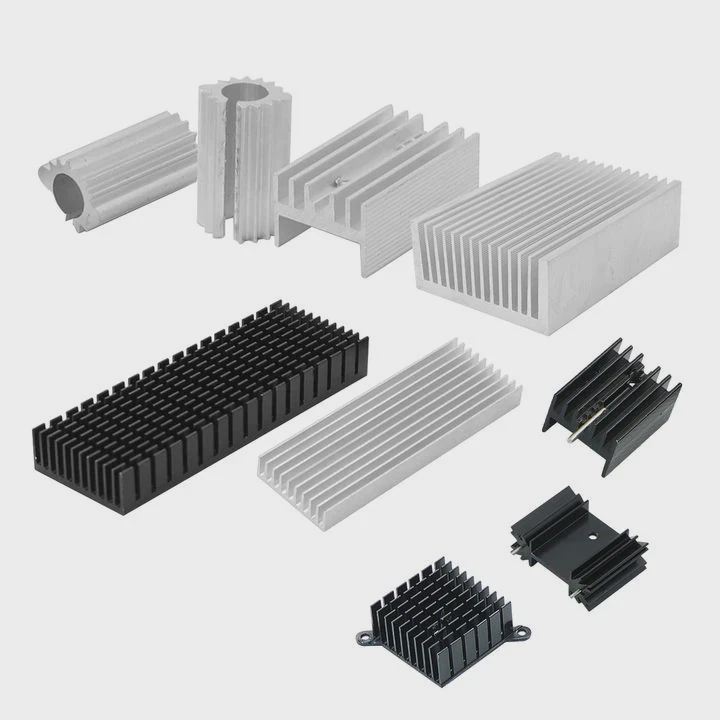
This process is still used today. It marked the start of modern aluminum industry.
The Hall-Héroult process
This method uses electrolysis. Aluminum oxide is dissolved in molten cryolite. Then electricity separates aluminum from oxygen.
Key advantages
- Much lower cost
- Scalable production
- Higher purity aluminum
Process overview
| Step | Description |
|---|---|
| Raw material | Alumina (Al?O?) |
| Medium | Molten cryolite |
| Method | Electrolysis |
| Output | Liquid aluminum |
Why it worked
Electricity replaced expensive chemicals. This reduced cost significantly.
Also, the process allowed continuous production. Factories could produce large volumes.
Global impact
After 1886, aluminum prices dropped quickly. It became accessible for industries like:
- Transportation
- Construction
- Electronics
Link to modern heat sinks
This breakthrough is the reason aluminum dominates thermal management today.
Without this process, aluminum heat sinks would not exist at scale.
My industry insight
Every time we design a custom heat sink, we rely on this history. The ability to extrude, machine, and weld aluminum all comes from affordable raw material.
It is a reminder that material science and manufacturing innovation always go together.
Conclusion
Aluminum was not discovered in one moment. It evolved through many experiments. The real breakthrough came with efficient production. That change turned aluminum into one of the most important engineering materials today.