Best Heat Sink Material?
- Yongxing
- 25 Apr ,2026
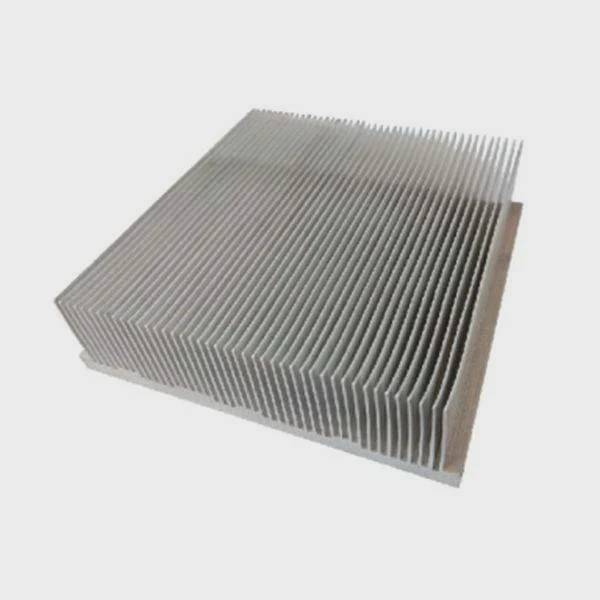
Heat management is critical in electronics, and choosing the right heat sink material can solve overheating problems fast.
Selecting the best heat sink material depends on thermal conductivity, weight, cost, and application needs. Proper material choice can improve device lifespan and performance.
Understanding how materials influence heat dissipation can save time and reduce costs. Let’s explore the options in detail.
How do materials affect heat sink performance?
Different materials transfer heat at different speeds. Picking the wrong one can cause devices to overheat.
Materials impact heat sink efficiency through their thermal conductivity, density, and specific heat. These properties dictate how quickly heat moves away from components.
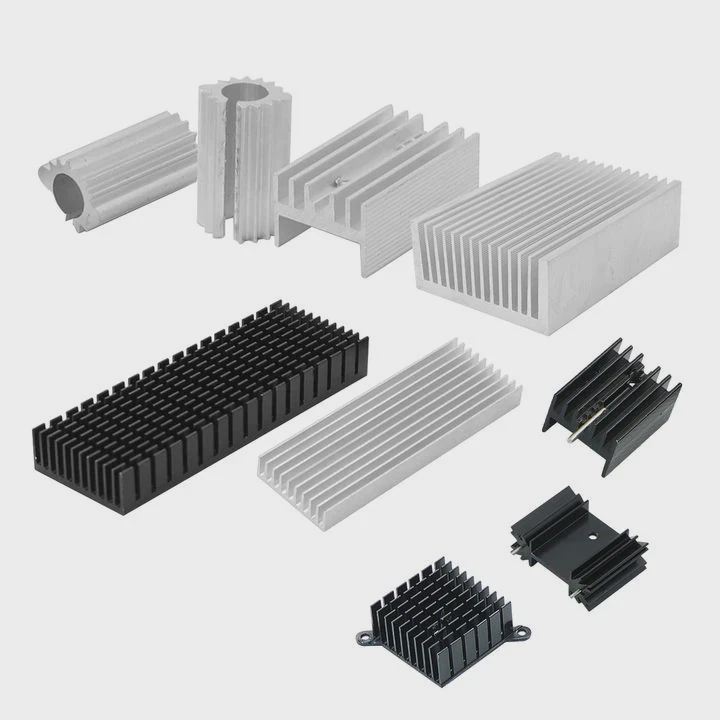
Heat sinks are more than just metal blocks. Each material has unique thermal properties that determine performance. Thermal conductivity measures how fast heat spreads through the material. Materials with high thermal conductivity remove heat faster, keeping electronic components cooler. Density and weight affect mechanical design and mounting. For example, heavy metals may require stronger support. Specific heat capacity also matters. Materials with higher specific heat store more energy before their temperature rises significantly. In practical terms, a heat sink must transfer heat from a hot device to the surrounding air efficiently. Choosing aluminum or copper is common because they offer a balance of conductivity, weight, and cost. However, some applications may require exotic materials like graphite or silver. They provide higher conductivity but at much higher cost and often harder manufacturing. Another factor is surface area design. Fins and spreaders enhance heat transfer, but material selection still sets the upper limit for thermal performance. Engineers often use simulation software to predict how material choice affects temperatures under real conditions. This helps prevent failure in high-power electronics. Lastly, environmental factors like corrosion or oxidation can affect long-term performance. Aluminum forms a protective oxide layer naturally, whereas copper may need coating. Overall, understanding the material properties allows designers to match performance, weight, and cost effectively.
Table: Key Material Properties Affecting Heat Sink Performance
| Material | Thermal Conductivity (W/m·K) | Density (g/cm³) | Specific Heat (J/g·K) |
|---|---|---|---|
| Aluminum | 205 | 2.7 | 0.897 |
| Copper | 385 | 8.96 | 0.385 |
| Graphite | 150–400 | 1.5–2.3 | 0.710 |
| Silver | 429 | 10.5 | 0.235 |
Why are copper and aluminum commonly used?
Many engineers prefer copper and aluminum because they offer good performance at reasonable cost.
Copper and aluminum are widely used for heat sinks due to their high thermal conductivity, availability, and ease of manufacturing.
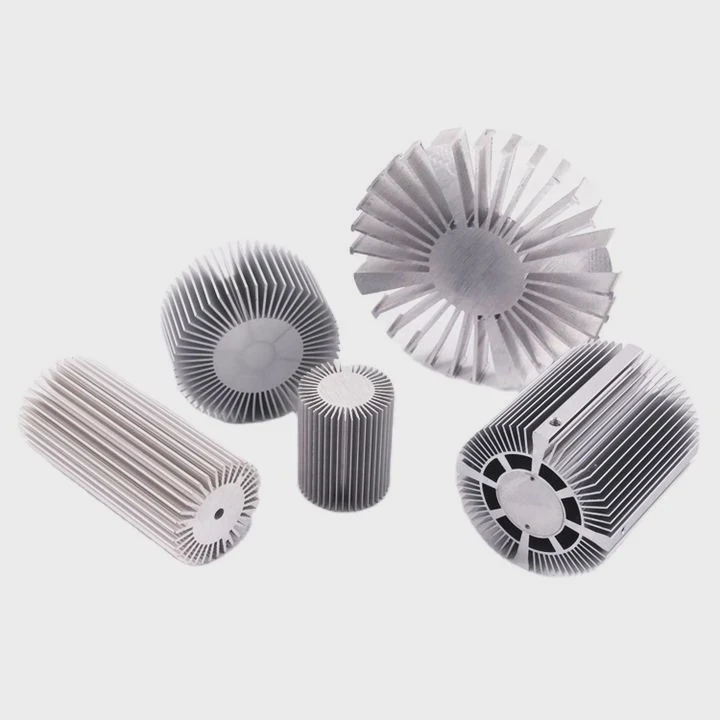
Copper and aluminum dominate heat sink applications because they provide the best combination of efficiency, weight, and price. Copper conducts heat faster than aluminum. It is ideal for high-power devices where maximum heat transfer is essential. Aluminum is lighter, easier to shape, and resists corrosion naturally. It suits medium-power electronics and areas where weight matters. Manufacturing methods also favor these metals. Aluminum is easy to extrude into complex fin shapes. Copper can be cast or bonded into plates. Cost differences are notable. Copper is more expensive but can reduce size requirements due to better conductivity. Aluminum is cheaper and easier to scale for mass production. Design flexibility is another factor. Aluminum allows large surface areas without adding too much weight. Copper may need hybrid designs where aluminum fins are combined with copper bases. This approach balances weight, cost, and performance. Overall, these metals remain popular because they meet most commercial and industrial requirements effectively.
Table: Comparison of Copper vs Aluminum
| Property | Aluminum | Copper |
|---|---|---|
| Thermal Conductivity | 205 W/m·K | 385 W/m·K |
| Density | 2.7 g/cm³ | 8.96 g/cm³ |
| Corrosion Resistance | High | Medium |
| Cost | Low | High |
| Manufacturing Flexibility | High | Medium |
Where is each material most effective?
Choosing the right material depends on the device type, power, and cooling requirements.
Copper is best for high-power, compact electronics, while aluminum suits lighter, medium-power applications and cost-sensitive projects.
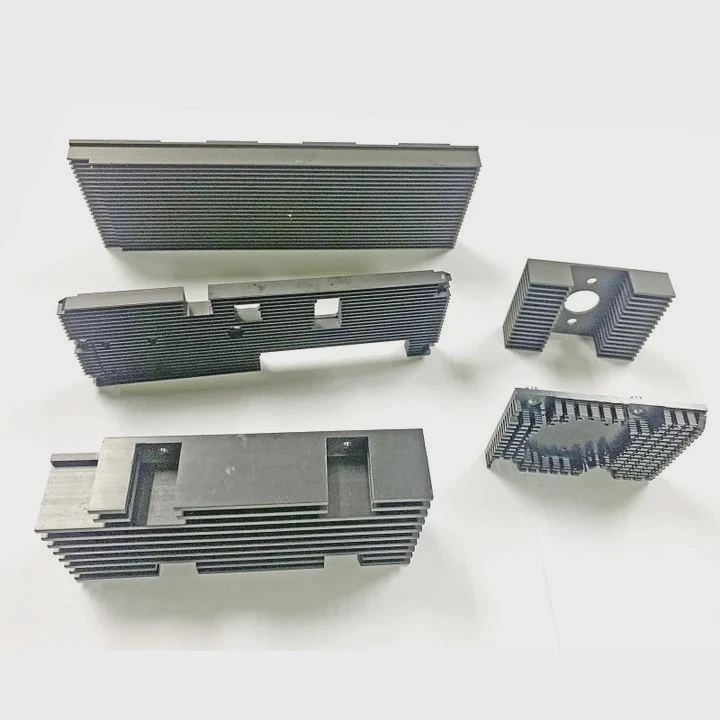
Copper excels in situations where thermal performance is critical, such as CPUs, high-power LEDs, and power converters. Its high conductivity allows small heat sinks to handle large amounts of heat. Aluminum is preferred in devices like telecom equipment, low-power CPUs, and battery packs where weight reduction is important. Engineers also combine materials. A copper base with aluminum fins uses copper’s conductivity near the chip and aluminum’s lightness to spread heat into the air efficiently. Thermal interface material also affects performance. Even the best metal cannot compensate for poor contact between the component and heat sink. Surface finish matters too. Smooth finishes reduce thermal resistance, while rough surfaces may trap air. Design engineers must consider the operating environment. Outdoor or humid conditions may favor aluminum due to corrosion resistance. Copper may require protective coatings. Overall, matching material properties to device needs ensures cooling efficiency without overspending on material or adding unnecessary weight.
Table: Application Examples by Material
| Application | Preferred Material | Reason |
|---|---|---|
| High-power CPUs | Copper | High conductivity, compact design |
| Power electronics | Copper | Handles high heat in small footprint |
| Telecom equipment | Aluminum | Lightweight, sufficient conductivity |
| LED lighting | Aluminum/Copper | Balance of heat transfer and cost |
| Battery packs | Aluminum | Light and easy to integrate |
Which material offers best thermal conductivity?
Some materials are exceptional, but cost and manufacturability limit their use.
Silver offers the highest thermal conductivity, but copper is more practical for most heat sink applications due to cost and availability.
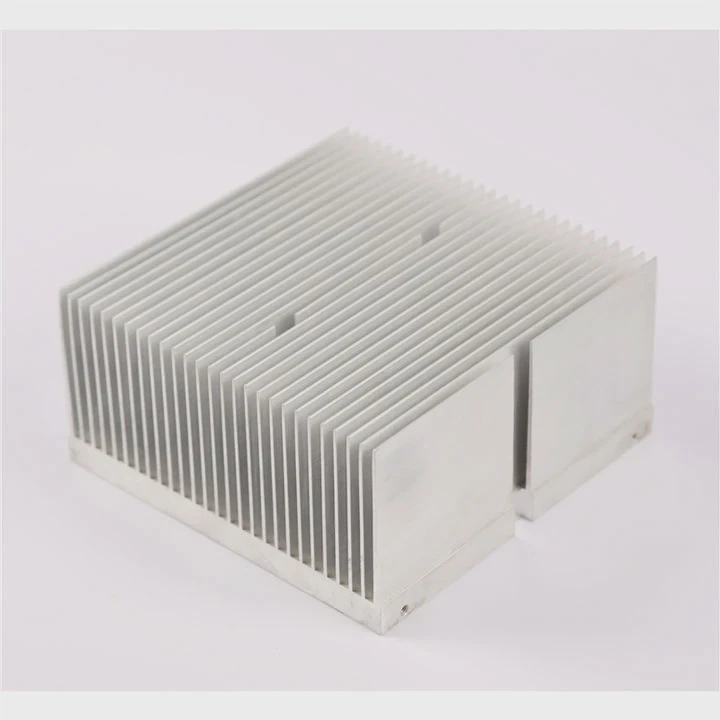
Silver has the best thermal conductivity at 429 W/m·K, slightly higher than copper. However, it is costly and harder to fabricate. Copper provides nearly the same performance but is cheaper and widely available. Graphite and other composite materials offer interesting alternatives. Graphite has directional conductivity, useful in spreading heat across a surface. Yet, it is less practical for mass production. Engineers often choose copper for maximum thermal efficiency. For medium-power devices, aluminum is the better compromise. Cost, weight, and corrosion resistance make it ideal. Hybrid designs are common. For example, a copper base with aluminum fins optimizes thermal path while keeping weight manageable. This combination is popular in CPU coolers, LED modules, and industrial power electronics. Ultimately, thermal conductivity must be balanced with design constraints, cost, and assembly ease. Even the best conductive material will underperform if the heat sink design does not maximize surface area and airflow. Therefore, material choice is only one factor in achieving optimal cooling.
Table: Thermal Conductivity Ranking
| Material | Thermal Conductivity (W/m·K) | Practical Use in Heat Sinks |
|---|---|---|
| Silver | 429 | Rare, high-cost applications |
| Copper | 385 | High-power electronics |
| Graphite | 150–400 | Specialized spreading |
| Aluminum | 205 | Most common, lightweight |
Conclusion
Choosing the right heat sink material depends on balancing thermal performance, cost, weight, and application. Copper is best for high-power, compact devices, while aluminum offers a lightweight, cost-effective solution for many applications.