Does Extrusion Process Affect Heat Sink Quality?
- Yongxing
- 27 May ,2026
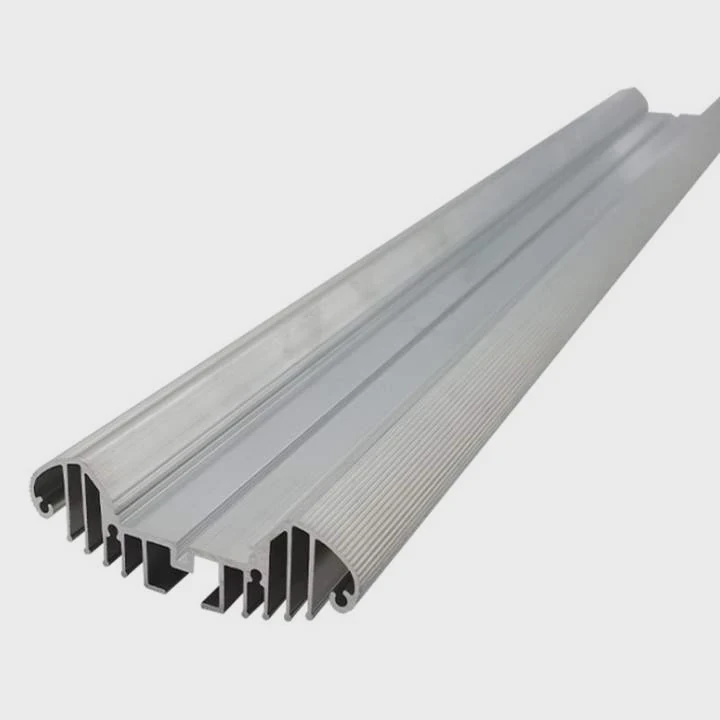
Many heat sinks look similar from the outside. Still, some fail early, cool poorly, or develop structural problems after long operation. In many cases, the extrusion process is the hidden reason behind these issues.
Yes, the extrusion process directly affects heat sink quality. Extrusion influences fin geometry, surface finish, dimensional accuracy, mechanical strength, and thermal performance. Poor extrusion control can reduce cooling efficiency and create long-term reliability risks.
Many buyers focus only on material grade or heat sink size. That approach misses an important part of thermal manufacturing. Even high-quality aluminum can perform badly if the extrusion process is unstable. Temperature control, die precision, extrusion speed, and cooling methods all affect the final thermal structure. A well-designed extrusion process creates better airflow channels, lower thermal resistance, and more consistent product quality.
How does extrusion impact fin geometry?
Many cooling systems lose efficiency because their fin structures are inconsistent. Bent fins, uneven spacing, and distorted profiles can reduce airflow and trap heat inside the heat sink.
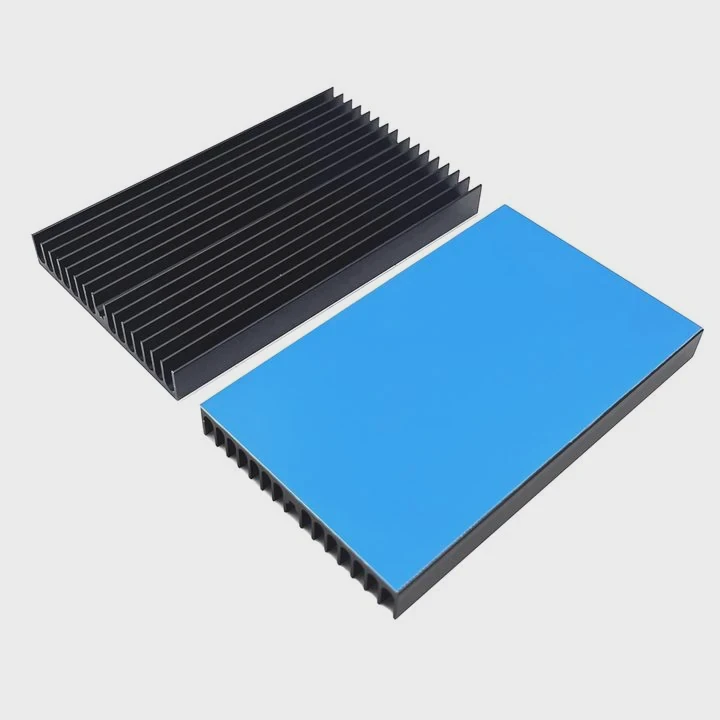
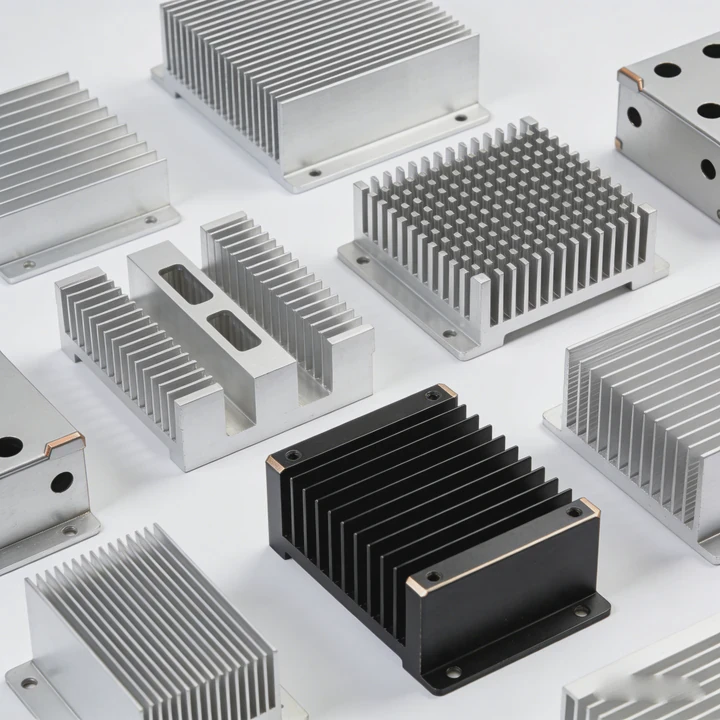
Extrusion directly controls fin geometry by shaping fin height, thickness, spacing, straightness, and structural consistency. Stable extrusion processes create precise fin profiles that improve airflow and thermal transfer efficiency.
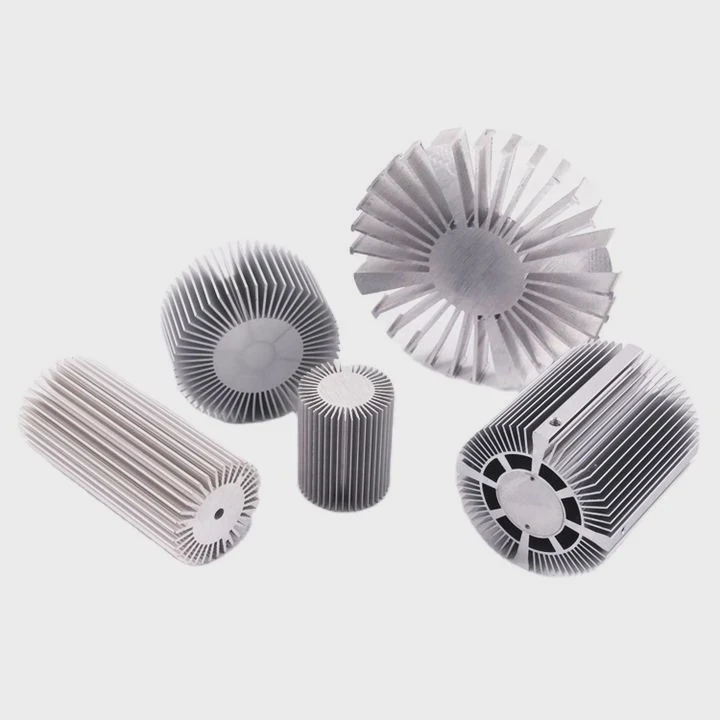
Fin geometry is one of the most important factors in heat sink performance. Even small shape differences can affect airflow resistance and heat dissipation.
Why fin geometry matters
Heat sink fins increase surface area. More surface area usually improves cooling performance. Still, the fin structure must match the cooling environment.
For example:
| Fin Type | Best Use |
|---|---|
| Thin dense fins | Forced-air cooling |
| Wide thick fins | Natural convection |
| Tall fins | High vertical airflow |
| Short reinforced fins | High vibration systems |
Poor fin geometry can reduce airflow efficiency even if thermal conductivity remains high.
Extrusion controls fin precision
During aluminum extrusion, heated aluminum passes through a precision die. The die shape determines the final fin structure.
If extrusion pressure becomes unstable, fins may deform. Common problems include:
- Fin bending
- Uneven spacing
- Twisting
- Surface cracking
- Thickness variation
These defects reduce cooling performance and may create airflow dead zones.
Die quality affects fin consistency
The extrusion die acts as the foundation of the heat sink profile.
A poorly designed die may create:
| Die Problem | Result |
|---|---|
| Uneven metal flow | Bent fins |
| Weak die support | Fin distortion |
| Poor temperature balance | Surface defects |
| Inaccurate dimensions | Assembly problems |
High-precision dies improve profile accuracy and repeatability during mass production.
Thin fins create manufacturing challenges
Many high-performance heat sinks use very thin fins to maximize surface area.
Still, thin fins are harder to extrude.
As fin thickness decreases:
- Extrusion pressure rises
- Metal flow becomes unstable
- Risk of fin tearing increases
This is why advanced extrusion equipment becomes important for complex profiles.
Airflow performance depends on geometry
Thermal performance depends heavily on airflow behavior between fins.
If fins are too dense:
- Air resistance increases
- Dust accumulates faster
- Cooling efficiency may drop
If fins are too wide:
- Surface area decreases
- Heat transfer efficiency weakens
The extrusion process must maintain accurate spacing to balance these factors.
Straightness affects thermal assembly
Large industrial heat sinks often connect directly to power modules or cooling plates.
If the extruded profile bends during manufacturing, thermal contact becomes uneven.
This creates:
- Air gaps
- Local hot spots
- Increased thermal resistance
Good extrusion control helps maintain profile flatness and straightness.
Extrusion cooling also matters
After extrusion, aluminum profiles must cool carefully.
Improper cooling may create internal stress. Over time, this can cause:
- Warping
- Structural instability
- Dimensional drift
Controlled cooling improves long-term mechanical reliability.
Large heat sinks require stronger process control
Large extrusion profiles create additional manufacturing difficulty.
Wide heat sinks may suffer from:
| Large Profile Challenge | Impact |
|---|---|
| Uneven cooling | Warping |
| Metal flow imbalance | Geometry distortion |
| Residual stress | Structural instability |
| Fin collapse risk | Reduced airflow |
This is why industrial thermal systems often require specialized extrusion equipment and process monitoring.
Are alternative manufacturing methods superior?
Many engineers ask whether extrusion is still the best choice for modern thermal systems. Some advanced applications now use vapor chambers, skived fins, die casting, or liquid cooling structures instead of traditional extrusion.
Alternative manufacturing methods can outperform extrusion in certain high-power or compact applications. Still, extrusion remains one of the most cost-effective, scalable, and reliable manufacturing methods for many industrial heat sink designs.
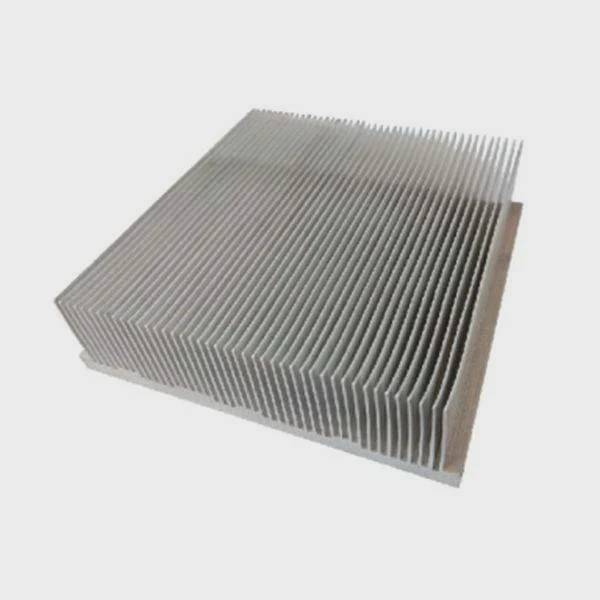
No single manufacturing method works best for every thermal application. The right process depends on thermal density, airflow conditions, budget, weight limits, and production volume.
Why extrusion remains popular
Extruded aluminum heat sinks continue dominating many industries because the process balances performance and manufacturing efficiency.
Extrusion offers:
- Low tooling cost
- Fast mass production
- Lightweight structures
- Flexible fin design
- Strong mechanical consistency
This makes extrusion suitable for:
- Power supplies
- LED systems
- Industrial automation
- Telecom equipment
- Renewable energy systems
Skived fin heat sinks
Skiving cuts fins directly from a solid metal block.
This creates very thin fins with excellent thermal performance.
Advantages of skived fin structures
| Benefit | Explanation |
|---|---|
| Higher fin density | Larger cooling area |
| No fin bonding resistance | Better heat transfer |
| Copper compatibility | Excellent thermal conductivity |
| Compact structures | Good for tight spaces |
Still, skiving increases manufacturing cost and machining complexity.
Die casting methods
Die casting supports complex three-dimensional thermal structures.
This method works well for products requiring integrated mechanical shapes.
Still, die-cast aluminum often has lower thermal conductivity because of material porosity.
Liquid cooling systems
Some modern systems generate too much heat for air cooling alone.
Liquid cooling becomes necessary in:
- AI servers
- EV battery systems
- High-power inverters
- Laser equipment
Liquid cooling removes heat much faster than traditional fin structures.
Still, it also increases:
- Manufacturing cost
- System complexity
- Maintenance requirements
Vapor chamber structures
Vapor chambers spread heat rapidly across wide surfaces.
These systems are useful when heat sources become highly concentrated.
Applications include:
- 5G communication
- Semiconductor tools
- Aerospace electronics
Still, vapor chamber production is more difficult than standard extrusion.
Extrusion remains ideal for many industries
Many industrial systems do not need extreme thermal technology.
Extrusion often provides the best balance between:
| Factor | Extrusion Performance |
|---|---|
| Cost efficiency | Excellent |
| Mass production | Excellent |
| Lightweight design | Excellent |
| Customization | Very good |
| Thermal performance | Good |
| Manufacturing speed | Fast |
This is why extrusion continues dominating medium and high-volume thermal applications.
Hybrid thermal structures are increasing
Modern thermal systems often combine multiple manufacturing methods together.
Examples include:
- Extruded fins + vapor chamber base
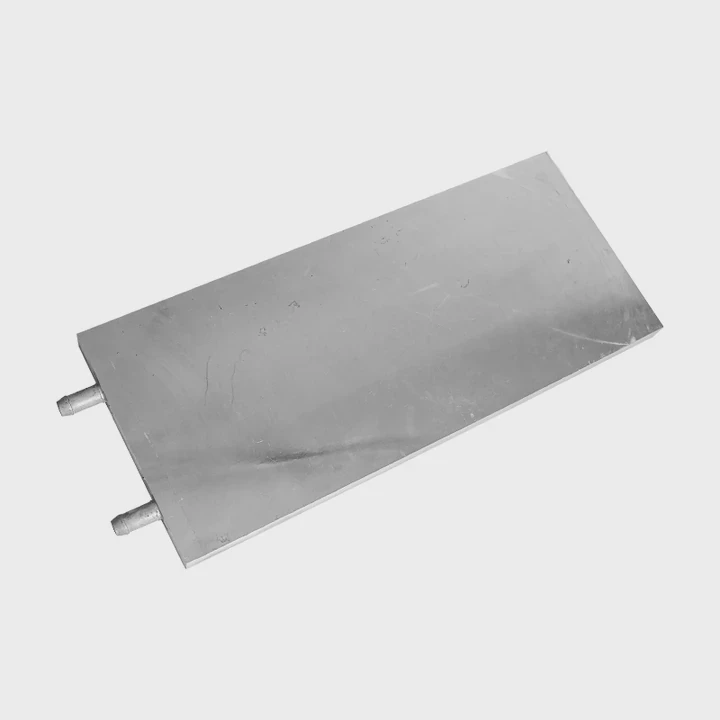
- Extruded housing + liquid cooling plate
- Skived copper core + aluminum extrusion
These hybrid designs improve performance while controlling cost.
Manufacturing capability affects final quality
The process itself is not the only factor.
Supplier capability also matters greatly.
Poor manufacturing control can damage any process, including:
- Extrusion
- Skiving
- Vacuum brazing
- Die casting
Process consistency often matters more than technology labels alone.
Does surface finish depend on extrusion quality?
Some heat sinks show scratches, rough surfaces, or oxidation shortly after production. These issues often begin during extrusion rather than during later finishing processes.
Yes, extrusion quality strongly affects heat sink surface finish. Stable extrusion creates smoother surfaces, better dimensional consistency, and fewer defects, which improves coating quality, corrosion resistance, and thermal contact performance.
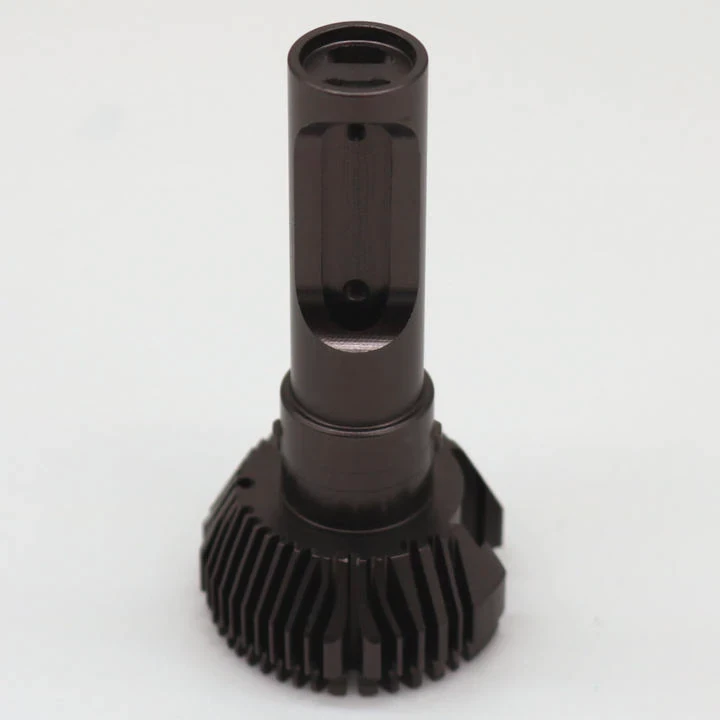
Surface finish affects both appearance and thermal performance. Rough or damaged surfaces may reduce coating adhesion and increase thermal resistance.
Why surface finish matters
Heat sinks often connect directly to power devices.
If the mounting surface becomes rough or uneven:
- Thermal contact weakens
- Air gaps increase
- Thermal resistance rises
This reduces cooling efficiency.
Surface quality also affects:
| Surface Requirement | Importance |
|---|---|
| Flatness | Better thermal contact |
| Smoothness | Improved coating quality |
| Oxidation control | Longer durability |
| Dimensional accuracy | Easier assembly |
Extrusion defects can damage surfaces
Several extrusion problems affect surface appearance.
Common defects include:
- Drag lines
- Surface tearing
- Metal streaks
- Oxidation marks
- Die lines
These defects often come from unstable metal flow or improper die maintenance.
Temperature control affects finish quality
Aluminum temperature during extrusion is very important.
If temperature becomes too high:
- Surface oxidation increases
- Grain structure weakens
- Surface tearing may appear
If temperature becomes too low:
- Metal flow becomes rough
- Fin edges may crack
- Surface smoothness decreases
Stable thermal control improves profile consistency.
Die condition affects surface smoothness
Extrusion dies wear gradually during production.
A damaged die may create:
| Die Wear Problem | Surface Result |
|---|---|
| Scratches inside die | Drag marks |
| Uneven bearing surfaces | Flow lines |
| Die contamination | Surface defects |
| Cracked die edges | Profile tearing |
Regular die maintenance improves long-term surface quality.
Surface finish affects anodizing results
Many aluminum heat sinks use anodized coatings.
Poor surface quality reduces anodizing consistency.
This may create:
- Uneven color
- Weak coating adhesion
- Visible defects
- Corrosion risk
Smooth extrusion surfaces improve coating appearance and durability.
Thermal contact surfaces need extra precision
The base area connecting to electronic devices often requires additional machining.
Even with good extrusion quality, CNC finishing may still be necessary for:
- High-flatness surfaces
- Tight tolerances
- Precision mounting holes
Still, better extrusion reduces later machining workload.
Surface quality also affects reliability
Rough surfaces may trap contaminants or moisture.
This increases corrosion risk in harsh environments.
Stable extrusion improves:
- Corrosion resistance
- Coating durability
- Structural consistency
- Long-term reliability
These factors become critical in outdoor or industrial systems.
Cosmetic quality also matters commercially
In many industries, appearance affects customer trust.
Poor surface quality may create concerns about:
- Manufacturing consistency
- Material purity
- Internal structural quality
This is especially important in export markets and OEM production projects.
Can extrusion improve thermal performance?
Some buyers believe heat sink material alone determines cooling efficiency. In reality, the extrusion process itself can directly influence thermal performance.
Yes, optimized extrusion can improve thermal performance by creating better fin geometry, reducing airflow resistance, improving structural consistency, and supporting efficient heat transfer across the entire heat sink structure.
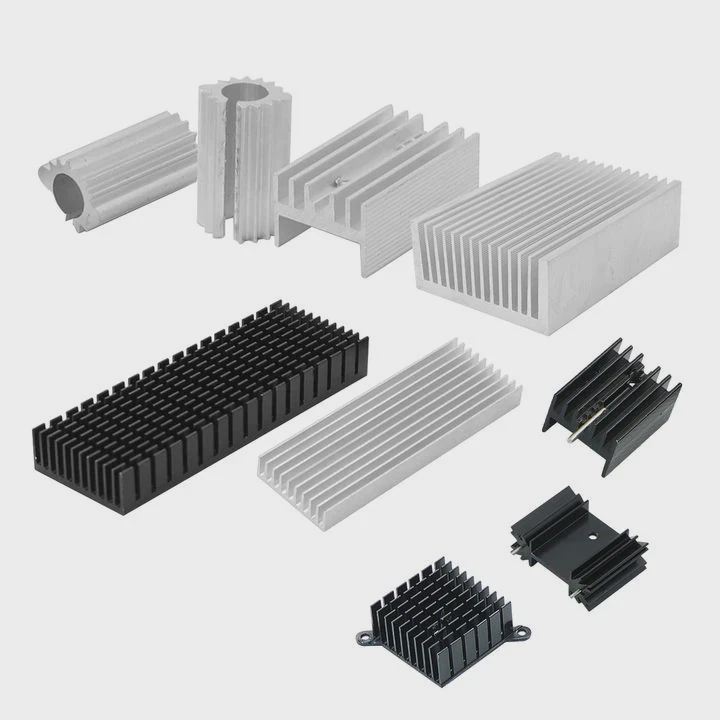
Extrusion is not just a shaping process. It directly affects airflow behavior, heat spreading, and thermal stability.
Fin density affects heat transfer
Extrusion allows manufacturers to create customized fin structures for different cooling conditions.
Higher fin density increases surface area.
This can improve cooling in forced-air systems.
Still, balance is important.
Fin density comparison
| Fin Density | Thermal Effect |
|---|---|
| Low density | Better natural airflow |
| Medium density | Balanced cooling |
| High density | Higher forced-air performance |
Extrusion precision helps maintain accurate spacing for predictable airflow.
Larger surface area improves cooling
Extrusion supports long continuous fins across large surfaces.
This creates:
- More contact with cooling air
- Better heat dissipation
- Improved thermal spreading
Large surface area becomes especially useful in passive cooling systems.
Uniform geometry improves airflow stability
Airflow behaves more efficiently inside consistent fin channels.
Poor extrusion quality may create:
- Uneven spacing
- Bent fins
- Air turbulence
These reduce cooling efficiency.
Precise extrusion improves airflow uniformity and thermal predictability.
Material grain structure also matters
Extrusion changes internal metal grain alignment.
Properly controlled extrusion may improve:
- Mechanical strength
- Structural consistency
- Thermal transfer stability
Still, poor process control may create residual stress or internal defects.
Thermal contact improves with profile stability
Warped heat sinks create weak contact with electronic components.
This increases interface thermal resistance.
Good extrusion control helps maintain:
| Thermal Stability Factor | Benefit |
|---|---|
| Flat base surfaces | Better contact |
| Straight profiles | Stable assembly |
| Consistent dimensions | Reliable pressure mounting |
| Reduced stress | Long-term stability |
These factors directly affect actual cooling performance.
Extrusion supports lightweight cooling systems
Lightweight thermal systems become important in:
- Aerospace
- Rail transit
- EV systems
- Portable electronics
Extrusion allows efficient heat sink structures without excessive weight increase.
Complex airflow designs become possible
Modern extrusion technology supports advanced thermal structures such as:
- Curved fins
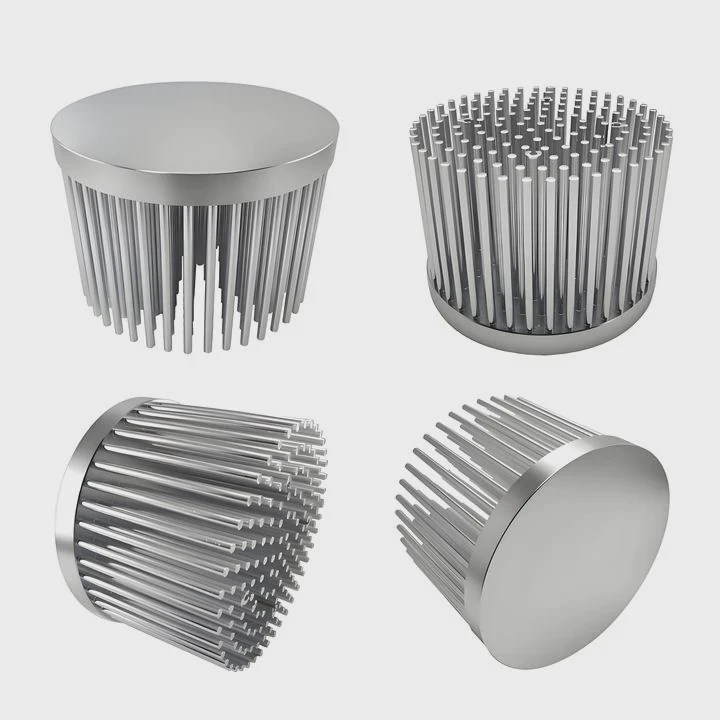
- Pin-fin hybrid profiles
- Hollow channels
- Multi-layer fin structures
These designs improve cooling efficiency while maintaining scalable production.
Thermal performance depends on total system design
Even excellent extrusion cannot solve every thermal problem.
Overall performance still depends on:
- Material choice
- Airflow conditions
- Mounting quality
- Coating systems
- Thermal interface materials
Still, high-quality extrusion creates a strong foundation for reliable thermal management.
Conclusion
The extrusion process plays a major role in heat sink quality and thermal performance. Fin geometry, surface finish, airflow behavior, and structural stability all depend heavily on extrusion control. A well-managed extrusion process helps create reliable, efficient, and durable thermal solutions for demanding industrial applications.