How many electrons does aluminum have?
- Yongxing
- 28 Mar ,2026
Many people feel confused when they first learn atomic structure. Numbers like electrons, protons, and configurations seem abstract and hard to connect with real materials like aluminum.
Aluminum has 13 electrons. This number equals its atomic number, which defines the element and determines its chemical behavior, conductivity, and role in thermal applications.
Understanding electron count is not just theory. It directly links to how aluminum works in heat sinks, electronics, and engineering systems. Now let’s break it down step by step.
What is the atomic number of aluminum?
Many beginners struggle to connect atomic numbers with real-world materials. The concept feels distant, yet it is the key to understanding how materials behave.
The atomic number of aluminum is 13. It represents the number of protons in the nucleus and also equals the number of electrons in a neutral aluminum atom.
When discussing aluminum in real engineering work, the atomic number is not just a number on the periodic table. It defines the identity of the element. Every element has a unique atomic number. Aluminum’s value of 13 means it has 13 protons in its nucleus. Because atoms are electrically neutral in most cases, this also means aluminum has 13 electrons.
Why atomic number matters in real applications
The atomic number controls how electrons are arranged around the nucleus. This directly affects bonding, conductivity, and thermal performance.
Key relationships
| Property | Value for Aluminum |
|---|---|
| Atomic Number | 13 |
| Protons | 13 |
| Electrons | 13 |
| Element Identity | Aluminum |
Connection to thermal performance
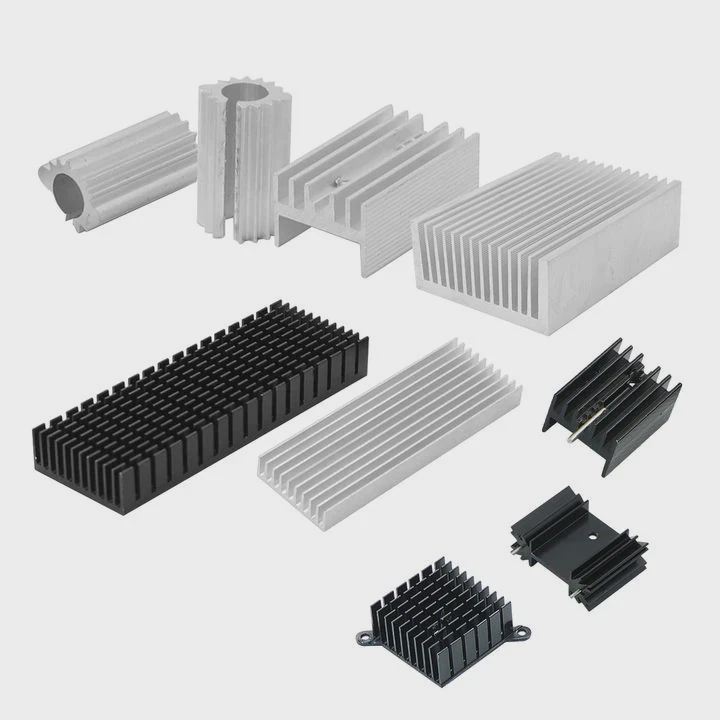
In heat sink design, aluminum is widely used because of its balance between weight, cost, and thermal conductivity. This behavior starts at the atomic level. The number of electrons and how they move determine how heat and electricity travel through the material.
Simple explanation
Think of the atomic number as an ID card. If the number changes, the material is no longer aluminum. It becomes a completely different element. This is why the atomic number is the foundation of all material science.
Practical insight
When working with clients in industries like rail transport or new energy systems, understanding atomic basics helps explain why aluminum performs differently from copper or steel. Aluminum’s atomic number leads to a structure that supports lightweight and efficient heat transfer.
How are electrons arranged in aluminum?
Many people know aluminum has 13 electrons, but they do not understand how these electrons are arranged. This is where confusion usually starts.
Aluminum’s electrons are arranged in shells as 2, 8, and 3. Its electron configuration is 1s² 2s² 2p⁶ 3s² 3p¹.
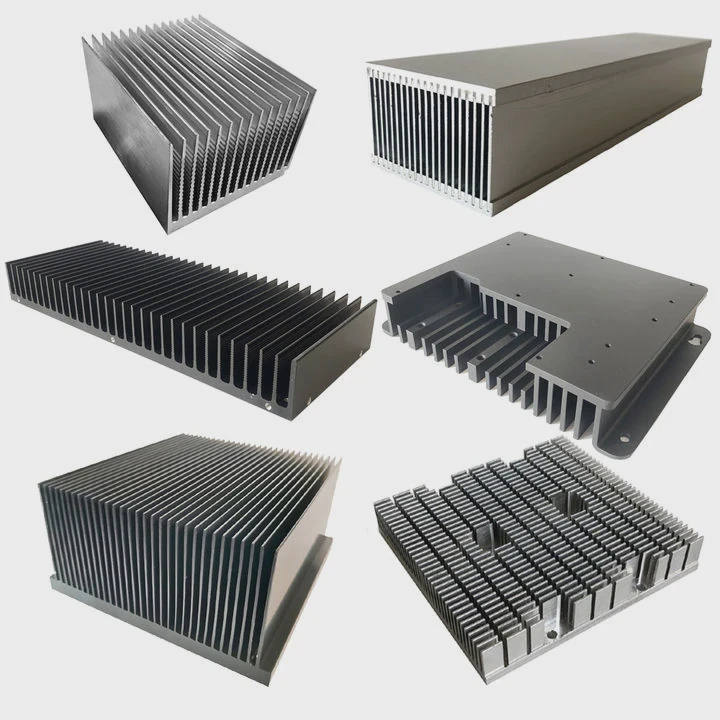
The arrangement of electrons follows energy levels. Electrons fill lower energy shells first before moving to higher ones. This rule helps us understand aluminum’s chemical and physical behavior.
Electron shell structure
| Shell Level | Number of Electrons |
|---|---|
| First (K) | 2 |
| Second (L) | 8 |
| Third (M) | 3 |
Why the outer electrons matter
The outermost electrons are called valence electrons. Aluminum has 3 valence electrons. These electrons are responsible for bonding and reactions.
Key point:
- Aluminum tends to lose 3 electrons
- This forms a +3 charge (Al³⁺)
- This behavior is critical in many applications
Real-world connection to heat sinks
In thermal management, electron movement plays a role in heat conduction. Materials with free-moving electrons can transfer energy more efficiently.
Deeper understanding of electron configuration
Subshell breakdown
| Subshell | Electrons |
|---|---|
| 1s | 2 |
| 2s | 2 |
| 2p | 6 |
| 3s | 2 |
| 3p | 1 |
This structure shows that the third shell is not full. This makes aluminum reactive compared to noble gases.
Engineering perspective
In real production environments, this electron structure explains why aluminum:
- Is easy to machine
- Forms oxide layers quickly
- Bonds well in processes like brazing and welding
Simple analogy
Think of electron shells like seats in a bus. The first two rows are full. The last row has empty seats. This makes aluminum more willing to interact with other atoms.
How many protons and neutrons in aluminum?
Many people mix up protons, neutrons, and electrons. This confusion makes it harder to understand atomic structure clearly.
Aluminum has 13 protons and typically 14 neutrons, giving it a mass number of 27.
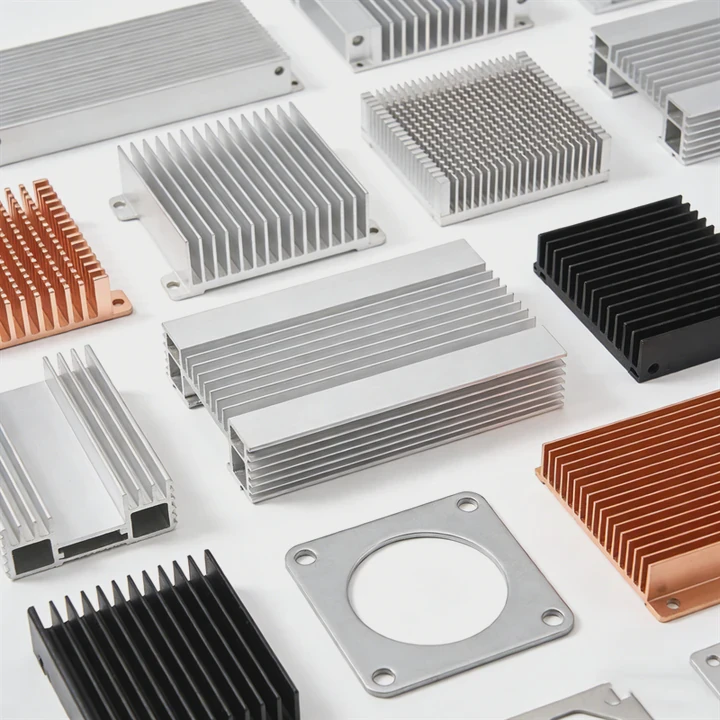
The number of protons defines the element. The number of neutrons can vary slightly, but aluminum’s most common isotope is Aluminum-27.
Basic atomic composition
| Particle | Number |
|---|---|
| Protons | 13 |
| Neutrons | 14 |
| Electrons | 13 |
What neutrons do
Neutrons do not carry charge, but they add mass and stability to the nucleus. Without enough neutrons, atoms become unstable.
Why Aluminum-27 is stable
Aluminum mainly exists as a single stable isotope. This makes it very reliable for industrial use.
Importance in manufacturing
In industries like aerospace or rail systems, stability is critical. Materials must perform consistently under stress, temperature changes, and long-term use.
Atomic mass calculation
Mass number = Protons + Neutrons
So for aluminum:
13 + 14 = 27
Real-world meaning
This mass affects density, weight, and mechanical behavior. Aluminum is lightweight because of its atomic structure.
Deeper insight into isotopes
Unlike some elements, aluminum does not have many stable isotopes. This simplifies processing and ensures consistent properties.
Practical example
When designing a heat sink for high-power electronics, weight matters. Aluminum’s atomic structure allows engineers to reduce system weight without sacrificing performance.
Simple analogy
Think of protons and neutrons as the core of a building. Electrons are like workers moving around. The core provides stability, while the workers handle activity.
Why is aluminum electron configuration important?
Many people learn electron configuration but fail to see its practical value. This leads to a gap between theory and real engineering work.
Aluminum’s electron configuration explains its conductivity, corrosion resistance, bonding ability, and suitability for thermal management systems.
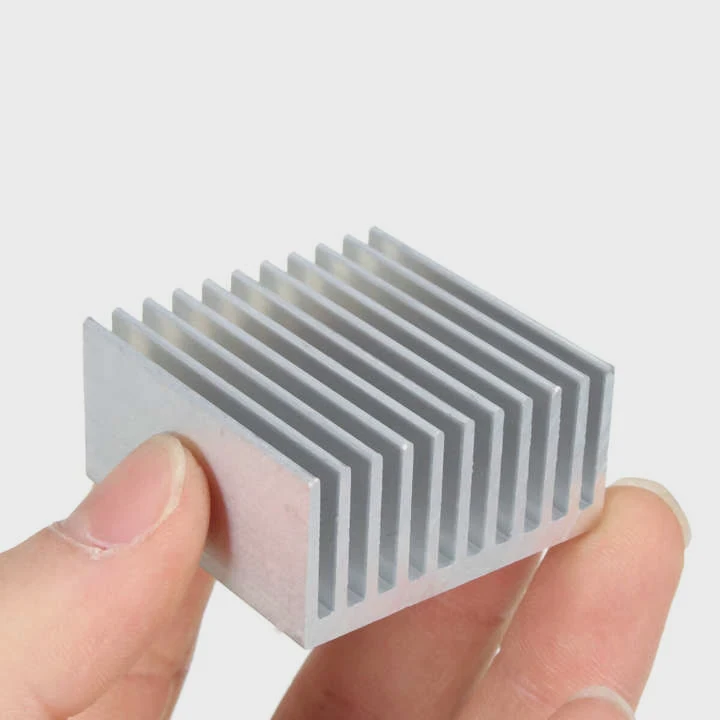
Understanding this concept helps explain why aluminum is widely used in heat sinks, cooling plates, and structural components.
Key impacts of electron configuration
1. Electrical conductivity
Aluminum allows electrons to move relatively freely. This makes it a good conductor, though not as strong as copper.
2. Thermal conductivity
Heat transfer in metals depends on electron movement. Aluminum performs well because of its electron structure.
3. Corrosion resistance
Aluminum forms a natural oxide layer. This happens because of its tendency to lose electrons and react with oxygen.
4. Lightweight structure
The atomic arrangement contributes to low density, which is critical in many industries.
Comparison with other metals
| Property | Aluminum | Copper |
|---|---|---|
| Valence Electrons | 3 | 1 |
| Conductivity | Medium | High |
| Weight | Light | Heavy |
| Cost | Lower | Higher |
Engineering applications
In real projects, this knowledge supports decisions such as:
- Choosing between aluminum and copper
- Designing cooling systems
- Optimizing weight and performance
Why engineers care
Electron configuration is not just theory. It explains:
- Why aluminum extrusions are efficient
- Why aluminum is easy to weld
- Why it works well in modular heat sink systems
Deeper perspective
Heat transfer mechanism
Heat moves through metals via:
- Free electrons
- Lattice vibrations
Aluminum’s electron structure supports both processes efficiently.
Real case insight
In one project involving high-power energy equipment, selecting aluminum instead of copper reduced weight by over 40%. The electron configuration still allowed strong thermal performance.
Simple takeaway
Electron configuration is like the operating system of a material. It controls how the material behaves in every condition.
Conclusion
Aluminum has 13 electrons, arranged in a way that drives its performance. This structure explains its conductivity, stability, and wide use in thermal management and engineering systems.