How to Choose a Heat Sink?
- Yongxing
- 22 Apr ,2026
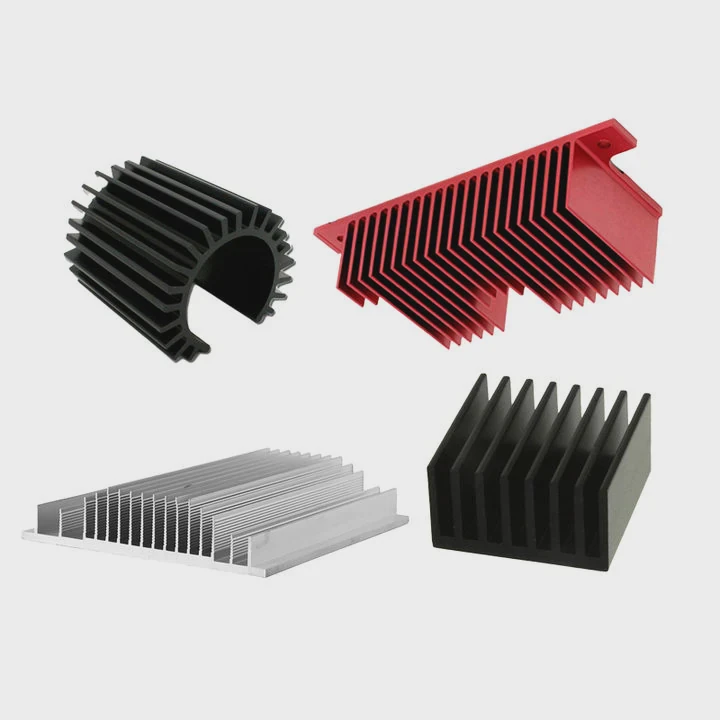
Heat problems often hide at the start. Many teams focus on power, layout, and cost first, then thermal failure appears later and slows the whole project.
A good heat sink choice depends on heat load, space, airflow, mounting, material, and real operating conditions. The best option is not the biggest or most costly one. It is the one that removes heat well, fits the product, and stays stable in mass production.
Many buyers ask the same question because the wrong thermal part can damage performance, shorten service life, and raise warranty risk. A smart selection process makes design work easier, lowers rework, and helps the final product stay safe and reliable.
What Factors Determine Heat Sink Selection?
Heat sink selection starts with one simple truth: a heat sink is not chosen by shape alone. It is chosen by the job it must do. In many projects, the first mistake is looking at catalog pictures before checking the real heat source. That step often leads to a weak match. A heat sink that looks strong may still fail if the heat load, airflow, or contact area is wrong. In my work, the better results always come from reading the thermal job first and the drawing second.
The main factors that determine heat sink selection are heat power, allowed temperature rise, airflow condition, space limit, material choice, mounting method, and long-term reliability needs. These factors work together, so one good value cannot fix a weak value somewhere else.
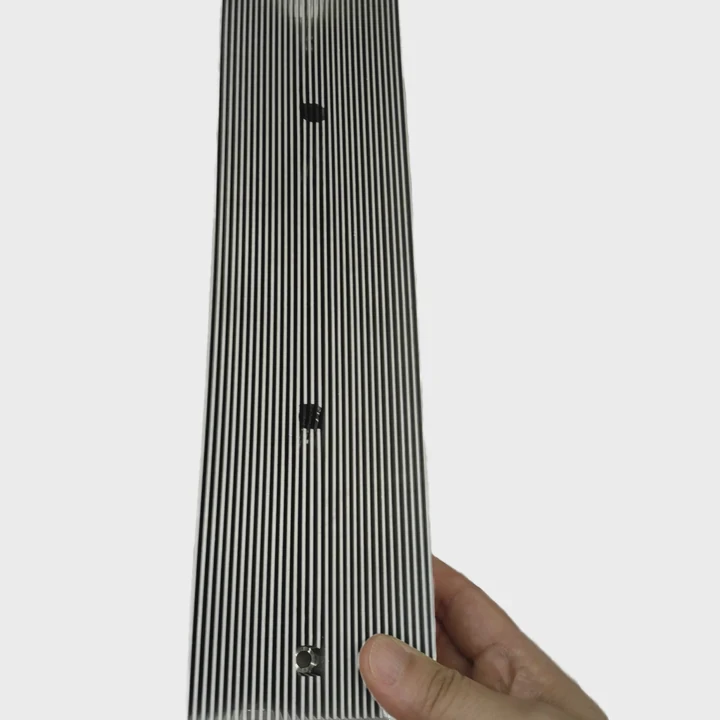
A heat sink has one clear purpose. It must move heat away from the source fast enough to keep the device inside its safe temperature range. That sounds easy, but the real work is in the details.
Start with the thermal target
The first number to check is heat dissipation. A designer needs to know how many watts the device will create in real use, not only in ideal lab conditions. Peak load matters. Continuous load matters more. Ambient temperature also matters because the same heat sink performs very differently at 25°C and 50°C.
A simple thermal target often includes these questions:
- How much heat must be removed?
- What is the highest allowed junction or case temperature?
- What is the highest ambient temperature?
- Is airflow natural or forced?
Without these answers, heat sink selection becomes guesswork.
Look at the full system, not one part
A heat sink does not work alone. It works with the fan, enclosure, interface material, fastener, and nearby components. A strong sink inside a closed box with poor airflow may still trap heat. A smaller sink with better air path may perform better. This is why system thinking matters so much.
In many industrial projects, I see teams ask for “more fins” first. But more fins are not always better. If fins are too dense, air cannot move through them well. Then thermal performance may drop instead of improve.
Key selection factors at a glance
| Factor | Why it matters | What to check |
|---|---|---|
| Heat load | Sets the cooling duty | Steady watts, peak watts |
| Ambient temperature | Changes cooling margin | Worst-case working temperature |
| Airflow | Strongly affects dissipation | Natural convection or fan flow |
| Space limit | Controls shape and volume | Height, length, width, keep-out area |
| Material | Affects weight and conductivity | Aluminum, copper, hybrid design |
| Mounting method | Impacts contact and reliability | Screws, clips, solder, bonded interface |
| Surface treatment | Can affect corrosion and radiation | Anodizing, coating, plating |
| Reliability need | Decides process level | Shock, vibration, humidity, life test |
Material and process also shape the answer
Aluminum is common because it gives a good balance of cost, weight, and performance. Copper offers better conductivity, but it is heavier and more expensive. In some cases, a mixed design works best, such as a copper base with aluminum fins. Process choice also matters. Extrusion, skiving, die casting, bonded fins, vacuum brazing, friction stir welding, and liquid cooling plates all fit different thermal levels.
So the real selection question is not “Which heat sink is best?” The better question is “Which heat sink is best for this exact thermal path, this exact space, and this exact product life target?” That question leads to better answers and fewer failures.
Why Does Size Matter for Heat Sinks?
Many people think a larger heat sink is always better. That idea sounds reasonable because a larger body usually means more surface area. More surface area often means more heat can move into the air. But size matters in a more practical and complex way. In actual products, size affects airflow, weight, mounting stress, assembly space, shipping cost, and even product appearance. So heat sink size is not only a thermal issue. It is also a system issue.
Size matters because it changes surface area, airflow path, thermal mass, weight, and fit inside the product. A heat sink must be large enough to remove heat, but not so large that it blocks airflow, adds stress, or creates assembly problems.
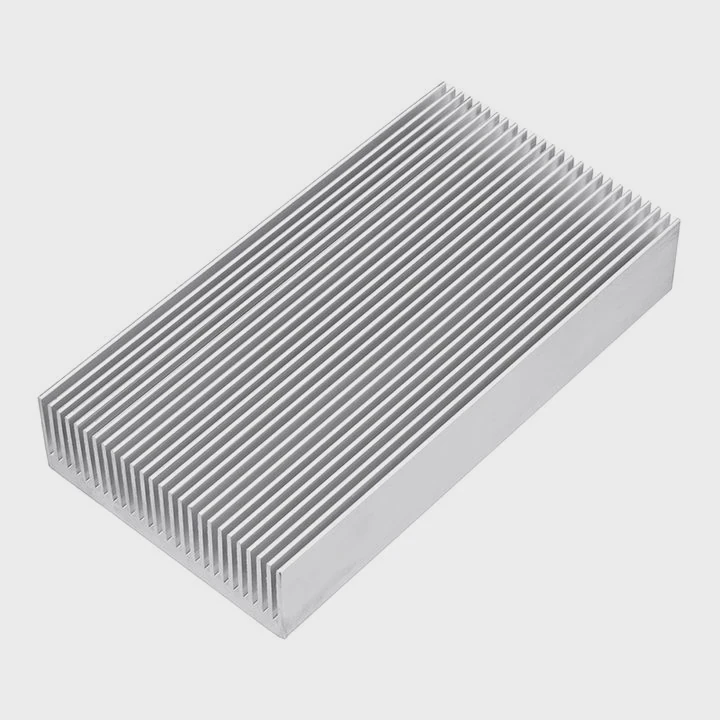
A larger heat sink usually provides more cooling area. That part is true. Yet that is only one side of the story. The other side is whether the air can actually use that area. If the sink grows in the wrong direction, or if fins become too tall or too close, performance gains may be smaller than expected.
Surface area helps, but usable area matters more
Heat leaves the device, enters the heat sink, and then moves into the air. This last step depends on surface area and air contact. If the fins are packed too tightly, airflow slows down. In natural convection, this problem becomes even more serious. Warm air needs room to rise. If the fin channels are too narrow, hot air stays trapped.
This is why fin spacing should match the airflow method. A design for fan cooling may not work well in natural convection. Bigger is not always smarter.
Size affects structure and installation
A larger sink also means more weight. Extra weight can stress the PCB, screws, clips, or solder joints, especially in vibration environments. For transport, rail, power electronics, and outdoor equipment, that stress is not a small issue. It can change long-term reliability.
Height is another major limit. Many devices have strict enclosure space. A sink that performs well in open air may fail to fit under a cover. In these cases, design teams often need to change from a tall fin structure to a wider base, a vapor chamber spreader, or a liquid cooling solution.
Bigger and better are not the same
Here is a simple view of how size changes the result:
Common size trade-offs
| Size change | Possible benefit | Possible problem |
|---|---|---|
| More fin height | More area | More airflow resistance |
| More fin count | More area | Less air gap |
| Thicker base | Better spreading | More weight and cost |
| Larger footprint | Better heat spreading | More board space used |
| More mass | Better short-term heat buffer | Slower response, more load on mounting |
Choose size from the real limit
A better way to size a heat sink is to start with four real limits:
1. Thermal limit
The sink must keep the device inside the safe temperature range under worst-case load.
2. Mechanical limit
The sink must not damage the board, enclosure, or mounting points.
3. Space limit
The sink must fit the real product, not only the CAD model without cables and nearby parts.
4. Manufacturing limit
The sink must be practical to make in stable volume with repeatable quality.
In several projects, the final answer was not the physically largest heat sink. The best answer was the one with the best balance: enough area, correct fin spacing, safe weight, and clean airflow. Size matters because it changes performance, but correct size matters more than maximum size.
Where Should Compatibility Be Checked?
Compatibility is one of the most ignored parts of heat sink selection. Many teams check thermal resistance and basic dimensions, then move ahead too fast. Later, they find that the heat sink hits a connector, misses the mounting hole pattern, blocks airflow, or fails in vibration tests. These problems often appear late, and late changes cost more. That is why compatibility should be checked at every important level, not only at the component level.
Compatibility should be checked at the heat source, interface, PCB, enclosure, airflow path, mounting method, and production process level. A heat sink is compatible only when it fits mechanically, works thermally, and can be assembled and repeated in production.
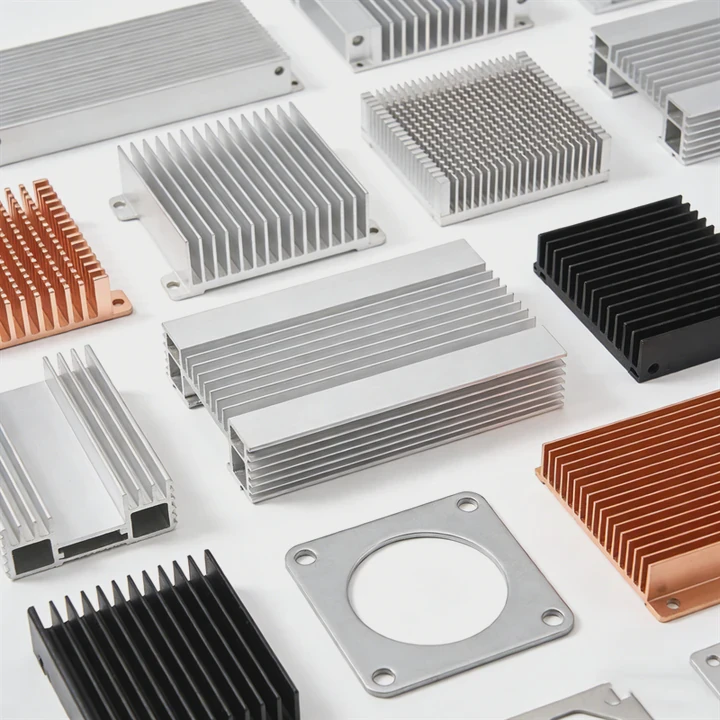
A heat sink may look correct on a drawing and still fail in real use. True compatibility has several layers, and each one matters.
Check the heat source first
The first check is the contact area between the heat source and the heat sink. The base must match the package size and heat spread pattern. If the contact area is too small, heat may not spread well. If the flatness is poor, thermal interface material must work harder, and resistance rises.
The mounting pressure also matters. Too little pressure creates weak contact. Too much pressure may damage chips, modules, or boards.
Check the board and nearby components
The second check is on the PCB or module layout. This includes hole location, keep-out area, connector height, capacitor position, cable routing, and service access. A sink that blocks a test point or power plug can create a maintenance problem later.
This stage should also check:
Mechanical compatibility points
- Hole pattern and tolerance
- Flatness of mounting surface
- Component clearance
- Safe distance to coils, cables, and shields
- Weight load on the board
- Shock and vibration limits
Check the enclosure and airflow path
The third check is inside the full product enclosure. This is where many good-looking designs fail. Once the cover is closed, airflow changes. Hot air may recirculate. Fan position may favor one side of the sink and leave the other side weak. Dust filters may lower airflow over time. So enclosure compatibility should be checked with actual air movement, not only with open-air assumptions.
A practical review should ask:
1. Does the sink fit the real installation direction?
Vertical and horizontal mounting can change natural convection.
2. Does it block or disturb airflow?
Large structures can create dead zones.
3. Is there enough room for assembly tools?
A screw that cannot be reached is a real production problem.
4. Can the same design survive in mass production?
A design that works only with careful manual alignment may not scale well.
Compatibility is also about production
Many buyers think compatibility ends with dimensions. In fact, it also includes process compatibility. The heat sink must match the supplier’s process capability, tolerance control, surface finish, and inspection method. If one design needs very tight flatness, but the chosen process cannot hold it well, then the sink is not truly compatible with the production plan.
This is why I treat compatibility as a full-chain check. A heat sink should fit the chip, the board, the enclosure, the airflow path, the assembly line, and the service life target. When all of these match, the risk drops sharply, and the product moves forward with much less friction.
Which Specifications Are Most Important?
Heat sink datasheets often include many numbers. Some of them are useful. Some of them look impressive but mean little without context. Buyers and engineers can lose time by focusing on easy numbers instead of decision numbers. The most important specifications are the ones that directly affect thermal safety, fit, and reliability in the real product.
The most important heat sink specifications are thermal resistance, material, dimensions, base flatness, fin structure, mounting method, weight, and operating environment limits. These values matter most because they decide cooling performance, fit, and long-term stability.
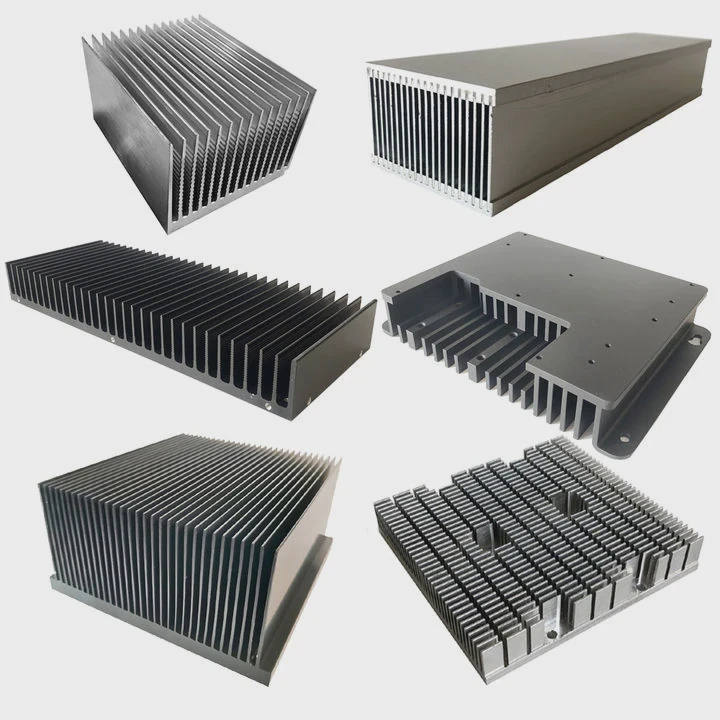
A good specification review starts with thermal performance, but it should not end there. A heat sink that shows good thermal resistance in one test setup may behave very differently in another setup. That is why each number must be tied to its test condition.
Thermal resistance comes first
Thermal resistance is often the headline value. It tells us how hard it is for heat to move from the heat sink into the air. Lower values are usually better. But this number only helps when the test condition is clear. Was it measured in natural convection or forced air? What airflow speed was used? What orientation? What heat load?
Without those details, one thermal resistance number can be misleading.
Dimensions and flatness are critical
After thermal resistance, dimensions matter a lot. Length, width, and height decide whether the heat sink can be used at all. Base flatness is also very important because poor contact raises interface resistance. In high-power modules, even a small change in flatness can hurt performance.
Material and structure shape the result
Material affects conductivity, weight, and cost. Aluminum works well for many uses. Copper helps when spreading is harder or heat density is higher. Fin type also matters. Straight fins, pin fins, skived fins, bonded fins, and brazed structures all behave differently under different airflow conditions.
Most important specifications to review
| Specification | Why it is important | What should be confirmed |
|---|---|---|
| Thermal resistance | Core cooling value | Test method and airflow condition |
| Dimensions | Fit and assembly | Real product space and tolerance |
| Material | Conductivity, weight, cost | Aluminum, copper, hybrid |
| Base flatness | Contact quality | Mating surface requirement |
| Fin geometry | Airflow and area | Fin height, thickness, spacing |
| Mounting method | Contact force and service life | Screw, clip, solder, adhesive |
| Weight | Mechanical safety | Board load and vibration |
| Surface treatment | Corrosion and finish | Anodized, plated, coated |
| Operating environment | Long-term reliability | Temperature, humidity, dust, shock |
Do not ignore environment and reliability
For industrial, rail, energy, medical, and outdoor systems, operating environment is one of the most important parts of the specification set. High humidity, salt fog, dust, vibration, thermal cycling, and long running hours can all change the right choice. A heat sink should not only cool well on day one. It should keep cooling well after long service.
A practical way to rank specifications
When I review a heat sink for a custom project, I usually place the specs in this order:
1. Thermal safety
Can it keep the device within the allowed temperature?
2. Mechanical fit
Can it fit the board, module, and enclosure without conflict?
3. Contact quality
Can it maintain low resistance at the interface?
4. Process stability
Can the design be made well in volume?
5. Reliability
Can it survive the real working environment over time?
That order keeps the review grounded in real use. A beautiful drawing, a low price, or a polished surface does not matter much if the sink fails the true job. The most important specifications are the ones that protect performance, assembly, and product life at the same time.
Conclusion
Choosing a heat sink is really about matching thermal need, size, compatibility, and core specifications. When these parts are checked together, the final design becomes easier to build, easier to trust, and much safer in long-term use.