Is Copper Better Than Aluminum Heat Sink?
- Yongxing
- 04 May ,2026
Heat builds up fast in modern devices. Many systems fail because of poor cooling. This creates risk, cost, and downtime for engineers and buyers.
Copper is better in thermal conductivity, but aluminum often wins in cost, weight, and manufacturability. The best choice depends on performance needs, design limits, and production scale.
Choosing between copper and aluminum is not a simple yes or no. It is a balance. In this article, the key differences are broken down in a clear and practical way.
How does copper compare to aluminum in conductivity?
Heat transfer is the core problem in thermal design. If heat cannot move fast, performance drops. Many engineers struggle to choose the right material.
Copper has higher thermal conductivity than aluminum, typically around 400 W/m·K compared to 200–230 W/m·K for aluminum. This means copper transfers heat faster and more efficiently.
Copper clearly leads in pure thermal performance. However, conductivity alone does not decide everything.
Understanding Thermal Conductivity
Thermal conductivity shows how fast heat moves through a material. The higher the number, the better the heat transfer.
| Material | Thermal Conductivity (W/m·K) | Relative Performance |
|---|---|---|
| Copper | ~400 | Excellent |
| Aluminum | ~200–230 | Good |
Copper moves heat about 1.7 to 2 times faster than aluminum. This is a big advantage in high heat flux systems.
Heat Spreading vs Heat Dissipation
Copper is strong in heat spreading. It quickly pulls heat away from a small hot spot. This is critical in CPUs, power modules, and laser systems.
Aluminum, on the other hand, is better for heat dissipation in air. It forms fins easily. It also works well with airflow.
Real Design Trade-Off
In many real projects, the design uses both materials. A copper base spreads heat. Aluminum fins release heat to air.
This hybrid design gives a balance between performance and cost.
Practical Insight
In one project, a high-power inverter had a hotspot issue. Aluminum alone could not spread heat fast enough. After adding a copper base plate, temperature dropped by 12°C. That solved the problem without a full redesign.
So, copper is better in conductivity. But that is only one part of the full picture.
Why is copper less commonly used despite advantages?
Many engineers ask this question. If copper is better, why not always use it? The answer is simple: real-world constraints.
Copper is less commonly used because it is heavier, more expensive, harder to machine, and less suitable for large-scale extrusion compared to aluminum.
Copper has limits that affect cost and production.
Cost Factor
Copper is much more expensive than aluminum. The price can be 3 to 5 times higher depending on the market.
For large-volume production, this cost difference becomes critical.
Weight Consideration
Copper is about 3.3 times heavier than aluminum.
| Property | Copper | Aluminum |
|---|---|---|
| Density | 8.96 g/cm³ | 2.70 g/cm³ |
| Weight Impact | Heavy | Lightweight |
In applications like EVs or aerospace, weight matters a lot. Extra weight reduces efficiency.
Manufacturing Challenges
Aluminum is easy to extrude. This allows complex fin designs at low cost.
Copper is harder to extrude. Most copper heat sinks are made by:
- CNC machining
- Skiving
- Bonding
These processes cost more and take longer.
Surface Treatment and Corrosion
Copper oxidizes easily. It forms a dark layer over time. This does not stop heat transfer, but it affects appearance and sometimes performance.
Aluminum forms a protective oxide layer. It is more stable in air.
Supply Chain Reality
Aluminum is widely available. It supports mass production.
Copper supply is more limited and price fluctuates more.
Practical Insight
In one project for a telecom system, copper was first selected. But after cost analysis, the design switched to aluminum with a vapor chamber. The final performance was similar, but cost dropped by 35%.
So, copper is better in theory. But in real business, aluminum is often the smarter choice.
Where is copper preferred over aluminum?
Some applications cannot compromise on thermal performance. In these cases, copper becomes necessary.
Copper is preferred in high heat flux, limited space, and critical thermal applications where fast heat spreading is required.
Copper is used when performance matters more than cost or weight.
High Power Density Systems
Devices with small size and high heat need copper. Examples include:
- CPUs and GPUs
- Power electronics
- Laser equipment
These systems generate heat in small areas. Copper spreads this heat quickly.
Vapor Chambers and Heat Pipes
Copper is widely used in heat pipes and vapor chambers.
This is because:
- It has good thermal conductivity
- It is compatible with working fluids
- It is easy to seal and weld
Medical and Precision Equipment
Medical devices need stable temperature control. Copper provides consistent heat transfer.
Precision instruments also benefit from copper’s reliability.
Hybrid Cooling Solutions
Many designs combine copper and aluminum.
Common structure:
- Copper base → fast heat spreading
- Aluminum fins → efficient air cooling
This reduces cost while keeping performance high.
Space-Constrained Designs
When space is limited, there is no room for large heat sinks. Copper helps move heat quickly to available cooling areas.
Practical Insight
A compact 5G module once faced overheating. Space could not increase. Switching to a copper heat spreader reduced peak temperature by 10°C without changing size.
This shows where copper becomes the only option.
Which applications benefit from copper heat sinks?
Not every system needs copper. But some industries rely on it.
Applications that benefit from copper heat sinks include high-power electronics, aerospace systems, medical devices, and advanced computing where thermal performance is critical.
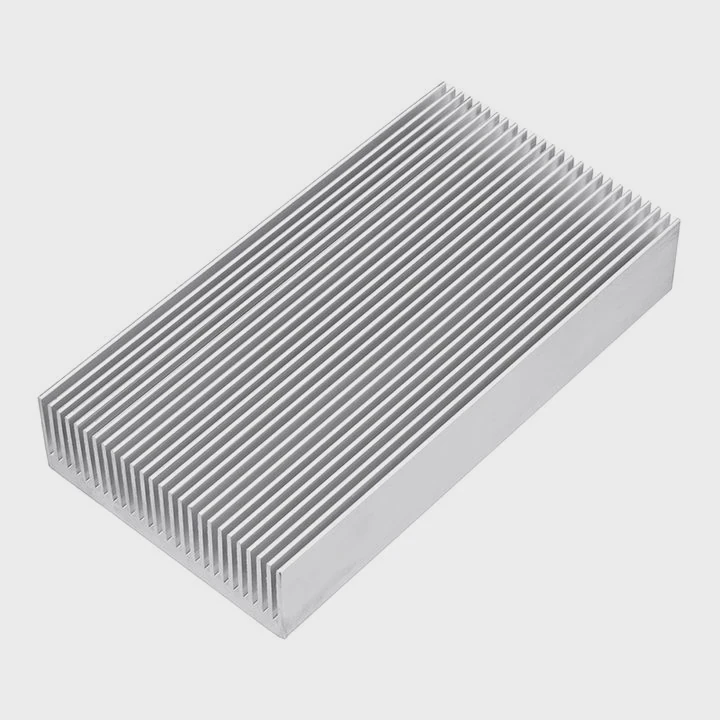
These applications demand reliability and performance.
Key Application Areas
1. High-Performance Computing
Servers, GPUs, and AI systems produce intense heat.
Copper helps:
- Reduce thermal resistance
- Improve system stability
- Extend component life
2. Power Electronics
IGBT modules, inverters, and converters generate high heat.
Copper improves:
- Heat spreading
- Efficiency
- Reliability
3. Aerospace and Defense
These systems work in extreme conditions.
Copper provides:
- Stable thermal control
- High reliability
- Compact design support
4. Medical Equipment
Devices like imaging systems need precise temperature control.
Copper ensures:
- Stable operation
- Low thermal variation
- High safety
5. Laser and Optical Systems
Lasers generate concentrated heat.
Copper helps:
- Quickly remove heat
- Protect sensitive components
- Maintain beam quality
When Aluminum Still Wins
Even in these industries, aluminum is still used when:
- Cost is limited
- Weight must be low
- Heat load is moderate
Design Strategy
Many engineers now use a layered approach:
- Copper core
- Aluminum structure
- Advanced interface materials
This creates a balance between performance and cost.
Practical Insight
In a recent energy storage project, a full copper design was too costly. A hybrid design was used instead. Copper was placed only in critical areas. The result met thermal targets and reduced cost by 28%.
This shows that smart design matters more than material alone.
Conclusion
Copper is stronger in thermal performance, but aluminum is better for cost, weight, and production. The best solution often combines both materials to balance efficiency and practicality.