Is Water a Good Heat Sink?
- Yongxing
- 04 May ,2026
Heat builds up fast in modern devices. Many systems fail early because heat is not managed well. This problem keeps getting worse as power density rises.
Yes, water is a very effective heat sink because it has high specific heat capacity and strong heat transfer ability, allowing it to absorb and carry away large amounts of heat efficiently.
This topic matters more now than ever. Devices run hotter. Systems get smaller. So understanding how water works in cooling helps engineers make better choices.
How does water absorb and transfer heat?
Heat damage often starts quietly. Components overheat slowly. Then performance drops or failure happens. This is where water shows its strength.
Water absorbs heat through its high specific heat capacity and transfers it efficiently through convection, making it far more effective than air in many cooling situations.
Water behaves in a very stable way when it absorbs heat. It takes a lot of energy to raise its temperature. This is the key reason why engineers use it.
What makes water special?
Water has three main thermal advantages:
- High specific heat capacity
- Good thermal conductivity
- Strong convection capability
This means water can both store heat and move heat effectively.
Heat absorption vs other materials
| Material | Specific Heat Capacity (J/kg·K) | Thermal Conductivity (W/m·K) |
|---|---|---|
| Water | ~4186 | ~0.6 |
| Aluminum | ~900 | ~205 |
| Copper | ~385 | ~400 |
| Air | ~1005 | ~0.024 |
From this table, it is clear that:
- Water stores more heat than metals before rising in temperature
- Metals conduct heat faster, but cannot store much
- Air performs poorly in both areas
How heat moves in water
Water transfers heat in three ways:
1. Conduction
Heat moves from a hot surface into water. This happens at the interface.
2. Convection
This is the most important part. Water flows and carries heat away.
- Hot water rises
- Cooler water replaces it
- Heat spreads through movement
3. Phase change (optional)
In some systems, water evaporates and absorbs large heat amounts.
This is seen in:
- Heat pipes
- Vapor chambers
- Boiling cooling systems
Why this matters
Water does not just absorb heat. It moves heat away from the source quickly. This reduces thermal buildup.
In real systems, this means:
- Lower peak temperatures
- Better stability
- Longer component life
This is why water is not just a heat sink. It is a heat transport medium.
Why is water used in cooling systems?
Many systems struggle with heat buildup. Air cooling reaches its limits quickly. Noise increases. Efficiency drops. This is where water becomes a better choice.
Water is used in cooling systems because it removes heat more efficiently than air, supports compact designs, and maintains stable temperatures under high thermal loads.
Water cooling is not new. It has been used for decades in many industries. Today, it is even more important due to higher power densities.
Key reasons engineers choose water
1. Higher cooling efficiency
Water transfers heat about 20–30 times better than air in real systems.
This allows:
- Smaller cooling structures
- Faster heat removal
- Lower operating temperatures
2. Better temperature control
Water systems keep temperatures stable.
Air cooling often shows:
- Temperature spikes
- Uneven cooling
Water reduces these issues because it spreads heat evenly.
3. Compact system design
With water cooling:
- Heat exchangers can be smaller
- Fans can be reduced or removed
- Systems become quieter
This is critical for:
- Data centers
- EV batteries
- Power electronics
4. Scalability
Water cooling can handle:
- Small devices
- Large industrial systems
It scales easily by adjusting:
- Flow rate
- Channel size
- Heat exchanger area
Air vs water cooling comparison
| Feature | Air Cooling | Water Cooling |
|---|---|---|
| Heat capacity | Low | High |
| Cooling efficiency | Moderate | High |
| Noise level | High (fans) | Low |
| System size | Larger | More compact |
| Cost | Lower | Higher initial |
Real-world insight
In many projects, air cooling works at first. But as power increases, limits appear. At that point, switching to water becomes necessary.
Water cooling is not just about performance. It is about reliability over time.
Where is water cooling applied instead of heat sinks?
Some systems generate extreme heat. Traditional heat sinks cannot keep up. Air cooling fails. This is where water cooling becomes essential.
Water cooling is applied in high-power and high-density systems such as data centers, EV batteries, power electronics, and industrial machinery where traditional heat sinks are insufficient.
Water replaces heat sinks when heat loads exceed certain limits. This usually happens when:
- Power density is high
- Space is limited
- Continuous operation is required
Main application areas
1. Data centers
Servers generate massive heat.
Air cooling issues:
- High energy consumption
- Hot spots
- Noise
Water cooling solves this by:
- Direct liquid cooling
- Cold plate systems
- Immersion cooling
2. Electric vehicles (EV)
Battery packs and power electronics produce heat.
Water cooling helps:
- Maintain battery performance
- Extend battery life
- Prevent thermal runaway
3. Industrial equipment
High-power machines run continuously.
Examples:
- Laser systems
- Welding machines
- Power converters
Water cooling ensures stable operation.
4. Renewable energy systems
Inverters and converters in solar and wind systems generate heat.
Water cooling improves:
- Efficiency
- Reliability
- Lifetime
Why heat sinks alone are not enough
Traditional heat sinks depend on:
- Surface area
- Airflow
Limits appear when:
- Airflow cannot increase further
- Space is restricted
- Heat flux is too high
Key limitation comparison
| Factor | Heat Sink (Air) | Water Cooling |
|---|---|---|
| Max heat flux | Limited | High |
| Space efficiency | Low | High |
| Cooling uniformity | Uneven | Uniform |
| Continuous load | Limited | Strong |
Practical observation
In many cases, systems start with heat sinks. As performance requirements grow, engineers shift to water cooling.
This is not a trend. It is a necessary evolution in thermal design.
Which systems combine water with heat sinks?
Some systems need both stability and performance. Using only water or only heat sinks is not enough. Combining both gives the best results.
Hybrid systems combine water cooling with heat sinks to maximize heat transfer efficiency, using heat sinks to spread heat and water to remove it quickly.
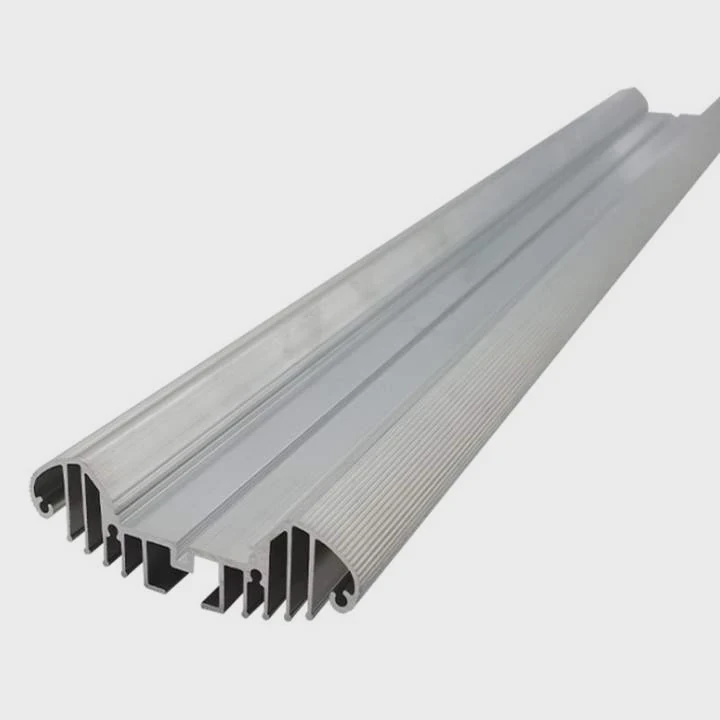
This approach is widely used in advanced thermal systems.
How hybrid cooling works
The system usually includes:
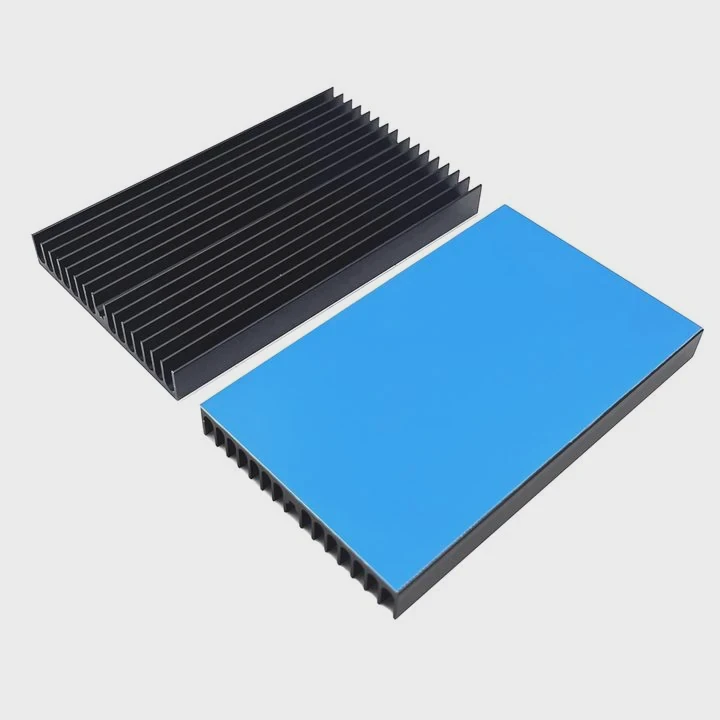
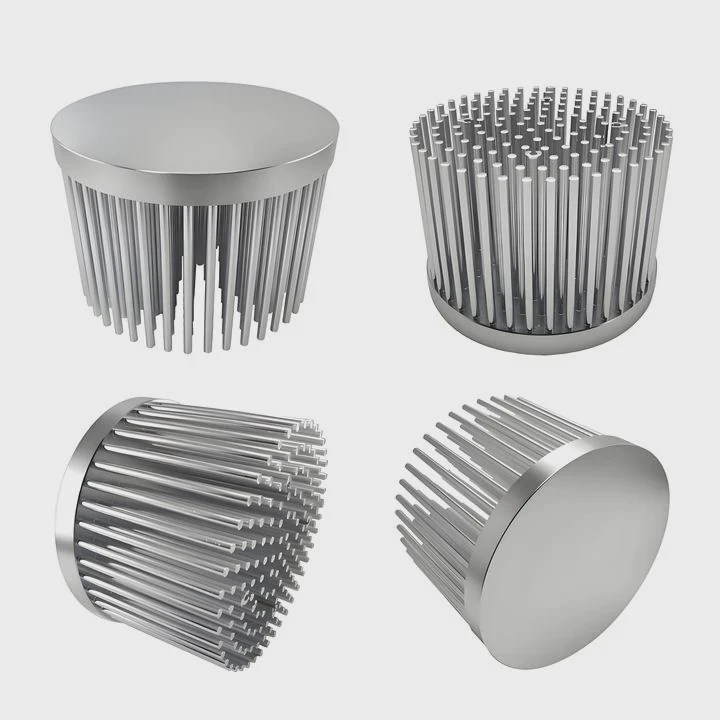
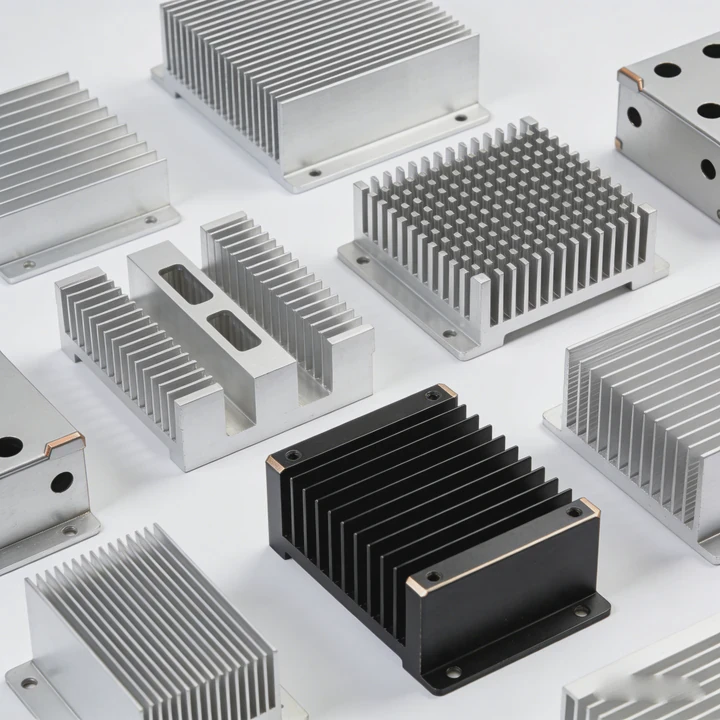
- Heat sink (metal structure)
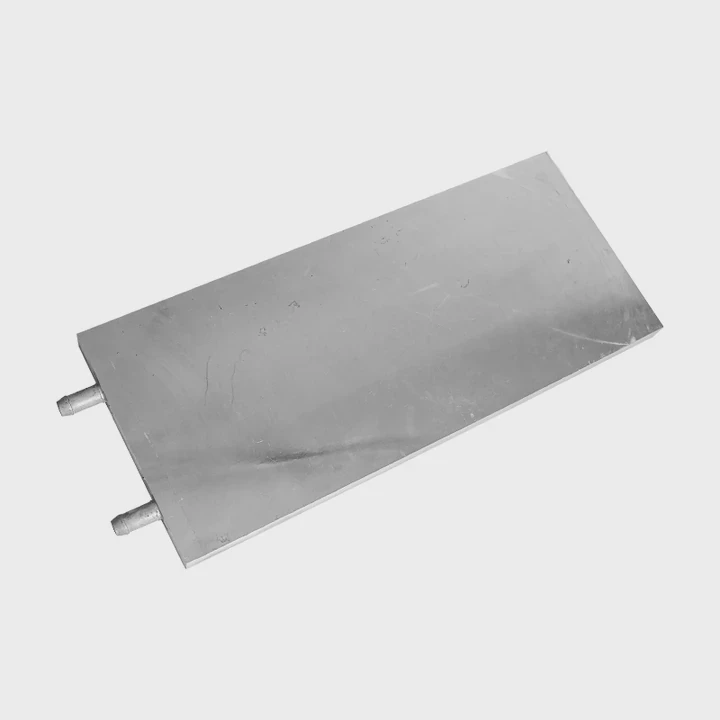
- Cold plate or water channel
- Pump and circulation loop
Heat flow path
- Heat source → heat sink base
- Heat spreads across fins or plate
- Water absorbs heat through channels
- Heat is carried away to radiator
Why combine both?
Each component solves a different problem:
- Heat sink: spreads heat locally
- Water: removes heat globally
Common hybrid systems
1. Cold plate + heat sink
Used in:
- Power modules
- IGBT systems
- EV inverters
2. Vapor chamber + liquid cooling
Used in:
- High-end electronics
- Telecom equipment
3. Liquid cooling plates with fins
Used in:
- Data servers
- Industrial drives
Design advantages
- Faster heat spreading
- Lower thermal resistance
- Better hotspot control
Typical structure comparison
| Design Type | Function | Advantage |
|---|---|---|
| Heat sink only | Passive cooling | Simple, low cost |
| Water only | Active cooling | High efficiency |
| Hybrid system | Combined | Best performance |
Engineering insight
In real design work, hybrid cooling often gives the best balance.
- It reduces thermal stress
- It improves system lifespan
- It allows higher power density
Many modern systems now use integrated thermal modules. These combine:
- Aluminum structures
- Liquid channels
- Advanced joining processes
This approach supports:
Custom design
High reliability
Mass production
Conclusion
Water is not just a good heat sink. It is a powerful heat transfer solution. When combined with smart design, it enables high-performance, reliable cooling across many industries.