What Does a Heat Sink Do?
- Yongxing
- 11 Mar ,2026
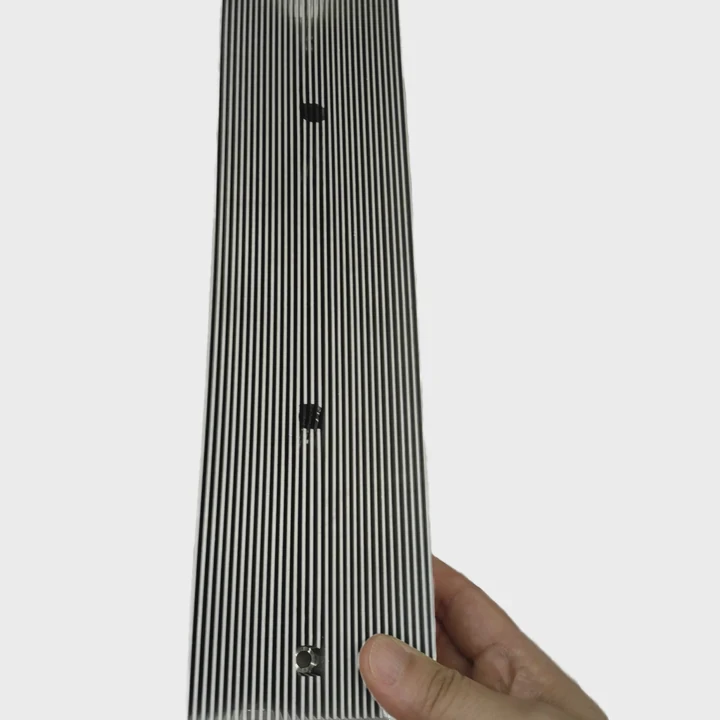
Electronic devices often fail because of heat. Many engineers focus on power or speed but forget temperature control. Heat quietly damages components and reduces system life.
A heat sink absorbs heat from electronic components and releases that heat into the surrounding air or cooling medium. It lowers device temperature by increasing surface area and improving heat transfer.
Heat sinks appear simple at first glance. A block of metal with fins does not look complex. Yet its role in modern electronics is critical. Understanding how heat sinks work helps engineers design safer and more reliable systems.
How does a heat sink control component temperature?
Electronic components produce heat during operation. Without control, temperature rises quickly and causes performance loss or permanent damage.
A heat sink controls component temperature by conducting heat away from the device and spreading it over a larger surface area where it can dissipate into the surrounding environment.
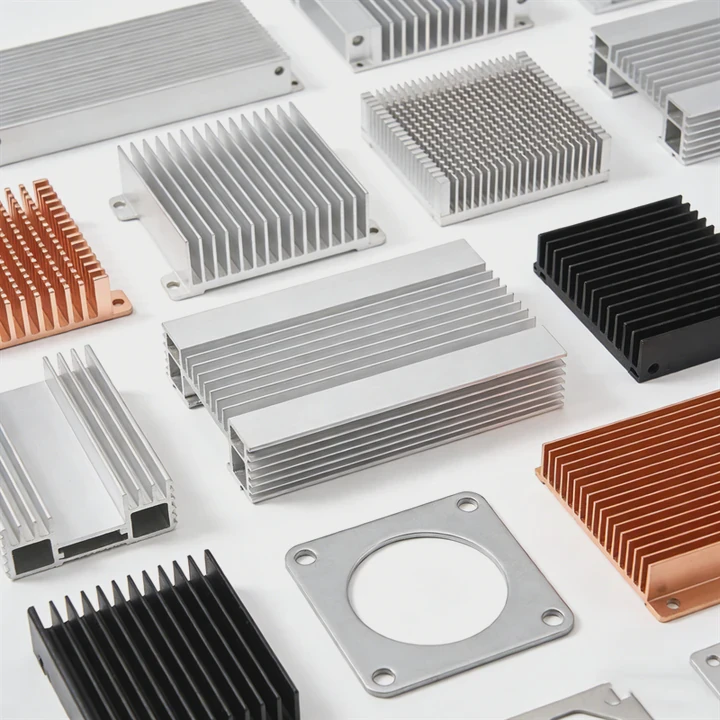
Heat management starts with heat conduction. When a semiconductor device such as a power transistor operates, electrical energy converts into heat. This heat concentrates in a very small region. Without a thermal path, temperature climbs rapidly.
A heat sink provides that path.
The Basic Heat Transfer Process
Three physical steps move heat away from a component:
| Step | Process | Description |
|---|---|---|
| 1 | Conduction | Heat moves from the chip into the heat sink base |
| 2 | Spreading | Heat spreads through the metal body of the heat sink |
| 3 | Convection | Heat transfers from the fins to air or liquid |
The process begins at the contact surface. Engineers often place a thermal interface material (TIM) between the component and the heat sink. This material fills microscopic air gaps. Air is a poor heat conductor, so filling these gaps improves thermal transfer.
Why Material Choice Matters
Most heat sinks use aluminum or copper. These materials offer strong thermal conductivity.
| Material | Thermal Conductivity (W/m·K) | Key Feature |
|---|---|---|
| Aluminum | ~200 | Lightweight and cost-effective |
| Copper | ~400 | Higher conductivity but heavier |
| Aluminum alloys | 150–220 | Common for extrusion manufacturing |
In many projects, aluminum becomes the preferred choice because it balances weight, cost, and performance.
The Role of Surface Area
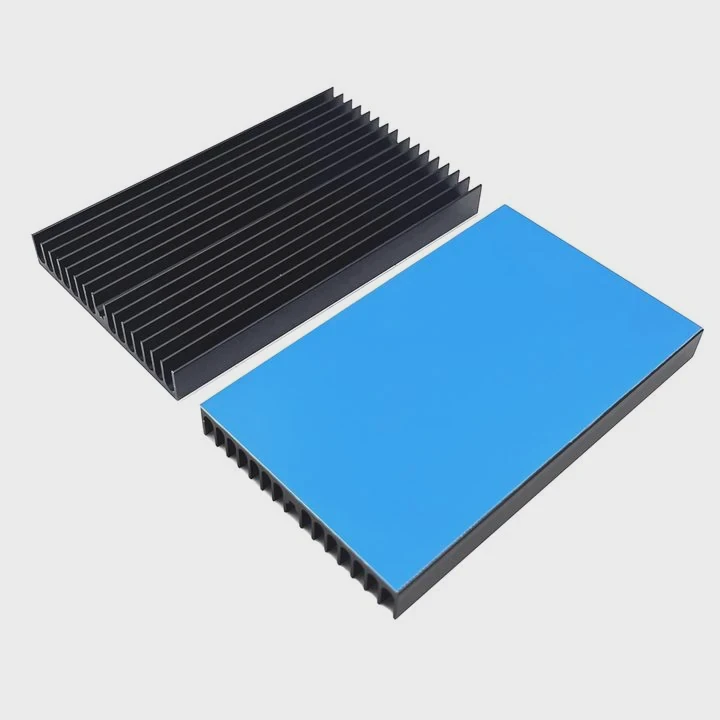
A larger surface area improves heat dissipation. This is the reason heat sinks often include many thin fins.
More surface area means more contact with air. More contact allows faster heat removal.
In several engineering projects, thermal simulations show the same pattern: increasing surface area reduces thermal resistance.
Thermal Resistance Concept
Engineers often describe heat sink performance using thermal resistance (°C/W).
A simplified equation looks like this:
Temperature rise = Power × Thermal resistance
If a device produces 100 W of heat and the heat sink has 0.5 °C/W resistance, the temperature rise becomes:
50 °C above ambient.
Lower thermal resistance means better cooling performance.
Practical Design Considerations
Designing a heat sink involves several practical factors:
- Airflow direction
- Fin spacing
- Base thickness
- Mounting pressure
- Thermal interface materials
In real engineering work, thermal control often becomes a balance between size, weight, cost, and performance.
A well-designed heat sink keeps components operating within safe temperature limits. This improves reliability and extends equipment life.
Why are fins used in heat sink designs?
A solid metal block can absorb heat. However, it cannot release that heat efficiently into the surrounding air.
Fins are used in heat sink designs because they increase surface area, which allows faster heat transfer from the heat sink into the surrounding air.
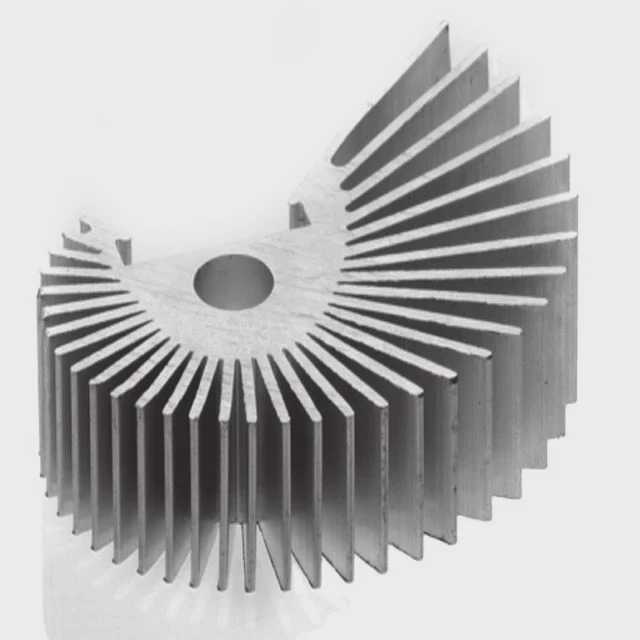
The main goal of fins is simple: increase the cooling surface without greatly increasing weight or size.
Surface Area Expansion
Imagine two heat sinks of equal volume.
One is a smooth block.
The other contains dozens of thin fins.
The finned heat sink may have ten times more surface area. More area means more air contact, and more air contact means faster cooling.
How Fins Improve Convection
Heat leaves the heat sink mainly through convection.
Air touching a hot surface warms up and rises. Cooler air replaces it. This constant movement removes heat from the surface.
Fins improve this process in two ways:
- They create many surfaces for air contact.
- They guide airflow through narrow channels.
Fin Geometry Matters
Different shapes appear in real applications.
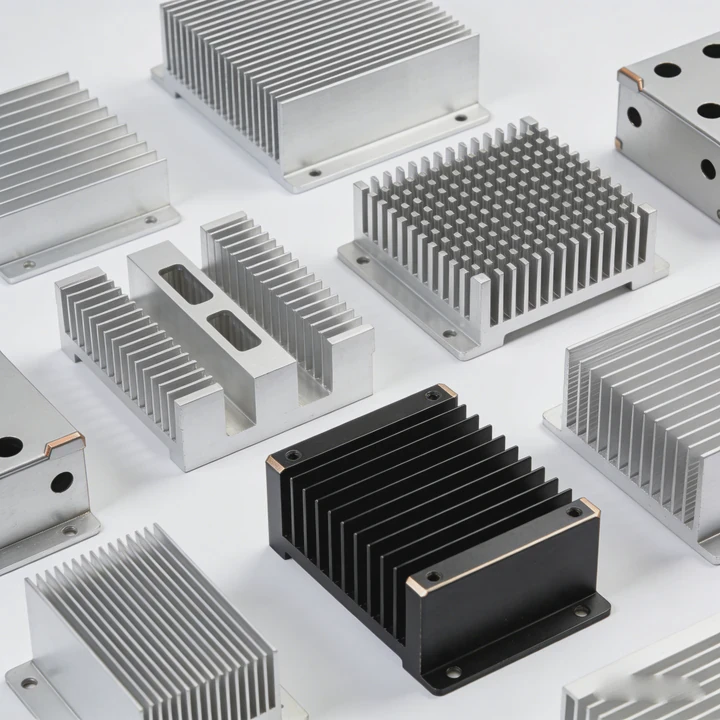
Common fin types include:
| Fin Type | Description | Typical Use |
|---|---|---|
| Straight fins | Parallel plates extending upward | Power electronics |
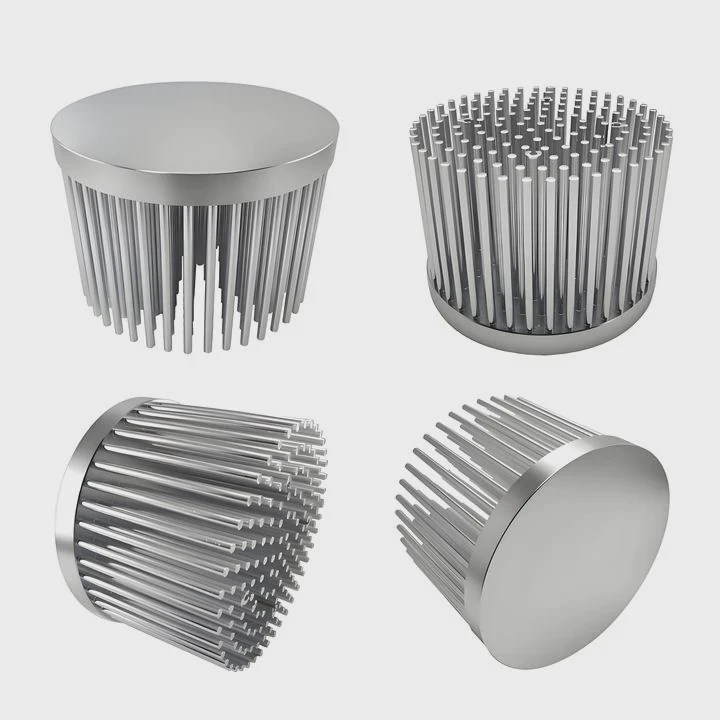
| Pin fins | Cylindrical pins instead of plates | Multi-direction airflow |
| Flared fins | Wider spacing near the top | Natural convection systems |
| Skived fins | Thin blades cut from metal | High-performance cooling |
Each geometry serves a different airflow condition.
Fin Spacing and Airflow
Fin spacing strongly affects cooling efficiency.
If fins sit too close together, airflow becomes restricted. Heat cannot escape effectively.
If fins sit too far apart, the total surface area decreases.
Engineers usually optimize spacing based on airflow conditions.
Natural vs Forced Convection
Two cooling modes affect fin design.
Natural Convection
Air moves because warm air rises. This method requires:
- wider fin spacing
- vertical orientation
- taller fins
Natural convection often appears in passive electronics.
Forced Convection
Fans push air through the heat sink.
This allows:
- thinner fins
- tighter spacing
- higher heat transfer rates
Many high-power devices rely on forced airflow.
Manufacturing Methods
Fin structures depend on manufacturing processes.
Common production methods include:
- aluminum extrusion
- skiving
- bonded fins
- vacuum brazing
Each method supports different fin shapes and thermal performance.
The final design always balances thermal efficiency, manufacturing cost, and structural reliability.
Where do heat sinks transfer heat to?
Many people assume heat sinks simply “remove heat.” In reality, they only move heat from one place to another.
A heat sink transfers heat from electronic components to the surrounding environment, usually air, but sometimes liquid cooling systems or structural chassis.
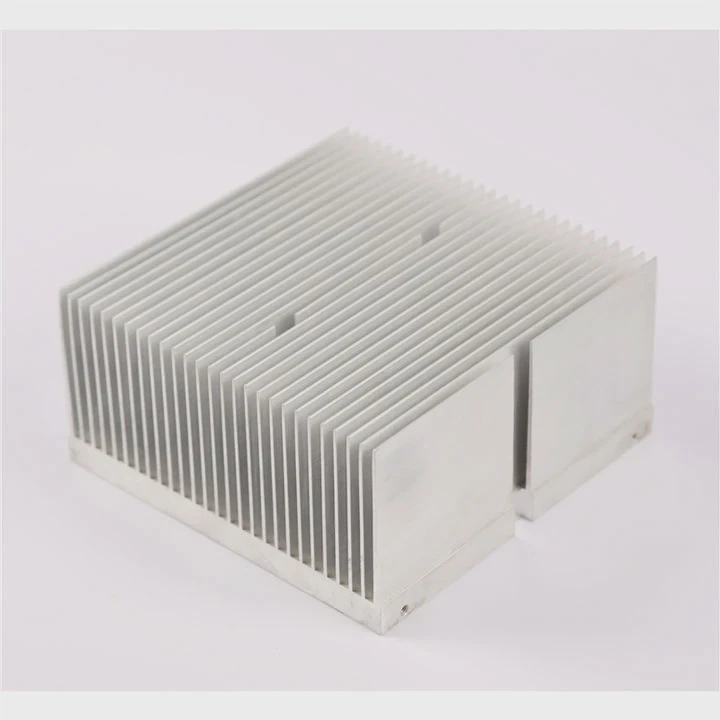
Heat always moves from a hot region to a cooler region. A heat sink simply helps this process occur faster and more efficiently.
Heat Transfer Path
The complete thermal path in electronics usually looks like this:
Component → Interface Material → Heat Sink → Air or Cooling Medium
Each step introduces some resistance.
Engineers work to minimize these resistances.
Air Cooling Systems
The most common heat sink destination is ambient air.
Air cooling works through convection. Heat transfers from the metal fins to moving air.
Two airflow sources exist:
| Cooling Type | Description |
|---|---|
| Passive cooling | Natural airflow from temperature differences |
| Active cooling | Fans or blowers force air across the heat sink |
Active cooling increases heat removal dramatically.
Many servers and power systems rely on forced airflow to maintain safe temperatures.
Liquid Cooling Systems
Some systems generate too much heat for air cooling alone.
Liquid cooling provides higher thermal capacity.
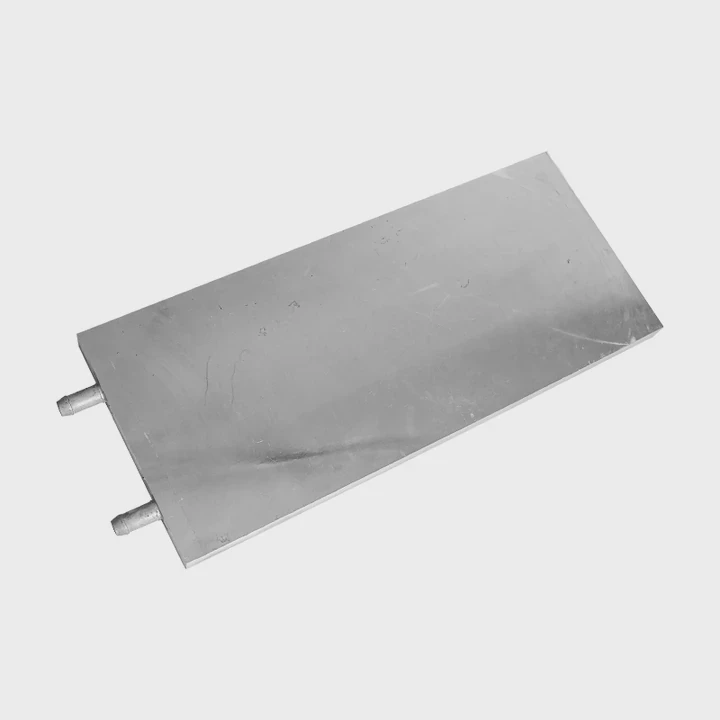
In these designs, heat sinks connect to liquid cold plates.
The process usually follows this path:
Component → Heat Sink Base → Cold Plate → Coolant → Radiator
Liquids such as water or glycol mixtures absorb heat much faster than air.
Heat Spreading Through Structures
In some equipment, heat sinks connect to the device chassis or enclosure.
The enclosure then becomes a large thermal radiator.
This method appears often in:
- rugged electronics
- outdoor communication equipment
- sealed industrial systems
The large metal body spreads heat across a wider surface.
Advanced Thermal Transport
Modern electronics sometimes use advanced thermal technologies:
Heat Pipes
Heat pipes transport heat using phase change.
A working fluid evaporates near the hot source and condenses at the cooler end.
This method moves heat extremely efficiently.
Vapor Chambers
A vapor chamber spreads heat evenly across a surface.
It acts like a two-dimensional heat pipe.
These technologies often combine with traditional heat sinks.
Thermal System Design
Heat sinks do not work alone. They are part of a complete thermal management system.
Design engineers consider:
- ambient temperature
- airflow conditions
- power density
- device layout
- environmental limits
Effective thermal design requires understanding the entire heat flow path.
When this path is optimized, electronic systems operate safely and reliably even under high power loads.
Which industries use heat sinks widely?
Heat sinks appear in almost every industry that uses electronic power devices. As power density increases, thermal control becomes more critical.
Industries such as electronics, renewable energy, transportation, telecommunications, and medical equipment widely use heat sinks to manage heat generated by high-power components.
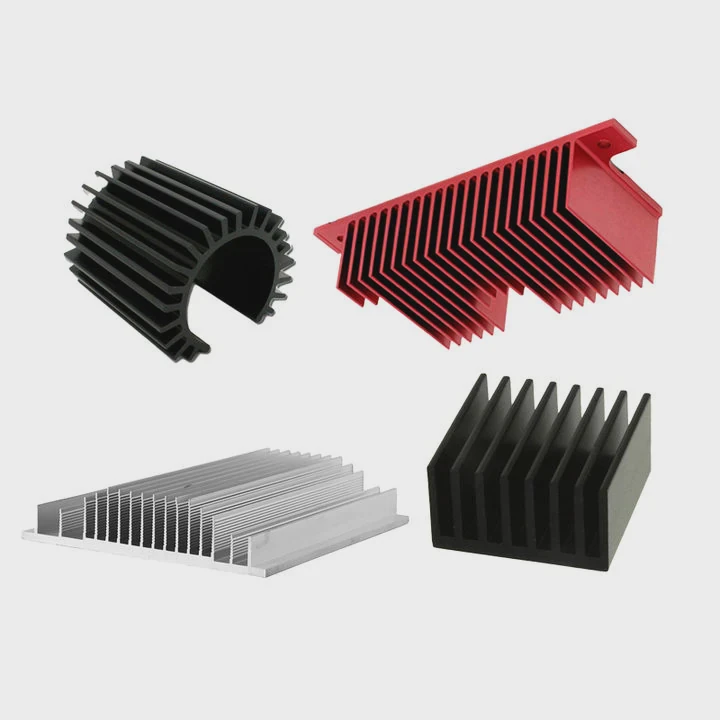
Over the past decade, thermal management has become a key engineering field. Many modern technologies simply cannot function without efficient cooling.
Consumer Electronics
Consumer devices generate increasing power in smaller spaces.
Common examples include:
- laptops
- gaming consoles
- LED lighting
- desktop processors
Compact aluminum heat sinks help these devices maintain safe temperatures without adding excessive weight.
Renewable Energy Systems
Renewable energy equipment produces large amounts of heat.
Important applications include:
| Equipment | Heat Source |
|---|---|
| Solar inverters | Power switching devices |
| Wind power converters | High-current electronics |
| Energy storage systems | Battery management modules |
These systems often operate continuously in outdoor environments. Thermal reliability becomes critical for long service life.
Electric Vehicles
Electric vehicles rely heavily on thermal management.
Major heat sources include:
- power electronics
- motor controllers
- onboard chargers
- battery management systems
Efficient cooling improves efficiency and protects sensitive components.
In many EV platforms, heat sinks integrate with liquid cooling plates to manage high heat loads.
Telecommunications and Data Centers
Modern communication infrastructure generates large heat loads.
Important examples include:
- 5G base stations
- network routers
- high-density servers
These systems run continuously. Even small temperature increases can reduce reliability.
Large extruded heat sinks and advanced vapor chamber systems often appear in these environments.
Medical Equipment
Medical devices require high reliability and stable operation.
Typical applications include:
- imaging systems
- surgical lasers
- diagnostic electronics
- laboratory analyzers
Thermal management protects sensitive components and ensures stable device performance.
Industrial Power Equipment
Industrial electronics often operate under heavy loads.
Examples include:
- motor drives
- welding machines
- industrial power supplies
- automation control systems
These environments can be hot and dusty. Heat sinks must remain effective under harsh conditions.
Aerospace and Rail Systems
Transportation systems demand extremely reliable cooling.
Heat sinks support:
- onboard power converters
- signal control systems
- communication modules
- radar and navigation electronics
Engineers often require certified manufacturing processes and strict reliability testing for these industries.
As electronics continue to increase in power density, heat sinks will remain a fundamental part of system design.
Conclusion
Heat sinks protect electronic systems by moving heat away from sensitive components and releasing it into the surrounding environment. Through conduction, spreading, and convection, they keep temperatures under control and ensure reliable operation across many modern industries.