What Does the Heat Sink Do?
- Yongxing
- 11 Mar ,2026
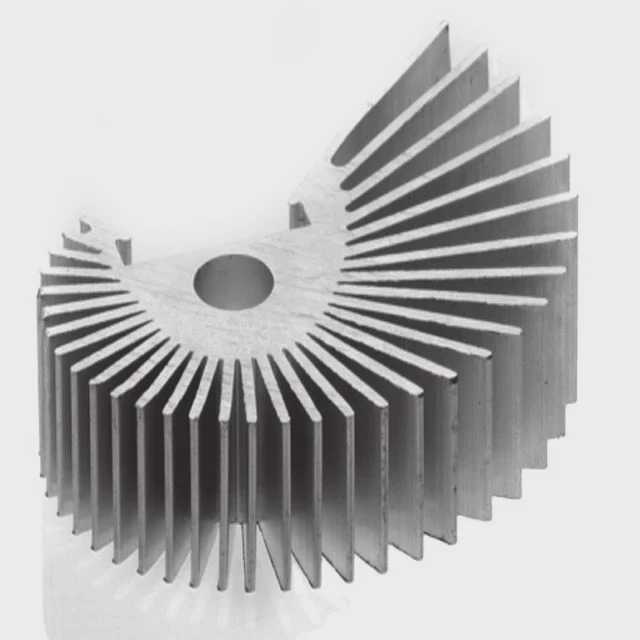
Electronic devices keep getting smaller and more powerful. Heat builds up fast inside them. Many engineers worry about overheating but often overlook the simple part that protects everything.
A heat sink removes excess heat from electronic components. It transfers heat away from chips and spreads it into the surrounding air, which helps keep the device within a safe operating temperature.
Every modern electronic system must manage heat. Processors, power modules, and communication equipment all produce heat during operation. A heat sink works as a passive cooling solution. It improves reliability, extends device life, and keeps performance stable. Understanding how heat sinks work helps engineers design safer and more efficient systems.
How does a heat sink improve device cooling?
A device may run perfectly at first. Then heat slowly builds up. Performance drops and components become unstable. Many engineers first notice this problem during long operation cycles.
A heat sink improves cooling by absorbing heat from a hot component and spreading it across a larger surface area, which allows the heat to dissipate into the surrounding air more efficiently.
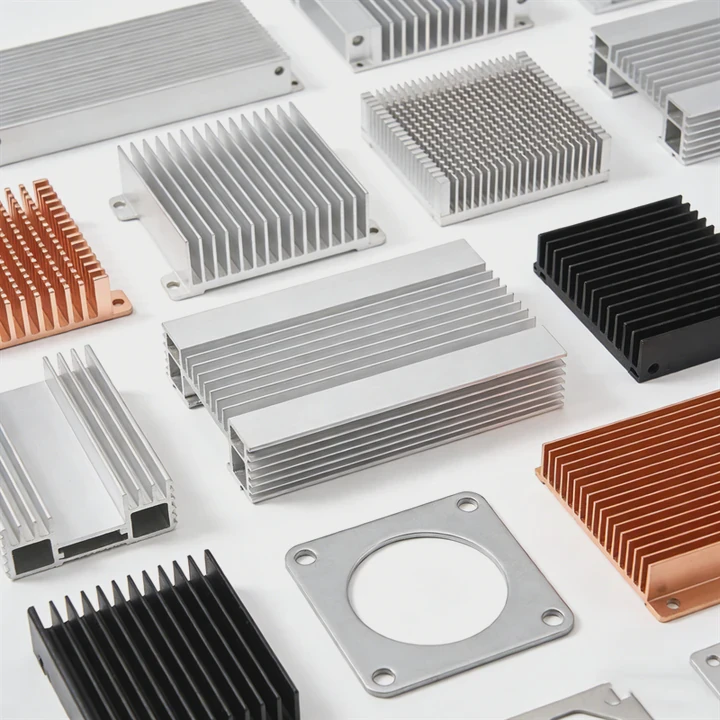
A heat sink works through three main heat transfer steps: conduction, spreading, and convection. Each step helps move heat farther away from the source.
Heat transfer process inside a heat sink
Heat first moves from the electronic chip to the base of the heat sink. This process is called thermal conduction. Materials such as aluminum and copper are used because they conduct heat very well.
After heat enters the base plate, it spreads through the fins. These fins increase the total surface area. More surface area means more contact with air.
Finally, air carries the heat away from the fins. This step is called convection. Airflow can be natural or forced by fans.
Key cooling mechanism
| Heat Transfer Step | What Happens | Why It Matters |
|---|---|---|
| Conduction | Heat moves from chip to heat sink base | Moves heat away from sensitive components |
| Spreading | Heat distributes across fins | Reduces hot spots |
| Convection | Air carries heat away | Releases heat into environment |
Surface area and airflow
A flat metal block would not cool very well. Engineers add fins to increase the exposed surface area. Thin fins create more contact with air. Air moving across the fins removes heat continuously.
Role of thermal interface materials
Heat sinks rarely touch chips directly. Small air gaps exist between surfaces. Air is a poor heat conductor. Thermal interface materials such as thermal paste or pads fill those gaps.
This small layer reduces thermal resistance. Heat flows more easily into the heat sink.
Passive and active cooling
Some systems rely on passive cooling. Natural air movement removes heat.
Other systems use active cooling, which includes fans or liquid cooling loops. In these systems the heat sink still plays a central role because it transfers heat from the chip to the cooling medium.
A well-designed heat sink improves cooling efficiency without consuming power. This simple component protects critical electronics in computers, power electronics, communication equipment, and industrial systems.
Why is overheating dangerous for electronics?
Many electronic failures do not happen suddenly. They begin with heat stress that slowly damages internal materials. Overheating is one of the most common causes of device failure.
Overheating damages electronic components by accelerating material degradation, increasing electrical resistance, and causing thermal stress that can lead to permanent failure.
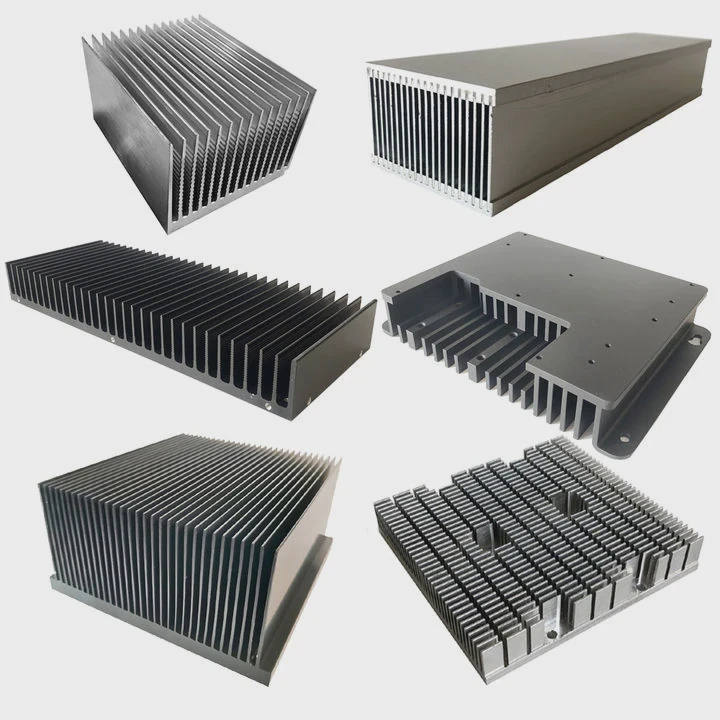
Electronic components are designed to operate within a specific temperature range. When temperatures exceed these limits, several problems occur.
Reduced component lifespan
Heat speeds up chemical reactions inside materials. Semiconductor structures degrade faster at higher temperatures. Insulation materials also age more quickly.
A simple rule used in electronics reliability is the Arrhenius rule. It suggests that for many components, every 10°C increase in temperature may reduce lifespan by half.
Electrical performance problems
High temperatures affect electrical properties. Resistance increases in conductors. Leakage currents rise in semiconductor devices.
These changes can cause:
- Signal distortion
- Reduced processing speed
- Unstable voltage levels
- Data errors in digital circuits
Thermal runaway
Some components suffer from a dangerous process called thermal runaway. Heat increases electrical current. Increased current produces even more heat.
This loop can quickly destroy the device.
Mechanical stress and material fatigue
Electronic assemblies use different materials. Silicon chips, copper traces, solder joints, and circuit boards all expand at different rates when heated.
Repeated heating and cooling cycles create mechanical stress.
This leads to:
- Cracked solder joints
- Delamination in circuit boards
- Broken wire bonds
Common overheating risks
| Risk Type | Cause | Result |
|---|---|---|
| Thermal degradation | Continuous high temperature | Shortened lifespan |
| Electrical instability | Temperature-dependent resistance | Performance loss |
| Thermal runaway | Positive heat-current feedback | Sudden failure |
| Mechanical stress | Expansion and contraction | Structural damage |
System-level consequences
Overheating can affect entire systems. A single power transistor that overheats may cause shutdown of a whole module. In data centers or telecom systems, overheating can reduce system reliability.
Heat sinks serve as a preventive solution. They remove excess heat early, before temperatures reach dangerous levels.
Proper thermal design is therefore not just about cooling. It is also about protecting the long-term stability of electronic systems.
Where are heat sinks installed on circuit boards?
Electronic circuit boards contain many components. Not all of them generate significant heat. Engineers focus on the parts that dissipate the most power.
Heat sinks are typically installed on high-power components such as processors, power transistors, voltage regulators, and communication chips that generate significant heat during operation.
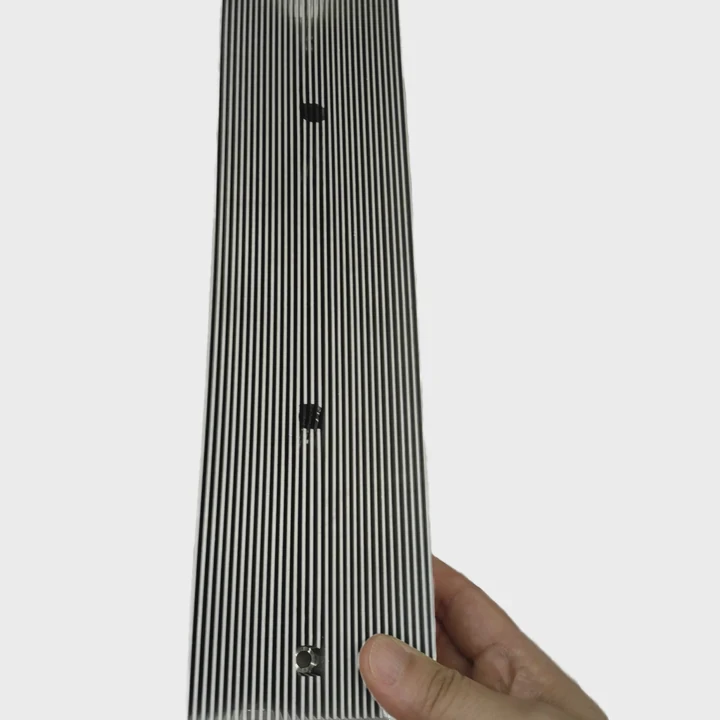
Placement of heat sinks depends on both thermal and mechanical design. Engineers identify the main heat sources on the board first.
Common components that require heat sinks
Several types of electronic components produce large amounts of heat.
1. Microprocessors and CPUs
Processors perform millions or billions of operations per second. This high activity generates significant heat.
Most computers and servers use large heat sinks combined with cooling fans.
2. Power transistors and MOSFETs
Power electronics convert and control electrical energy. These devices often switch high currents or voltages.
Heat sinks help prevent power devices from exceeding safe temperatures.
3. Voltage regulators
Voltage regulators stabilize power supply levels. Linear regulators especially generate heat because they dissipate excess voltage as thermal energy.
4. Power modules
Industrial systems and electric vehicles use integrated power modules. These modules contain multiple semiconductor switches.
They often require large heat sinks or even liquid cooling plates.
Heat sink mounting methods
Engineers must ensure good mechanical contact between the heat sink and the component.
Common mounting methods include:
- Clip mounting
- Screw mounting
- Spring-loaded brackets
- Adhesive thermal pads
Each method ensures firm contact and stable thermal performance.
Typical PCB heat sink placement
| Component Type | Typical Location | Cooling Requirement |
|---|---|---|
| CPU / Processor | Center of main board | High cooling demand |
| Power MOSFET | Power supply section | Moderate to high |
| Voltage regulator | Near power input | Moderate |
| RF amplifier | Communication module | High |
Airflow considerations
Heat sink placement must also consider airflow direction. If airflow is blocked, cooling efficiency drops significantly.
Engineers often align heat sink fins with airflow paths created by system fans.
Compact device challenges
Modern electronics are becoming smaller. Space inside devices is limited.
Engineers must balance:
- Component density
- Airflow paths
- Heat sink size
- Structural stability
Good thermal design ensures that the heat sink works effectively without interfering with other components on the circuit board.
Which designs maximize heat dissipation?
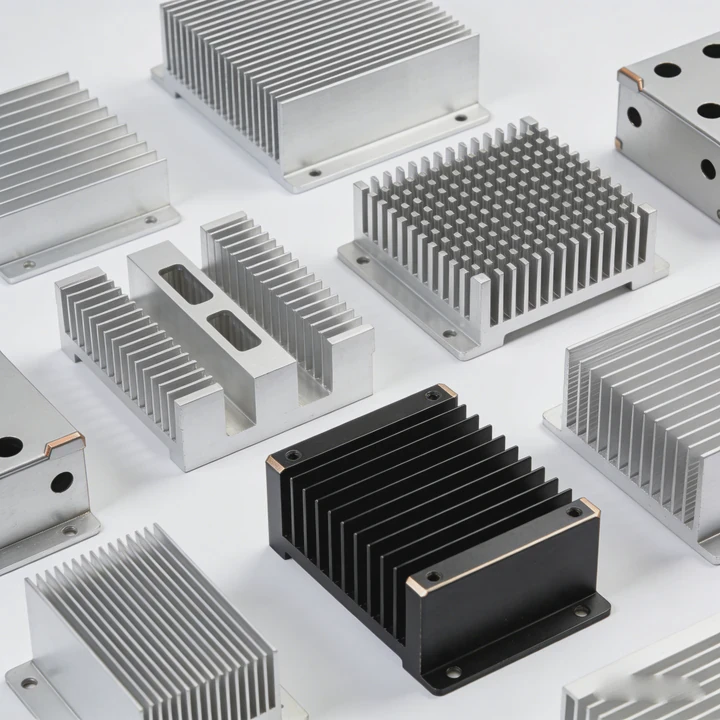
Many people think all heat sinks look the same. In reality, engineers design many different structures to improve heat dissipation.
Heat sink designs maximize heat dissipation by increasing surface area, improving airflow, reducing thermal resistance, and using high-conductivity materials such as aluminum or copper.
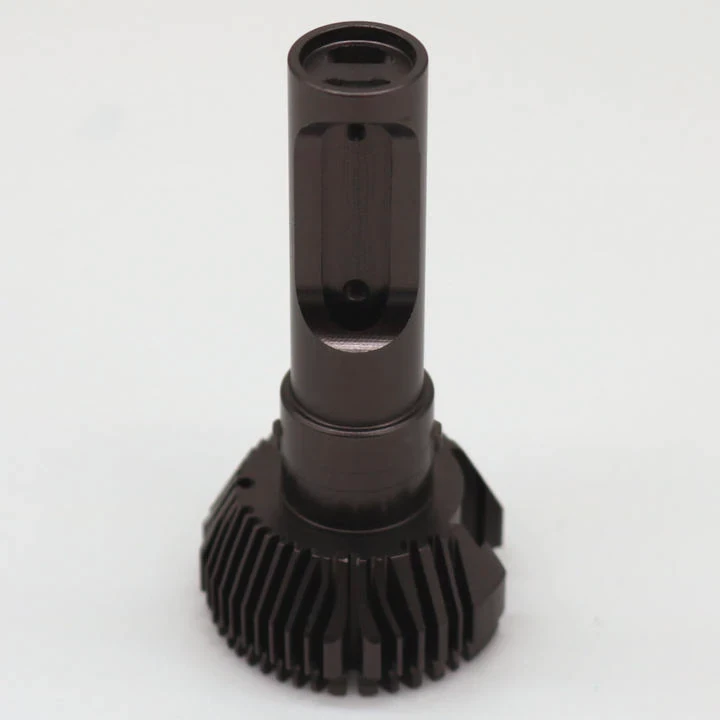
Different applications require different heat sink designs. Engineers choose the best structure based on heat load, airflow conditions, and space constraints.
Common heat sink structures
Several designs are widely used in electronics cooling.
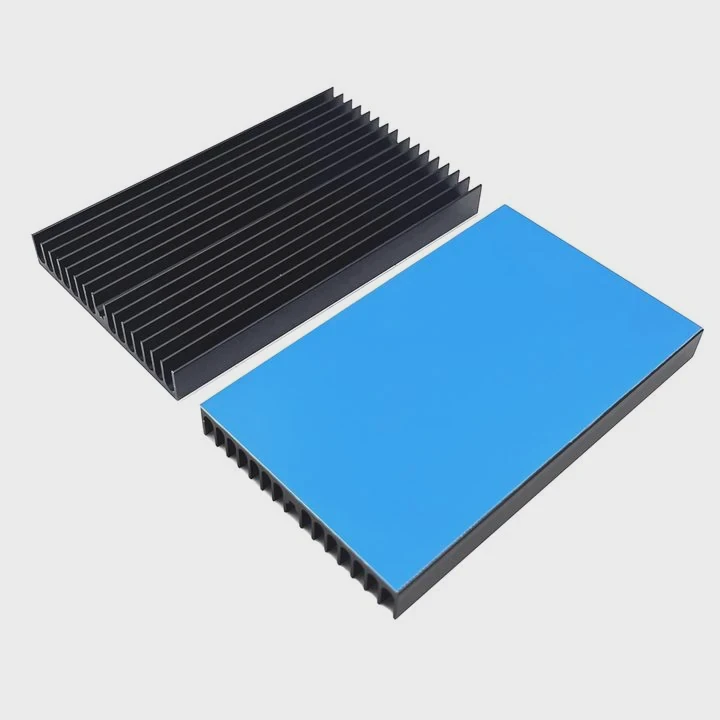
Extruded heat sinks
Extrusion is one of the most common manufacturing methods. Aluminum is pushed through a die to form long fin structures.
These heat sinks are cost-effective and widely used in power electronics.
Skived fin heat sinks
Skiving cuts thin fins directly from a metal block. This process creates very thin and tall fins.
The result is higher surface area and improved cooling performance.
Bonded fin heat sinks
In this design, separate fins are attached to a base plate using soldering or bonding processes.
This allows engineers to create dense fin arrays.
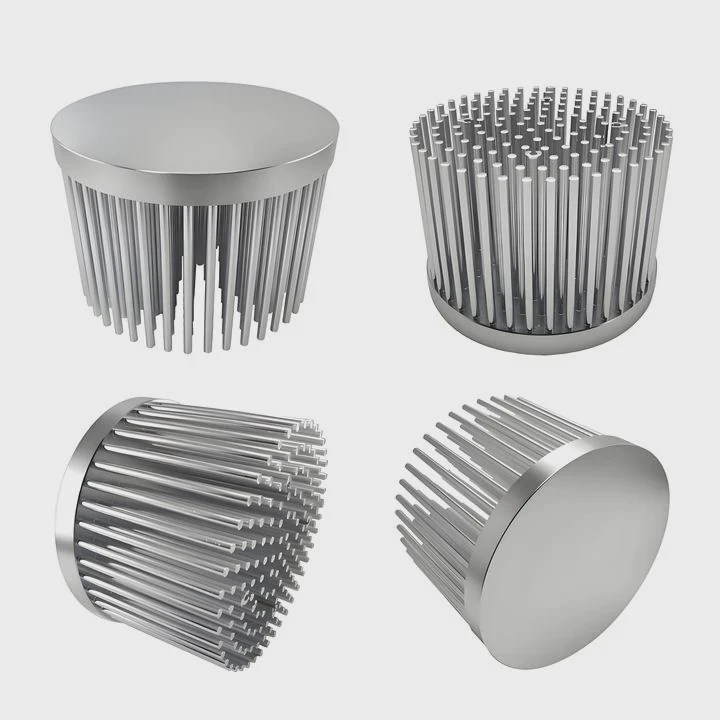
Pin fin heat sinks
Pin fins consist of many small cylindrical or square pins.
Air can flow in multiple directions through the pins. This design works well when airflow direction is uncertain.
Heat sink material comparison
| Material | Thermal Conductivity | Advantages | Limitations |
|---|---|---|---|
| Aluminum | Good | Lightweight and cost-effective | Lower conductivity than copper |
| Copper | Excellent | Very high heat transfer | Heavy and expensive |
| Aluminum alloys | Moderate to good | Balanced performance | Slightly lower conductivity |
Advanced heat sink technologies
Modern electronics sometimes require advanced cooling methods.
Vapor chamber heat sinks
A vapor chamber spreads heat rapidly across a large surface. It uses phase change to transport heat efficiently.
Heat pipe integrated sinks
Heat pipes move heat away from hot spots quickly. They are often integrated into CPU coolers or high-power modules.
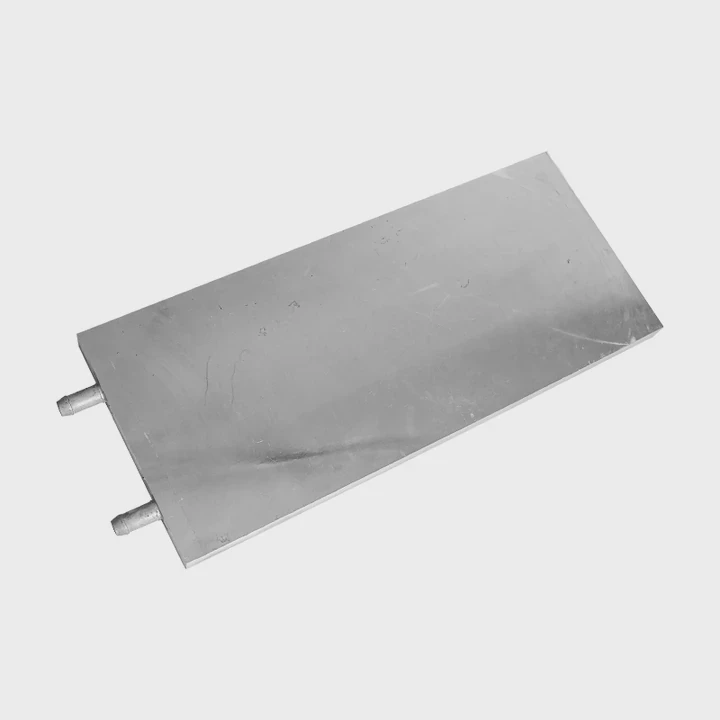
Liquid cooling plates
For extremely high heat loads, liquid cooling systems circulate coolant through channels in a cooling plate.
Design factors engineers evaluate
Several parameters influence heat sink performance.
Fin geometry
Fin thickness, height, and spacing affect airflow and heat transfer.
Base thickness
A thicker base spreads heat more evenly across the fins.
Air velocity
Higher airflow increases convective heat transfer.
Thermal resistance
Engineers calculate thermal resistance to measure cooling efficiency.
Good heat sink design combines material choice, geometry, and airflow management. These factors work together to maximize heat dissipation and ensure reliable device operation.
Conclusion
Heat sinks protect electronics by transferring heat away from sensitive components. They improve cooling, prevent overheating damage, and support stable performance. Proper heat sink design and placement play a key role in the reliability and longevity of modern electronic systems.