What Happens If Heat Sink Fails?
- Yongxing
- 21 Apr ,2026
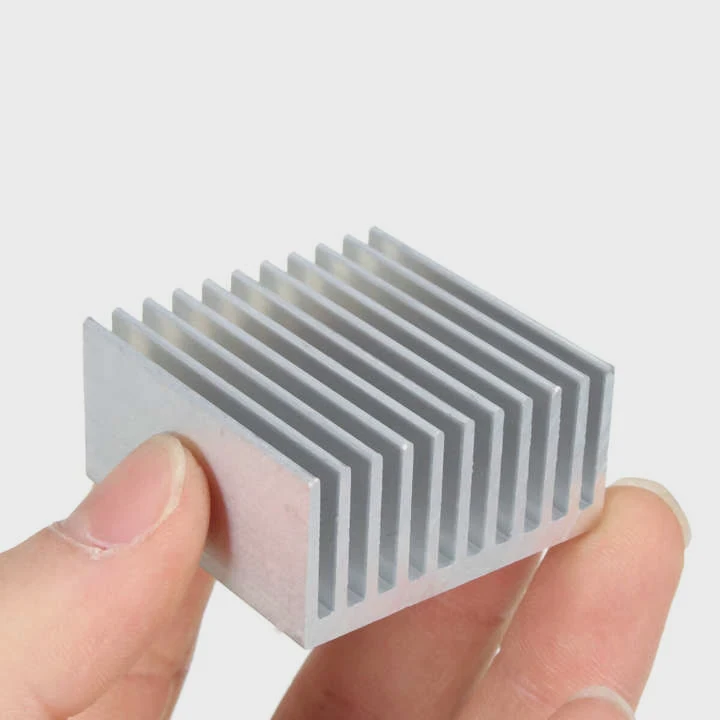
Heat sinks often work quietly in the background. When they fail, the problem escalates fast and many users do not notice until damage is done.
If a heat sink fails, heat is no longer dissipated efficiently, causing rapid temperature rise, system instability, automatic shutdowns, and potential permanent damage to critical electronic components.
A failed heat sink does not always stop a system instantly. It usually starts with small signs. Then performance drops, and finally the system breaks down completely.
How does failure impact system stability?
Small thermal issues grow into serious system instability. Performance becomes unpredictable and errors start to appear more often.
Heat sink failure disrupts thermal balance, leading to unstable operation, reduced performance, and frequent system errors due to overheating components.
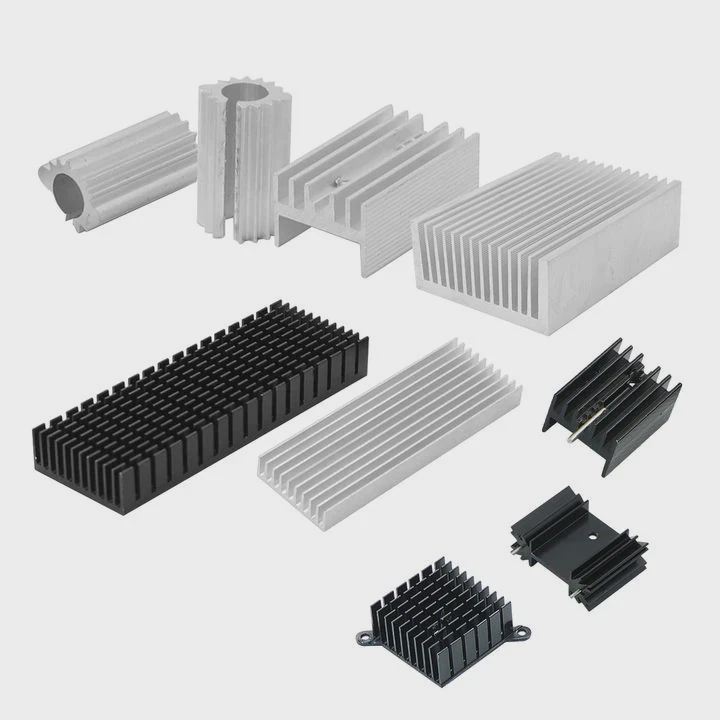
When a heat sink stops working properly, heat begins to accumulate around key components. Stability is the first thing affected.
Thermal Imbalance in the System
A working heat sink spreads and removes heat evenly. Once it fails, heat concentrates in specific areas. This creates:
- Uneven temperature zones
- Local hotspots
- Increased stress on nearby components
This imbalance affects timing and signal integrity.
Performance Throttling
Modern systems try to protect themselves. When temperatures rise:
- CPUs reduce clock speed
- GPUs limit processing power
- Power modules lower output
This is called thermal throttling. It keeps the system alive but reduces performance significantly.
Signal and Data Errors
High temperature affects electrical signals. This leads to:
- Bit errors in communication
- Data corruption
- Random system glitches
These errors are often hard to trace because they appear randomly.
Mechanical Stress and Instability
Heat expansion affects physical connections:
- Solder joints weaken
- Connectors loosen
- PCB layers shift
Over time, this creates unstable electrical paths.
Stability Impact Table
| Issue Type | Result |
|---|---|
| Thermal imbalance | Hotspots and uneven stress |
| Throttling | Reduced system performance |
| Signal errors | Data corruption |
| Mechanical stress | Intermittent failures |
Practical Observation
In a real test case, a loosened heat sink caused a processor to fluctuate between normal and throttled states. The system did not crash immediately. Instead, it showed random lag and errors before complete instability.
This shows that failure often starts subtly, not dramatically.
Why can heat sink failure cause shutdowns?
Shutdowns are not random. They are protective actions triggered when temperature crosses safe limits.
Heat sink failure leads to rapid overheating, triggering thermal protection mechanisms that force the system to shut down to prevent permanent damage.
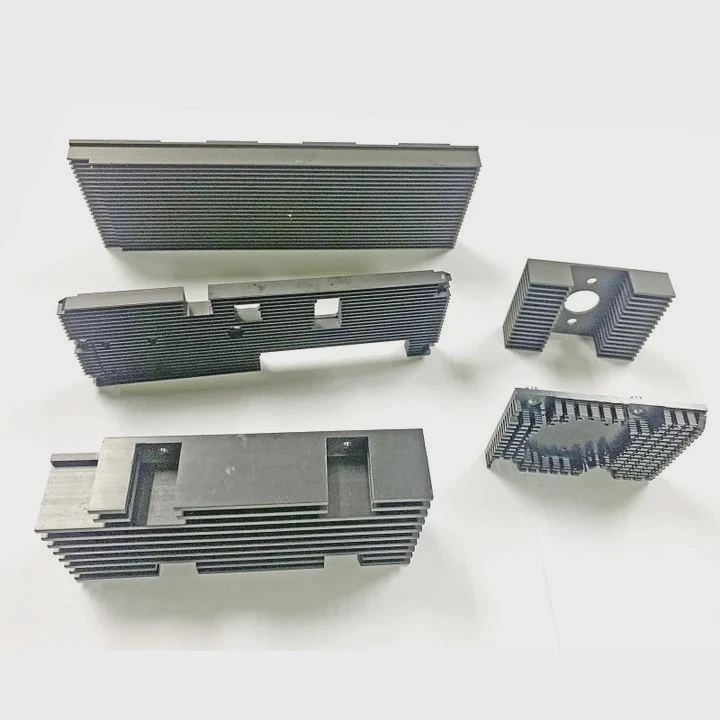
Most modern electronic systems include built-in thermal protection. These systems monitor temperature continuously.
Thermal Protection Mechanisms
When temperature exceeds a threshold:
- Sensors detect overheating
- Control systems send warning signals
- Automatic shutdown is triggered
This process happens within seconds in many devices.
Rapid Temperature Rise
Without a heat sink, heat has nowhere to go. As a result:
- Temperature rises quickly
- Cooling delay increases
- Critical limits are reached fast
In high-power systems, this can happen in less than a minute.
Firmware and Hardware Safeguards
Different systems use different protection methods:
- Firmware-based shutdown
- Hardware cutoff circuits
- Emergency power reduction
These safeguards are designed to prevent catastrophic failure.
Chain Reaction Effect
Heat sink failure does not affect only one component. It creates a chain reaction:
- One component overheats
- Heat spreads to nearby parts
- Multiple sensors detect high temperature
- System shuts down completely
Shutdown Causes Table
| Cause | Description |
|---|---|
| Sensor trigger | Detects high temperature |
| Fast heat buildup | No heat dissipation |
| Protection logic | Forces system shutdown |
| Thermal chain reaction | Multiple components affected |
Real Insight
During a stress test, a detached heat sink caused a power module to shut down within seconds. The protection system worked as expected, but repeated shutdown cycles eventually damaged the module permanently.
Shutdown protects the system, but repeated overheating still causes long-term harm.
Where does damage appear first?
Damage does not occur everywhere at once. It starts at the weakest and hottest points.
Damage from heat sink failure first appears at hotspots such as chips, power devices, and solder joints where heat concentration is highest.
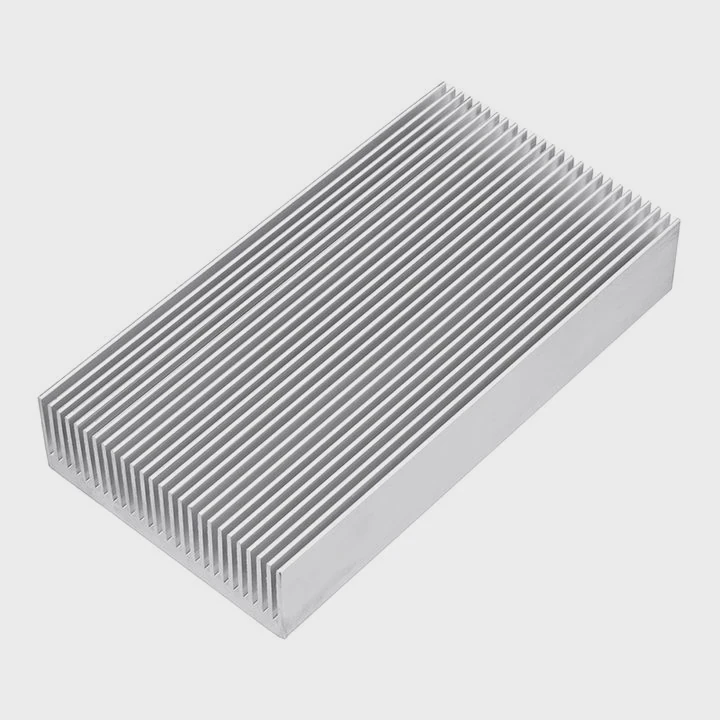
Heat always finds the weakest point. In electronic systems, this is usually where power density is highest.
Primary Hotspots
The first areas to suffer damage include:
- CPU or GPU cores
- Power transistors (MOSFETs, IGBTs)
- Voltage regulators
These components generate the most heat.
Solder Joint Weakness
Solder joints are very sensitive to thermal stress:
- Repeated heating and cooling causes fatigue
- Micro-cracks begin to form
- Electrical connections become unstable
This often leads to intermittent failures before complete breakdown.
Interface Failure
Between the heat sink and component, there is usually a thermal interface material (TIM). When the heat sink fails:
- TIM dries out or degrades
- Thermal resistance increases
- Heat transfer becomes inefficient
This accelerates temperature rise.
PCB-Level Damage
The printed circuit board also suffers:
- Layer separation (delamination)
- Warping due to uneven heat
- Burn marks in severe cases
Damage Location Table
| Location | Type of Damage |
|---|---|
| Chips | Internal overheating failure |
| Solder joints | Cracking and fatigue |
| Thermal interface | Loss of heat transfer |
| PCB | Structural deformation |
Engineering Insight
In thermal imaging tests, the first visible damage usually appears as a small hotspot. That area continues to heat up faster than the rest.
Without a functioning heat sink, this hotspot becomes the starting point of total failure.
Which components are most at risk?
Some components are more vulnerable because they generate more heat or have lower tolerance.
High-power and heat-sensitive components such as CPUs, GPUs, power semiconductors, and voltage regulators are most at risk when a heat sink fails.
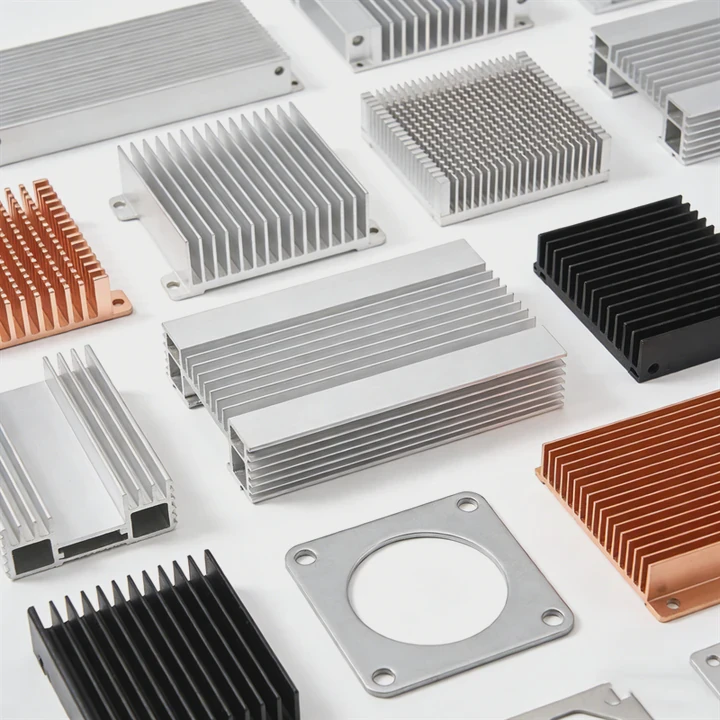
Not all components fail at the same rate. The most at-risk parts are those with high thermal load.
High-Risk Components
1. CPUs and GPUs
These are highly integrated and power-dense.
- Very high heat generation
- Small surface area
- Depend heavily on cooling
Without a heat sink, failure can occur very quickly.
2. Power Semiconductors
Includes:
- MOSFETs
- IGBTs
- Diodes
Used in high-power systems like:
- EVs
- Industrial drives
- Power supplies
They are extremely sensitive to temperature rise.
3. Voltage Regulators
These components stabilize power supply.
- Operate continuously
- Generate steady heat
- Easily overheat without cooling
4. LEDs (High Power)
High-power LEDs are also at risk:
- Light output drops with heat
- Color changes occur
- Lifespan reduces drastically
Risk Comparison Table
| Component Type | Risk Level | Failure Speed |
|---|---|---|
| CPU / GPU | Very High | Seconds to minutes |
| Power devices | Very High | Minutes |
| Voltage regulators | High | Minutes to hours |
| LEDs | Medium | Hours |
Why These Components Are Vulnerable
Key reasons include:
- High power density
- Continuous operation
- Limited thermal tolerance
These factors make them dependent on proper heat dissipation.
Real-World Scenario
In one case, a failed mounting clip caused poor contact between a heat sink and a power module. The module continued working briefly, but internal temperature rose rapidly. Within minutes, the device failed permanently.
This shows that even partial heat sink failure can be enough to destroy critical components.
Conclusion
Heat sink failure leads to rapid overheating, system instability, and early component damage. Reliable cooling is essential to maintain performance, protect hardware, and ensure long-term system stability.