What Is Heat Sink Made Of?
- Yongxing
- 14 Mar ,2026
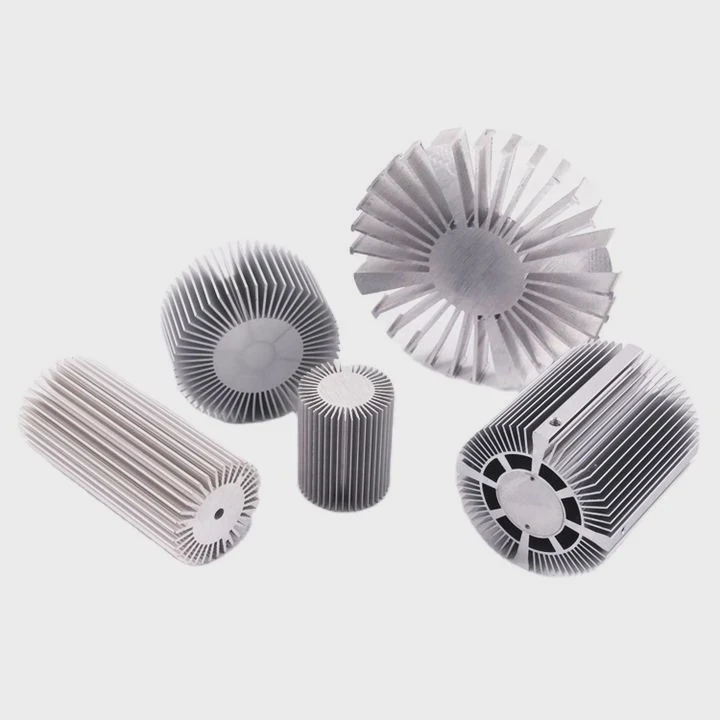
Electronic devices become hotter every year. High power chips, LEDs, and power modules all produce heat. Poor cooling quickly leads to failure, reduced lifespan, or unstable performance.
Heat sinks are usually made from aluminum, copper, or composite materials because these metals conduct heat efficiently and transfer it away from electronic components quickly and reliably.
Heat sink material choice is not random. Engineers must balance thermal conductivity, weight, manufacturing cost, and structural strength. Each material brings different advantages. Understanding these materials helps engineers choose the best cooling solution.
Which materials are commonly used for heat sinks?
A device overheats when heat cannot escape fast enough. Many engineers face this issue during thermal design. Choosing the right heat sink material becomes the first key step.
The most common heat sink materials are aluminum, copper, and composite materials that combine metals with vapor chambers, heat pipes, or graphite to improve heat spreading.
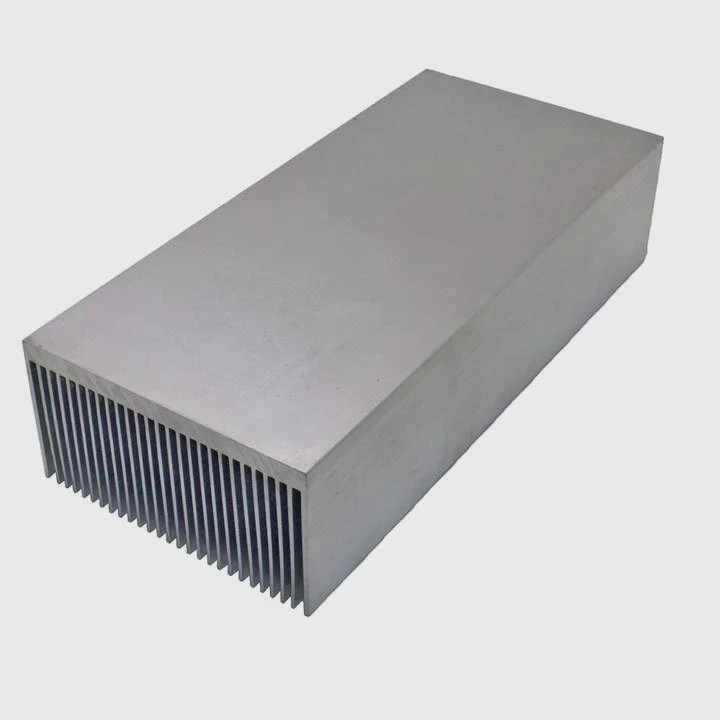
Heat sinks work by moving heat away from hot components and releasing it into the surrounding air or liquid cooling system. The material used must conduct heat efficiently while still being practical for manufacturing.
Key Properties Required for Heat Sink Materials
Every heat sink material must satisfy several basic requirements.
| Property | Why It Matters |
|---|---|
| Thermal Conductivity | Determines how fast heat travels through the material |
| Weight | Affects mechanical load on electronics |
| Cost | Influences large-scale production |
| Manufacturability | Determines available shapes and structures |
| Corrosion Resistance | Ensures long-term reliability |
Materials that perform well across these factors become common in industrial thermal management.
Aluminum Heat Sinks
Aluminum is the most widely used heat sink material. It provides a strong balance between thermal performance, weight, and cost. Aluminum alloys such as 6063 and 6061 are widely used in extruded heat sinks.
Extrusion technology allows long fin structures that increase surface area. A larger surface area means more heat can transfer to the air.
Copper Heat Sinks
Copper provides higher thermal conductivity than aluminum. This property allows heat to move faster across the heat sink base.
Copper heat sinks are often used in:
- High-power CPUs
- Power electronics
- Laser systems
- Semiconductor equipment
However, copper is heavier and more expensive. It is also harder to machine.
Composite Heat Sink Materials
Modern electronic systems often require cooling solutions beyond simple metal blocks. Composite materials combine different cooling technologies to improve thermal efficiency.
Examples include:
- Vapor chamber heat sinks
- Heat pipe integrated heat sinks
- Graphite thermal spreaders
- Aluminum-copper hybrid structures
These solutions distribute heat across larger areas before releasing it.
Typical Material Thermal Conductivity
| Material | Thermal Conductivity (W/m·K) |
|---|---|
| Aluminum | ~200 |
| Copper | ~390 |
| Graphite | 400–1500 |
| Vapor Chamber | Equivalent up to 5000+ |
High thermal conductivity helps heat move faster from the heat source to the cooling fins.
Material selection always depends on system power density, space limits, and cooling method.
Why is aluminum popular for heat sinks?
Many thermal engineers face the same challenge. They need efficient cooling but must also control cost and weight. Aluminum often becomes the most practical solution.
Aluminum is popular for heat sinks because it provides good thermal conductivity, low weight, strong corrosion resistance, and excellent manufacturability at a relatively low cost.
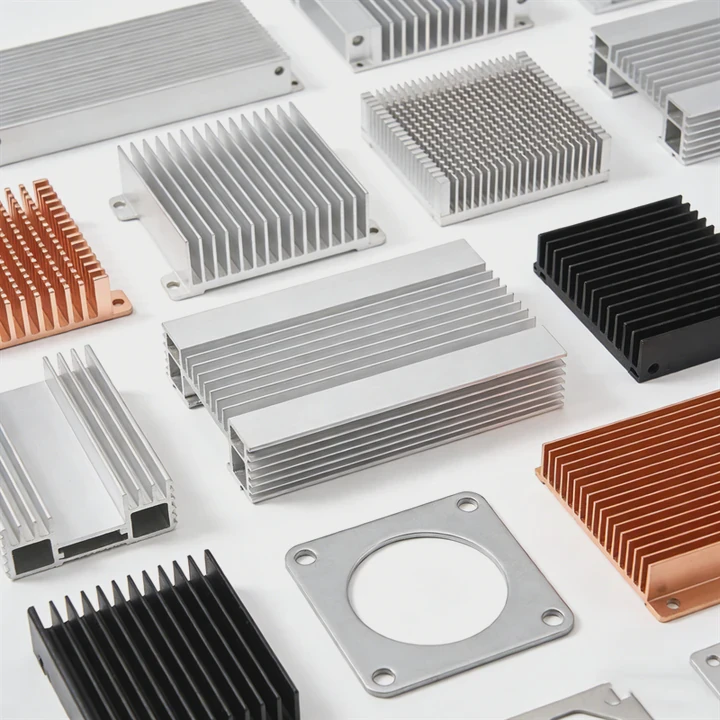
Aluminum has become the industry standard for many cooling systems. It appears in consumer electronics, power modules, LED lighting, and industrial control equipment.
Balanced Thermal Performance
Aluminum conducts heat well enough for most electronic systems. Its thermal conductivity is around 200 W/m·K, which is sufficient for many medium and high-power applications.
While copper conducts heat faster, aluminum offers a better balance between performance and practicality.
Lightweight Structure
Weight matters in many industries.
Examples include:
- Electric vehicles
- Aerospace equipment
- Portable medical devices
- Telecommunications hardware
Aluminum is about one-third the weight of copper. This property allows large heat sinks without excessive mechanical stress on circuit boards.
Excellent Manufacturability
One of aluminum’s biggest advantages is its compatibility with many manufacturing processes.
Common processes include:
- Aluminum extrusion
- CNC machining
- Die casting
- Skiving
- Friction stir welding
- Vacuum brazing
Extrusion is especially popular. It produces complex fin structures with high efficiency and low cost.
Corrosion Resistance
Aluminum naturally forms an oxide layer when exposed to air. This oxide layer protects the surface from corrosion.
Additional surface treatments can further improve durability.
Examples include:
- Anodizing
- Black anodizing for better radiation
- Nickel plating
- Powder coating
Cost Efficiency
Large-scale heat sink production requires materials that are affordable and easy to process.
Aluminum offers:
| Advantage | Result |
|---|---|
| Lower raw material cost | Reduced product price |
| Easy machining | Faster manufacturing |
| High recyclability | Sustainable production |
Because of these benefits, aluminum heat sinks dominate markets such as LED cooling, computer hardware, and industrial electronics.
How does copper compare to aluminum heat sinks?
Some electronic systems generate extremely high heat density. In those cases, aluminum alone may not be enough. Copper becomes an attractive option.
Copper heat sinks offer nearly twice the thermal conductivity of aluminum, allowing faster heat spreading, but they are heavier, more expensive, and harder to manufacture.
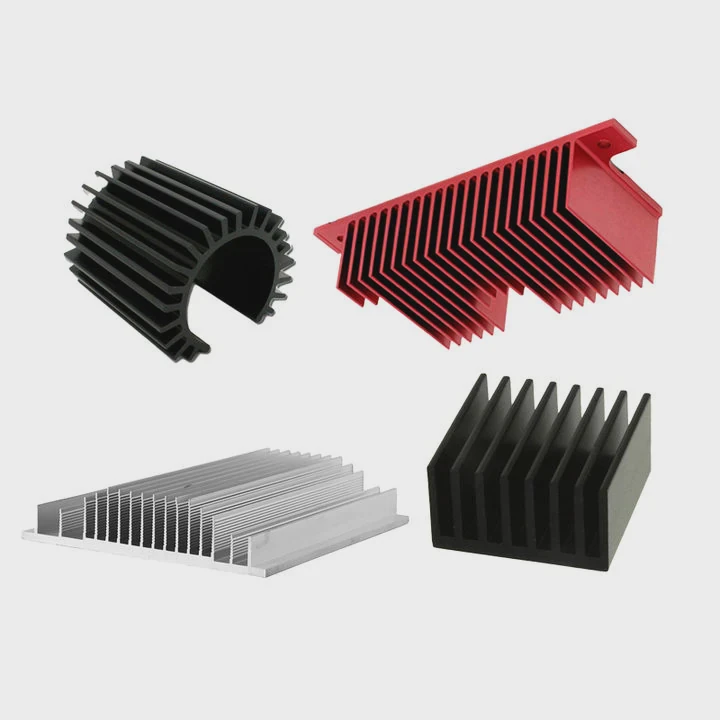
Copper plays a critical role in high-performance cooling systems where heat must move away from the source extremely quickly.
Higher Thermal Conductivity
Copper has a thermal conductivity of about 390 W/m·K, which is nearly double that of aluminum.
This property allows copper to spread heat more efficiently across the heat sink base.
This advantage becomes important when dealing with:
- CPUs and GPUs
- IGBT modules
- Laser equipment
- Semiconductor power devices
A copper base plate can quickly distribute heat before it moves into the cooling fins.
Improved Heat Spreading
Many modern heat sink designs use copper base + aluminum fins.
This hybrid design provides two benefits:
- Copper spreads heat quickly.
- Aluminum fins dissipate heat efficiently with lower weight.
This structure improves overall thermal efficiency while controlling cost.
Manufacturing Challenges
Copper has several disadvantages.
| Challenge | Explanation |
|---|---|
| Higher cost | Raw material price is much higher |
| Higher density | Weight increases structural load |
| Difficult machining | Tools wear faster |
| Limited extrusion capability | Complex shapes harder to produce |
Because of these issues, copper heat sinks are usually used only when necessary.
Typical Copper Applications
Copper heat sinks often appear in:
- High-power CPUs
- Military electronics
- Laser modules
- Semiconductor testing equipment
- High-power industrial power supplies
Engineers choose copper only when thermal performance becomes the highest priority.
Where are composite heat sink materials applied?
Electronic power density continues to increase. Traditional metal heat sinks sometimes cannot meet cooling requirements. Engineers begin to use composite thermal materials.
Composite heat sink materials combine metals with technologies such as vapor chambers, heat pipes, or graphite layers to dramatically increase heat spreading capability.
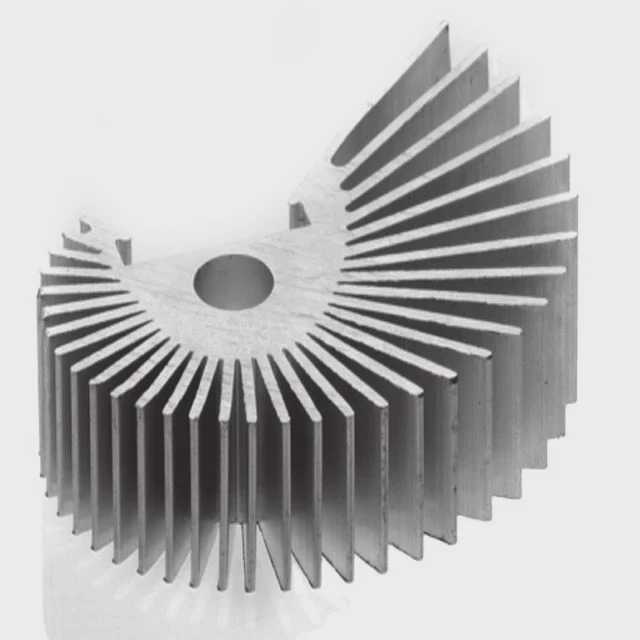
Composite heat sinks are designed for extremely demanding thermal environments.
Vapor Chamber Heat Sinks
A vapor chamber is a sealed metal plate containing a small amount of working fluid.
When heat enters the chamber:
- The liquid evaporates
- Vapor spreads heat across the chamber
- Vapor condenses on cooler surfaces
- Capillary structures return liquid to the heat source
This process creates extremely high equivalent thermal conductivity.
Heat Pipe Integrated Heat Sinks
Heat pipes transfer heat quickly over longer distances.
A heat pipe contains:
- Working fluid
- Capillary wick structure
- Sealed metal tube
Heat pipes move heat from the heat source to remote cooling fins.
This design is common in:
- Gaming laptops
- Data center servers
- GPU cooling systems
- Industrial power converters
Graphite Thermal Spreaders
Graphite materials provide very high in-plane thermal conductivity.
Flexible graphite sheets are used in:
- Smartphones
- Tablets
- compact electronics
These materials spread heat across large areas even in thin devices.
Composite Thermal Module Applications
| Industry | Typical Cooling Solution |
|---|---|
| Data Centers | Vapor chamber + fin heat sinks |
| Electric Vehicles | Liquid cold plates |
| 5G Base Stations | Heat pipe cooling modules |
| Aerospace | Lightweight composite heat spreaders |
| Medical Devices | Precision copper heat spreaders |
Composite solutions allow engineers to design cooling systems for extremely high power densities.
These advanced thermal technologies often combine multiple materials and manufacturing methods to achieve optimal performance.
Conclusion
Heat sinks are mainly made from aluminum, copper, and composite materials. Aluminum dominates most applications because it balances cost, weight, and performance. Copper provides higher thermal conductivity for demanding systems. Composite technologies such as vapor chambers and heat pipes enable cooling solutions for modern high-power electronics.