Why Do Heat Sinks Have Fins?
- Yongxing
- 05 May ,2026
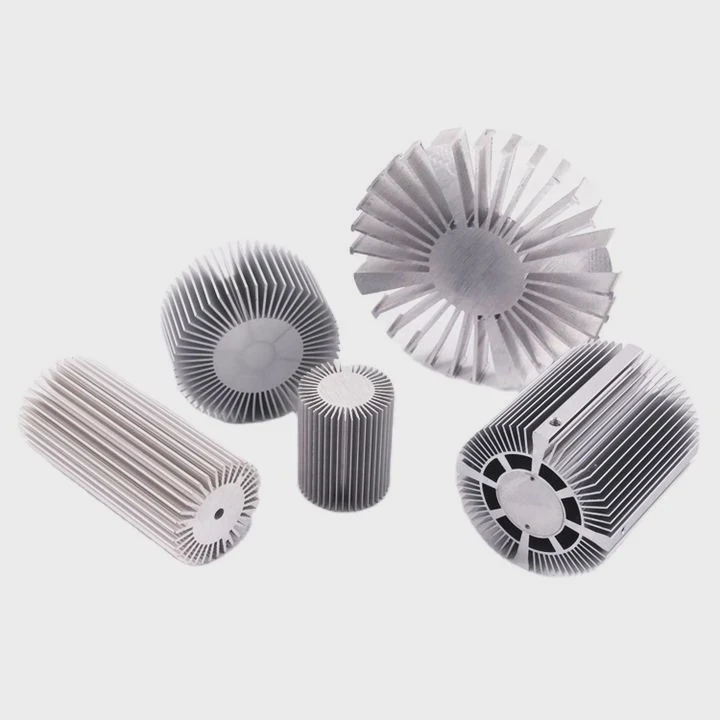
Heat buildup in electronics can cause serious damage fast. Without proper cooling, devices overheat and fail.
Fins on heat sinks help transfer heat from the device to the surrounding air more efficiently. They increase the surface area, allowing heat to escape faster and keeping electronics safe and stable.
Understanding fins is key to designing effective thermal solutions. Let’s dive into how and why they work.
How Do Fins Enhance Cooling Efficiency?
Fins may look simple, but they play a crucial role in keeping devices cool. The problem is that a solid block of metal cannot dissipate heat fast enough on its own.
Fins create more surface area for air to contact the heat sink. This allows heat to flow from the base to the fins and then into the air, improving cooling efficiency significantly.
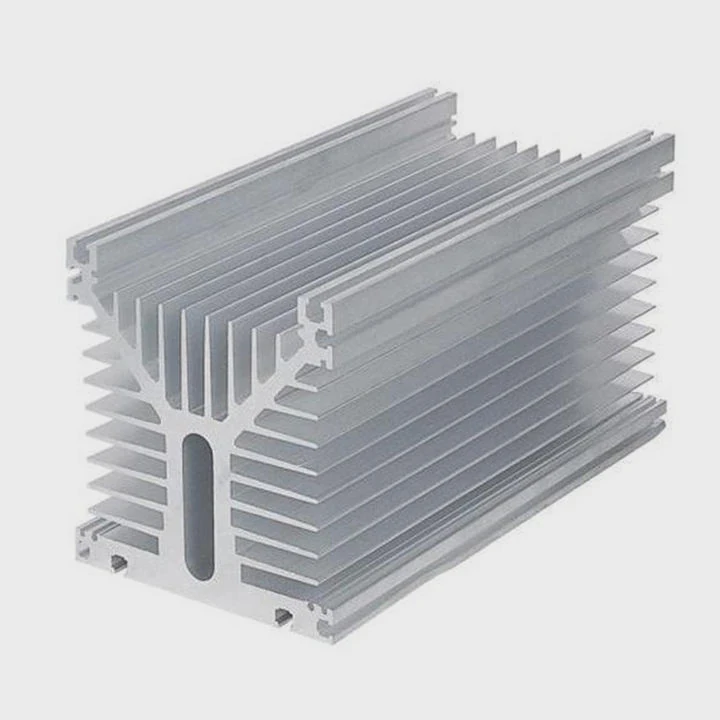
Fins work by increasing the contact area between the heat sink and air. Heat moves from the hot electronic component to the heat sink base. Then it travels along the fins, which act like small channels carrying heat away. More surface area means more heat escapes.
How Airflow Impacts Fins
Airflow around fins matters a lot. If air cannot move freely between fins, heat stays trapped. Designers often space fins carefully and orient them along airflow paths. Fans or natural convection can enhance this process. Even small changes in fin orientation can improve cooling performance by 20–30%.
Material and Fin Thickness
Fin thickness also affects efficiency. Thin fins allow better heat transfer to the air but may be weaker structurally. Thicker fins carry more heat but reduce airflow. Aluminum is common because it balances weight, cost, and thermal conductivity. Copper fins are better for heat transfer but heavier and more expensive.
| Factor | Effect on Cooling |
|---|---|
| Fin spacing | Wider spacing improves airflow, reduces thermal resistance |
| Fin thickness | Thinner fins transfer heat faster but are weaker |
| Material | Copper conducts heat better, aluminum is lighter and cheaper |
| Airflow | Higher airflow increases heat dissipation |
Overall, fins improve heat sink performance by multiplying the area that touches the air. Without fins, heat sinks cannot keep high-power devices safe.
Why Is Surface Area Critical for Heat Transfer?
Many people underestimate the role of surface area. Heat transfer from a solid to air happens at the interface, so the more surface that touches the air, the faster heat leaves the heat sink.
Increasing surface area with fins allows more heat to leave the device quickly. This reduces the risk of overheating and maintains system stability.
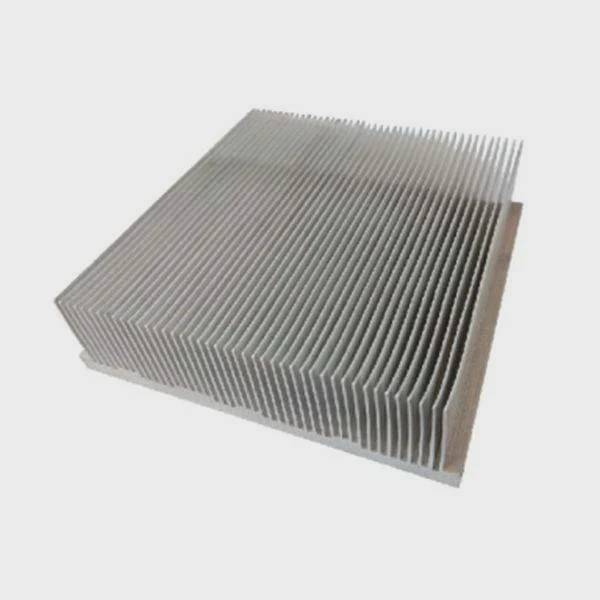
Surface area determines how much heat can leave a heat sink per second. A plain metal block has limited area, so it gets hot fast. Adding fins multiplies the contact area many times.
Calculating Surface Area
Engineers calculate total surface area by considering the base and all fin surfaces. For example, a heat sink with 20 fins might have ten times the surface area of its base alone. This directly increases heat transfer efficiency.
The Relationship Between Surface Area and Heat Transfer
Heat transfer rate (Q) is proportional to surface area (A), temperature difference (ΔT), and heat transfer coefficient (h):
[ Q = h \cdot A \cdot \Delta T ]
So, larger (A) means higher (Q). Fins maximize (A) without making the heat sink too bulky. This is why high-performance heat sinks always have many well-designed fins.
| Surface Type | Relative Area |
|---|---|
| Flat base only | 1× |
| Base + 10 fins | 10× |
| Base + 20 fins | 20× |
By optimizing fin design, engineers ensure that heat escapes quickly, maintaining device reliability over long-term use.
Where Are Fins Most Effective on Heat Sinks?
Not all parts of a heat sink need the same fin arrangement. The problem is that heat is not uniform across a device. The hottest areas need more attention.
Fins are most effective where heat concentration is highest, usually directly above processors, power transistors, or LEDs, allowing these components to stay cool during operation.
Placement and Orientation
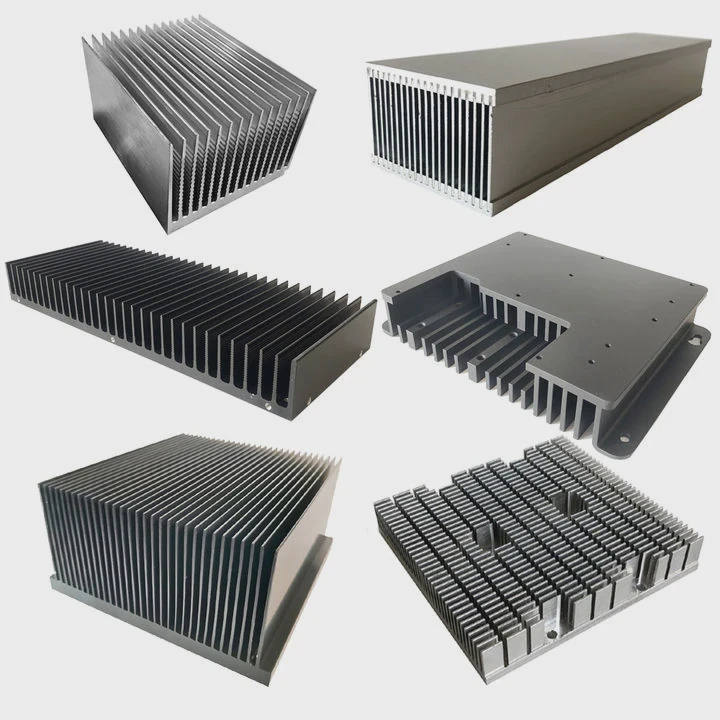
Placing fins over the hottest part ensures maximum cooling. Orientation also matters. Vertical fins align with natural convection, letting warm air rise and draw cooler air from below. Horizontal fins work better with forced airflow from fans.
Edge vs. Center Fins
Edges of the heat sink can also dissipate heat, but the center often gets the hottest. Adding more fins at the center improves overall performance. Designers sometimes taper fin height from center to edges to balance airflow and heat removal.
Multi-Level Fin Design
Some high-power heat sinks use multi-level fins. This means smaller fins are placed between larger fins. This increases surface area even more while keeping airflow effective. It also prevents hot spots and keeps the device safe.
Understanding fin placement allows engineers to design heat sinks that are both compact and highly efficient. A poorly placed fin may block airflow and reduce cooling performance.
Which Fin Structures Are Commonly Used?
There are several fin types, each solving different cooling challenges. The problem is that one size does not fit all.
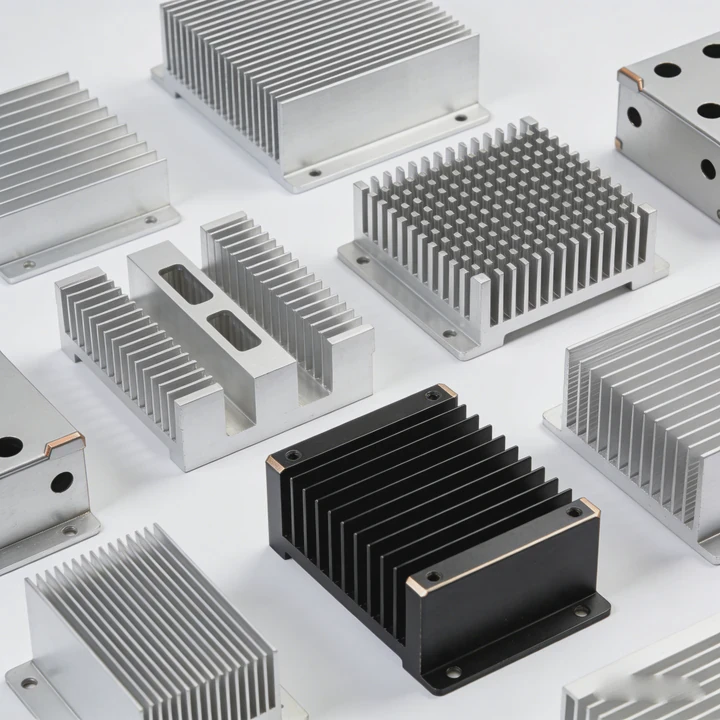
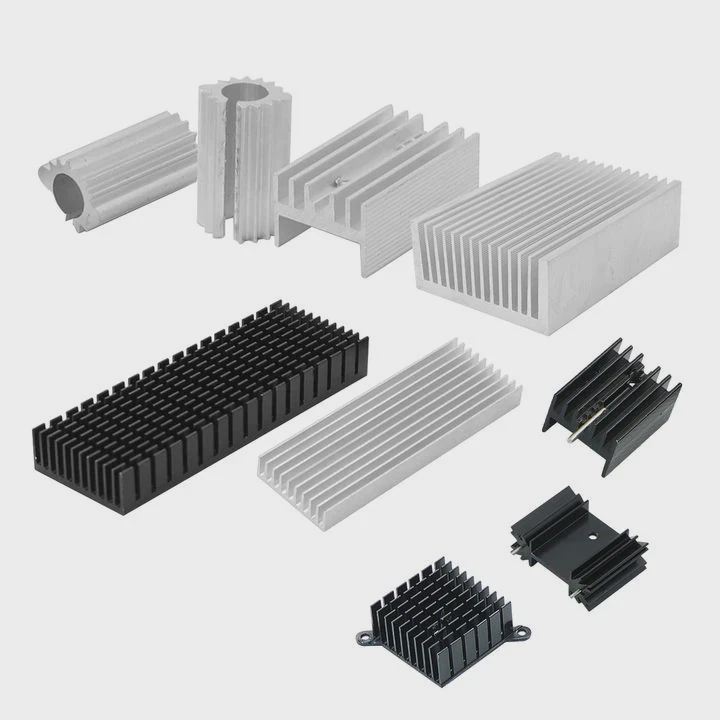
Common fin structures include straight, pin, and flared designs, each providing specific airflow and surface area advantages depending on the application.
Straight Fins
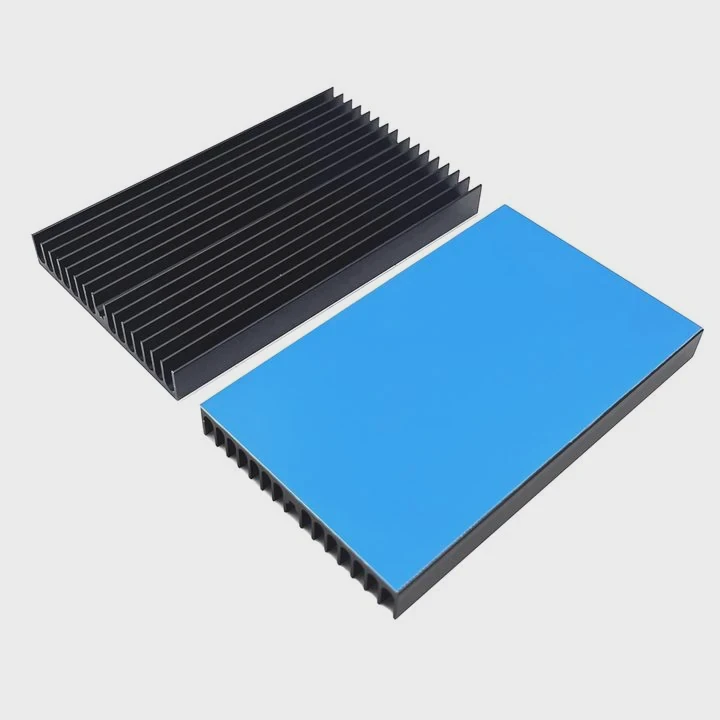
Straight fins are simple vertical plates. They are easy to manufacture and provide good surface area. They work well for forced airflow applications, such as computer CPUs with fans.
Pin Fins
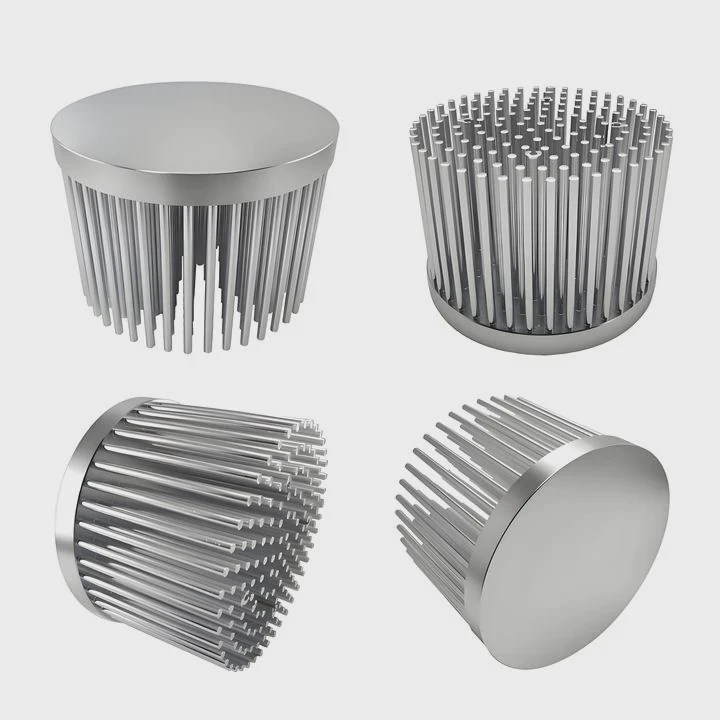
Pin fins are small cylindrical or rectangular posts. They allow air to flow around them in multiple directions, increasing turbulence. This improves heat transfer in compact spaces. Pin fins are ideal for limited airflow or natural convection scenarios.
Flared or Wavy Fins
Flared or wavy fins increase airflow turbulence and contact area. They are often used in automotive electronics or LED cooling. They prevent air from creating laminar flow, which reduces heat transfer efficiency.
Comparative Table of Fin Types
| Fin Type | Best Use Case | Pros | Cons |
|---|---|---|---|
| Straight | Forced airflow | Easy to make, good area | Limited turbulence |
| Pin | Natural or restricted airflow | High turbulence, compact | Harder to manufacture |
| Wavy/Flared | High heat flux | Excellent heat transfer | More complex and costly |
Material and Manufacturing Considerations
Aluminum extrusion allows straight or flared fins easily. Pin fins may require casting or machining. Copper fins are heavier but provide higher thermal conductivity. Engineers select fin type based on thermal needs, space constraints, and cost.
Choosing the right fin design improves heat sink performance while balancing manufacturing complexity and cost. It ensures devices stay cool under normal and extreme operating conditions.
Conclusion
Fins are essential because they increase surface area, guide airflow, and enhance heat transfer. Proper design ensures reliable cooling, protecting electronics and improving performance over time.