Which Packaging Methods Are Recommended for Heat Sinks?
- Yongxing
- 07 Aug ,2026
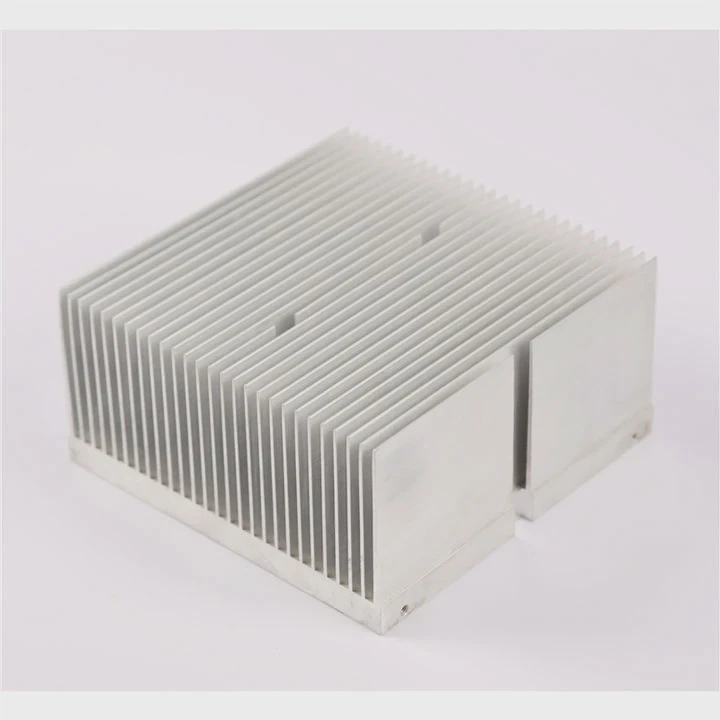
Heat sinks often leave the factory in perfect condition but arrive with bent fins, scratches, or damaged surfaces. Poor packaging can turn a high-quality product into a costly problem before it reaches the customer.
The best packaging methods for heat sinks combine protective wrapping, custom inserts, strong outer cartons, moisture protection, and proper handling practices. The right packaging prevents fin damage, reduces shipping risks, protects surface quality, and lowers replacement costs throughout the supply chain.
Many buyers focus on thermal performance, materials, and machining quality. Yet packaging deserves equal attention. Even a perfectly manufactured heat sink can fail customer expectations if transportation damage affects its appearance or installation. Good packaging is not simply about protection. It is also about reducing logistics costs, improving customer satisfaction, and maintaining product quality from the factory to the final assembly line.
Do Protective Materials Prevent Fin Damage?
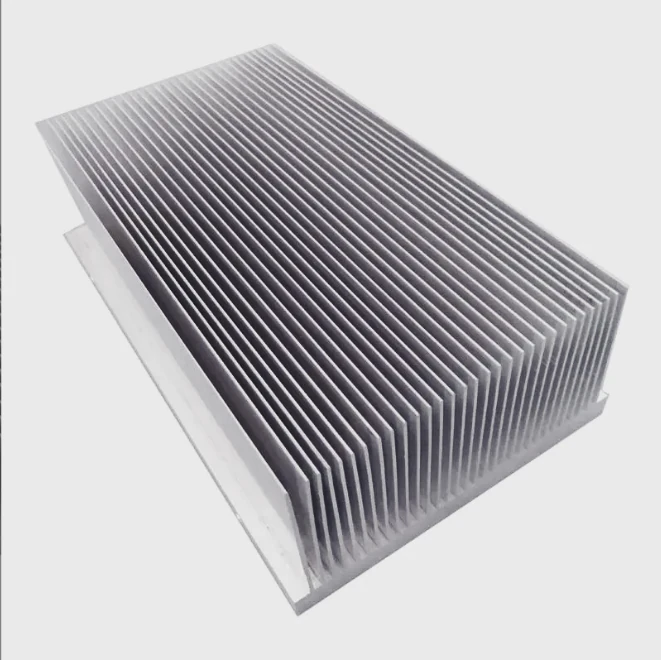
Heat sink fins are usually the most fragile part of the product. Thin aluminum or copper fins can bend easily during transportation. Protective materials greatly reduce fin damage by separating parts, absorbing impacts, and preventing direct contact between products during shipping.
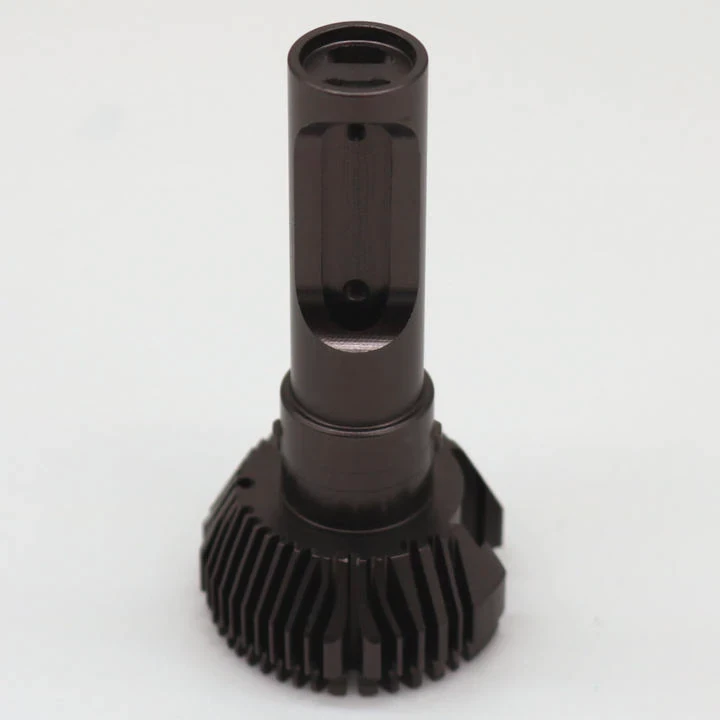
Fin damage is one of the most common issues in heat sink transportation. It usually happens when several products touch each other inside one package. During shipping, vibration, sudden drops, and compression can cause the fins to press against nearby parts. Even a small impact may permanently bend thin fins.
Different protective materials work in different ways. Some absorb impact, while others create enough space so that products never touch.
Common Protective Materials
| Material | Main Purpose | Best Application |
|---|---|---|
| PE foam wrap | Cushion against impact | Finished heat sinks |
| Bubble wrap | Surface protection | Small batches |
| EPE foam sheets | Shock absorption | Large aluminum heat sinks |
| Protective plastic film | Prevent scratches | CNC-machined surfaces |
| Corner protectors | Edge protection | Heavy assemblies |
Soft materials absorb vibration throughout transportation. This helps protect delicate fins from repeated movement inside the box. Protective films also prevent scratches on anodized surfaces without affecting the thermal structure.
Why Separation Matters
Many damaged heat sinks are not damaged by outside forces. They are damaged by each other.
When products move inside one carton, fins may collide repeatedly. This continuous contact often creates more damage than a single drop during shipping.
For this reason, every heat sink should remain isolated from neighboring products whenever possible.
Packaging Based on Fin Design
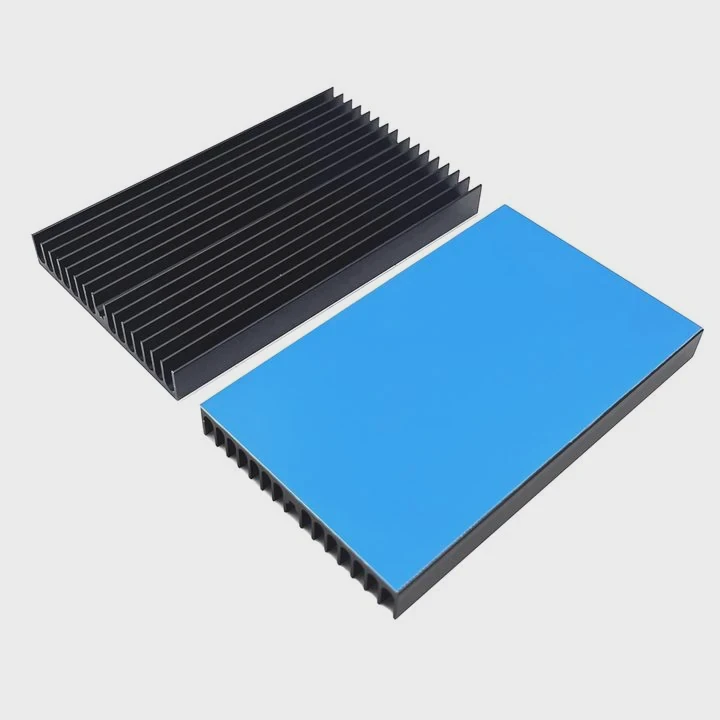
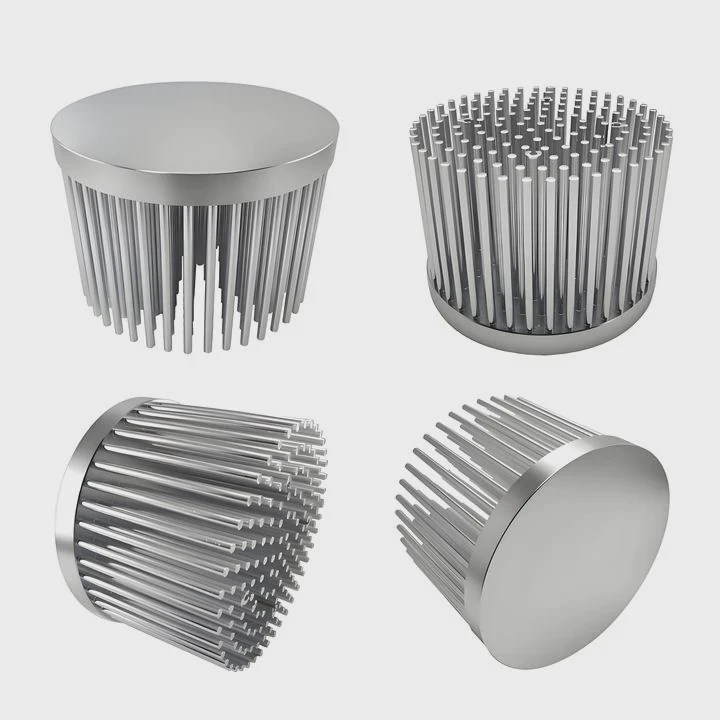
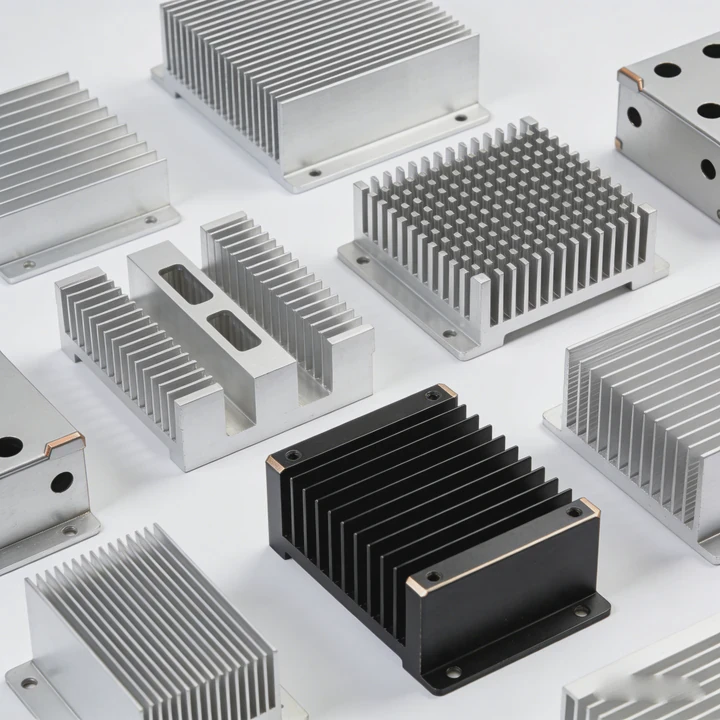
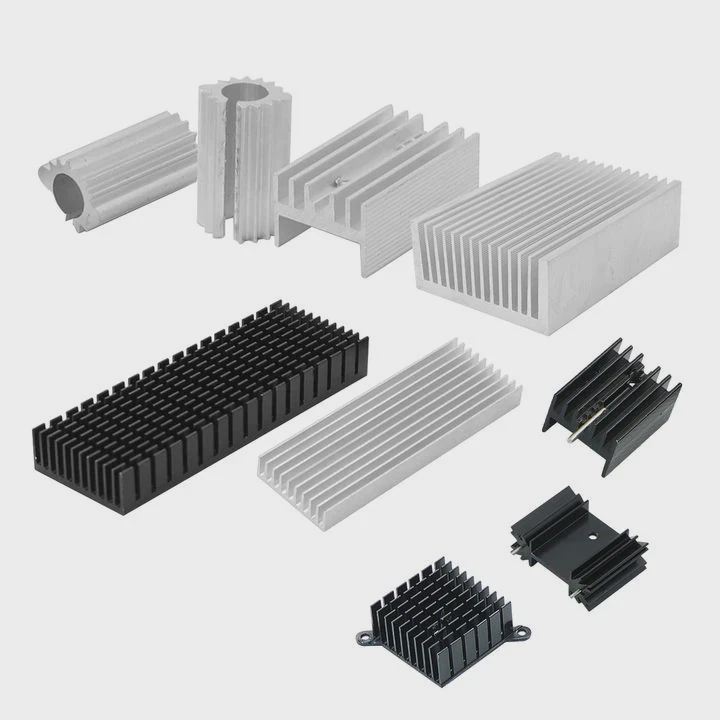
Heat sinks come in many designs. Thick skived fins behave differently from thin extruded fins. Large bonded-fin assemblies also require additional support because their height creates extra leverage during impacts.
Packaging should match the product instead of using one standard solution.
For example:
- Thin fins need soft cushioning around the fin area.
- Heavy base plates require stronger bottom support.
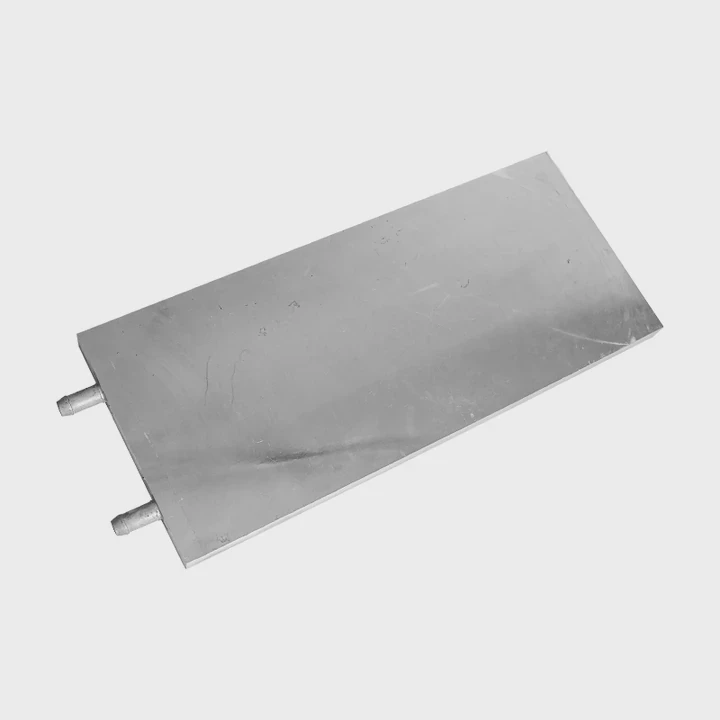
- Large liquid cooling plates require rigid positioning.
- Machined surfaces benefit from protective films before wrapping.
Another important point is weight distribution. A heavy base combined with tall fins can shift during transport if the package does not hold the product firmly. Internal movement creates unnecessary stress on the fin structure.
Proper protective materials also improve customer experience. When customers open the carton and find every fin straight and every surface clean, they immediately gain confidence in product quality. That first impression often reflects the manufacturer’s attention to detail.
Although protective materials add a small packaging cost, they usually save much more by reducing warranty claims, replacement shipments, production delays, and customer complaints.
Can Foam or Cardboard Inserts Improve Safety?
Loose products inside a shipping carton are much more likely to become damaged. Foam and cardboard inserts improve safety by fixing the heat sink in place, reducing movement, distributing impact forces, and protecting fragile fin structures during transportation.
Internal inserts are often overlooked, yet they play one of the biggest roles in packaging performance.
The goal is simple. The product should remain completely stable from the moment the carton is sealed until it reaches the customer.
Foam Inserts
Foam inserts offer excellent shock absorption.
Closed-cell polyethylene foam is widely used because it combines strength with flexibility. Custom-cut foam holds each product securely while absorbing vibration from trucks, ships, and air freight.
Foam works especially well for:
- High-value heat sinks
- Precision-machined parts
- Prototype shipments
- Medical equipment cooling modules
- Aerospace applications
The foam surrounds the product while leaving enough space to avoid pressure on delicate fins.
Cardboard Inserts
Cardboard inserts provide structure at a lower cost.
Die-cut cardboard can create individual compartments that separate multiple heat sinks inside one carton. This solution works well for medium-volume production where cost control is important.
Cardboard also offers environmental benefits because it is recyclable and easy to dispose of after delivery.
Comparing Both Options
| Feature | Foam Inserts | Cardboard Inserts |
|---|---|---|
| Shock absorption | Excellent | Moderate |
| Product positioning | Excellent | Good |
| Cost | Higher | Lower |
| Recyclability | Moderate | Excellent |
| Best for | Premium products | Standard production |
Many manufacturers combine both materials instead of choosing only one.
For example, foam may support the bottom of the heat sink while cardboard separates multiple products inside one master carton.
Custom Inserts Increase Reliability
Custom packaging may cost slightly more during development, but it often reduces total logistics expenses.
When inserts match the exact dimensions of the heat sink:
- Products cannot rotate.
- Heavy components remain centered.
- Fin contact disappears.
- Outer cartons experience less internal stress.
- Packing becomes faster for factory workers.
Custom inserts also improve loading efficiency because products stack more consistently on pallets.
Another benefit is repeatability. Every shipment uses the same packaging process regardless of who packs the carton. This creates more consistent shipping quality across different production batches.
Large OEM customers often request packaging validation before approving mass production. Drop testing, vibration testing, and compression testing become much easier when custom inserts are already part of the package design.
For long international shipments involving trucks, containers, ports, warehouses, and final delivery vehicles, internal inserts often provide the biggest improvement in shipping protection.
Are Anti-Static Options Necessary for Electronics?
Many heat sinks are installed directly onto electronic devices. Anti-static packaging becomes necessary whenever electrostatic discharge could damage nearby electronic components or complete assemblies during handling and transportation.
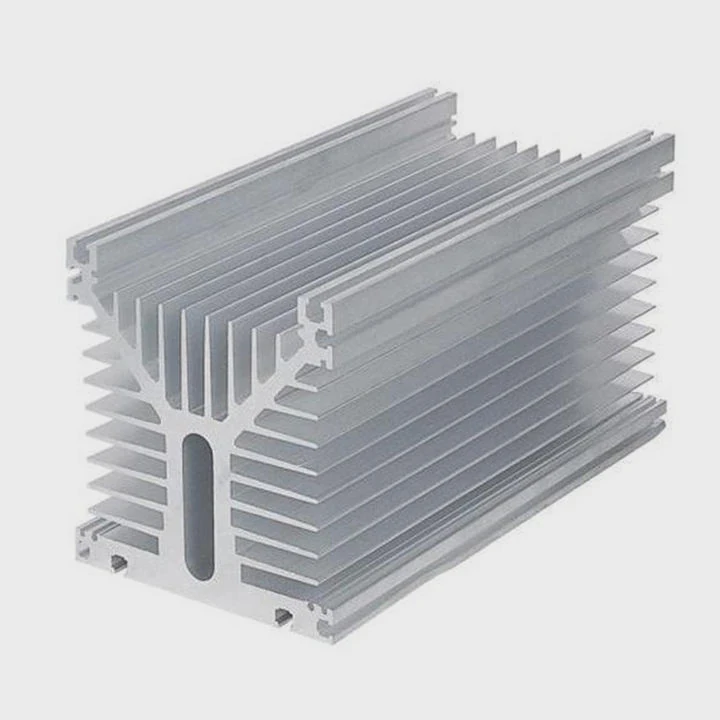
Heat sinks themselves are made from metal. Metal does not suffer permanent damage from static electricity.
However, many shipments include much more than the heat sink alone.
Complete thermal modules may contain:
- PCBs
- Sensors
- Fan assemblies
- Power modules
- LED boards
- Semiconductor devices
- Thermal interface materials
These components can be sensitive to electrostatic discharge.
When Anti-Static Packaging Is Recommended
Anti-static packaging is strongly recommended for products that include electronic assemblies.
Typical examples include:
- CPU cooling modules
- GPU cooling assemblies
- Industrial control modules
- Medical electronics
- Communication equipment
- Power electronics
In these products, static electricity may damage electronic circuits long before the customer installs the product.
Common Anti-Static Packaging Materials
Pink anti-static bags are commonly used for temporary protection against static generation.
Metalized shielding bags provide higher protection because they block external electrostatic discharge from reaching sensitive components.
Conductive foam can safely hold electronic connectors while preventing electrostatic buildup.
ESD-safe trays also help organize products during production and transportation.
Complete ESD Protection
Packaging alone cannot eliminate electrostatic risks.
A complete ESD protection process usually includes:
ESD Workstations
Workers package products on grounded workstations.
Wrist Straps
Operators wear grounding straps to prevent charge buildup.
Conductive Containers
Finished products move between workstations inside ESD-safe containers.
Controlled Packaging Area
Humidity and grounding are carefully managed throughout the packing process.
For customers in industries such as telecommunications, automotive electronics, medical equipment, and semiconductor manufacturing, ESD protection often becomes part of the purchasing specification.
Ignoring these requirements may lead to hidden failures that only appear after final assembly.
Although anti-static materials cost more than standard packaging, they help avoid expensive field failures and improve overall product reliability.
How to Reduce Shipping Risk?
Shipping exposes heat sinks to vibration, compression, moisture, stacking pressure, and accidental drops. Reducing shipping risk requires strong packaging design, proper palletization, moisture control, careful labeling, and continuous logistics testing throughout the supply chain.
Transportation is often the longest part of a heat sink’s journey.
A shipment may travel by truck, rail, ship, warehouse, customs inspection, and local delivery before reaching the customer. Every transfer increases the chance of damage.
Reducing shipping risk requires thinking beyond the carton itself.
Strong Outer Cartons
High-strength corrugated cartons resist crushing during stacking.
Double-wall cartons are commonly used for heavier heat sinks.
Heavy products should never exceed the strength rating of the carton.
Moisture Protection
International shipping often exposes products to humidity changes.
Useful moisture protection includes:
- PE plastic bags
- Vacuum sealing
- Desiccant packs
- Moisture indicator cards
These materials reduce corrosion and surface oxidation during long ocean transportation.
Proper Pallet Design
Individual cartons may be well protected, yet poor pallet loading can still cause failures.
Good pallet practices include:
- Even weight distribution
- Stretch wrapping
- Corner protectors
- Strong pallet bases
- Stable stacking patterns
A stable pallet reduces movement throughout transportation.
Package Testing
Packaging should be tested before mass shipment.
Common tests include:
- Drop testing
- Vibration testing
- Compression testing
- Incline impact testing
- Environmental testing
Testing helps identify weak points before products enter commercial transportation.
Shipping Labels
Proper labels also reduce handling mistakes.
Common labels include:
- Fragile
- This Side Up
- Keep Dry
- Do Not Stack
- Center of Gravity
Although labels cannot prevent every accident, they encourage better handling throughout the logistics chain.
Work With Logistics Partners
Reliable freight partners understand how to transport industrial equipment safely.
Regular communication between manufacturers, freight companies, and customers helps identify recurring shipping issues and improve future packaging designs.
Packaging should also evolve over time. Customer feedback, transportation data, and damage reports provide valuable information for continuous improvement.
The most successful manufacturers treat packaging as part of product engineering instead of treating it as the final production step. A well-designed package protects not only the heat sink but also the manufacturer’s reputation. Every successful delivery strengthens customer confidence and reduces unnecessary replacement costs.
Conclusion
Excellent heat sink packaging combines protective materials, secure inserts, anti-static solutions when required, and proven shipping practices. A thoughtful packaging design keeps products safe throughout transportation, reduces logistics costs, and ensures every heat sink arrives ready for immediate installation.