Can Heat Sinks Be Custom-Shaped?
- Yongxing
- 02 Jul ,2026
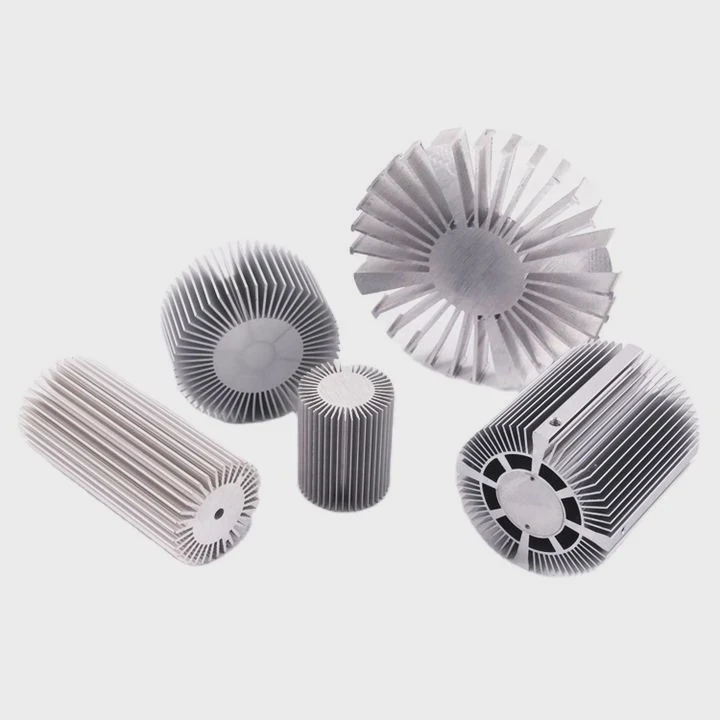
Many engineers struggle when standard heat sinks do not fit limited space, unusual layouts, or demanding thermal targets. This problem often appears late in product development and creates delays.
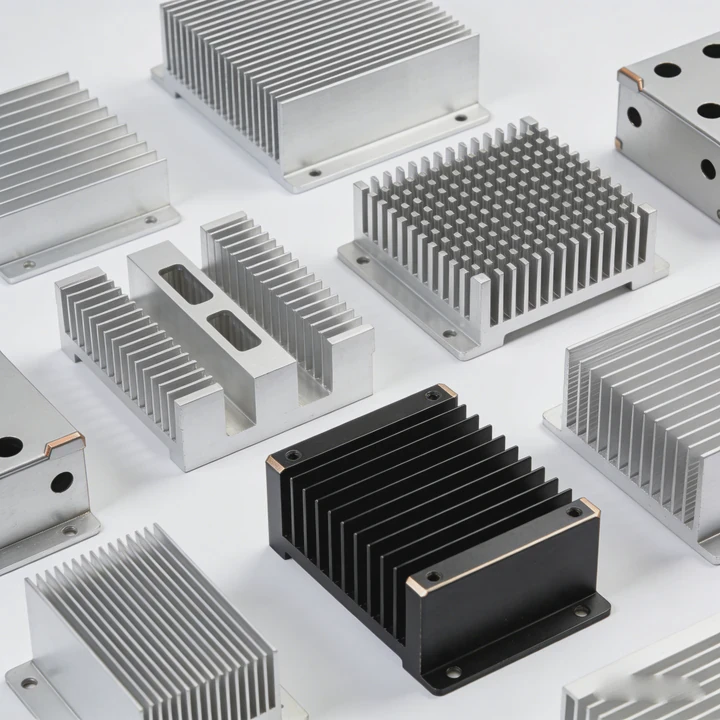
Yes, heat sinks can be custom-shaped through several manufacturing methods such as extrusion, CNC machining, skiving, die casting, forging, and bonded assembly. The best method depends on thermal goals, geometry, material choice, production volume, and cost requirements.
Many products now use compact and irregular layouts. Because of this trend, custom heat sinks have become a common solution in industries such as electronics, renewable energy, transportation, medical equipment, and telecommunications.
Which Manufacturing Methods Allow Custom Shapes?
A standard heat sink may not fit every application. Many projects require special dimensions, unusual fin structures, or integrated mounting features. This is where custom manufacturing becomes important.
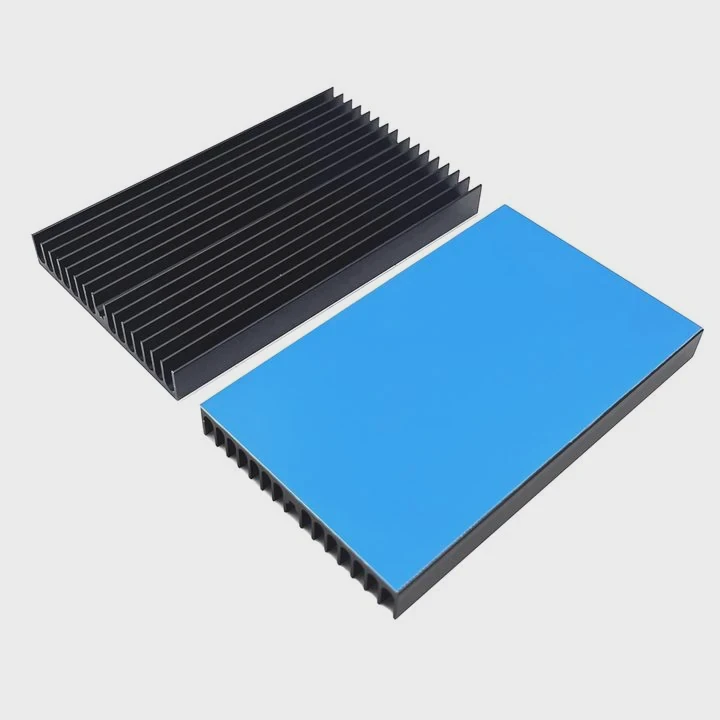
Several manufacturing methods support custom heat sink shapes. The most common options include CNC machining, extrusion, skiving, die casting, forging, vacuum brazing, and welded assemblies. Each method offers different benefits for complexity, thermal performance, cost, and production volume.
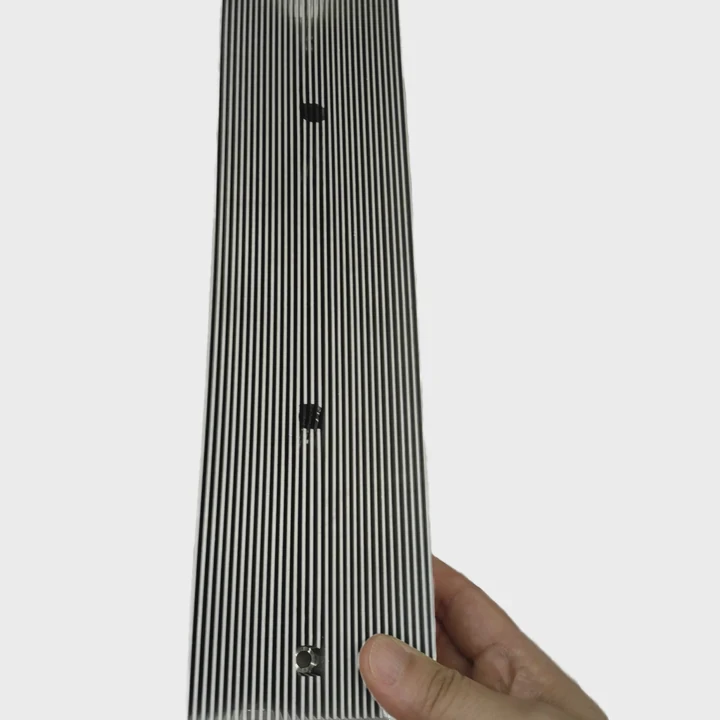
Custom shapes are possible because modern manufacturing offers many ways to create heat transfer structures. The key is selecting the process that matches both thermal and mechanical goals.
Common Manufacturing Options
| Manufacturing Method | Shape Flexibility | Typical Volume | Main Advantage |
|---|---|---|---|
| CNC Machining | Very High | Low to Medium | Excellent precision |
| Extrusion | Medium | Medium to High | Cost-effective |
| Skiving | High | Medium | High fin density |
| Die Casting | High | High | Complex integrated features |
| Forging | Medium | High | Strong structure |
| Vacuum Brazing | Very High | Medium to High | Multi-part assemblies |
CNC Machining
CNC machining offers one of the highest levels of design freedom. Engineers can create unique fin layouts, mounting holes, pockets, channels, and custom interfaces. This process works especially well during product development because design changes are easy to implement.
Many custom heat sink projects begin with CNC machining because tooling investment is low. The process can handle both aluminum and copper materials. It can also create very tight tolerances. This flexibility makes it a common choice for prototypes and small production runs.
Extrusion
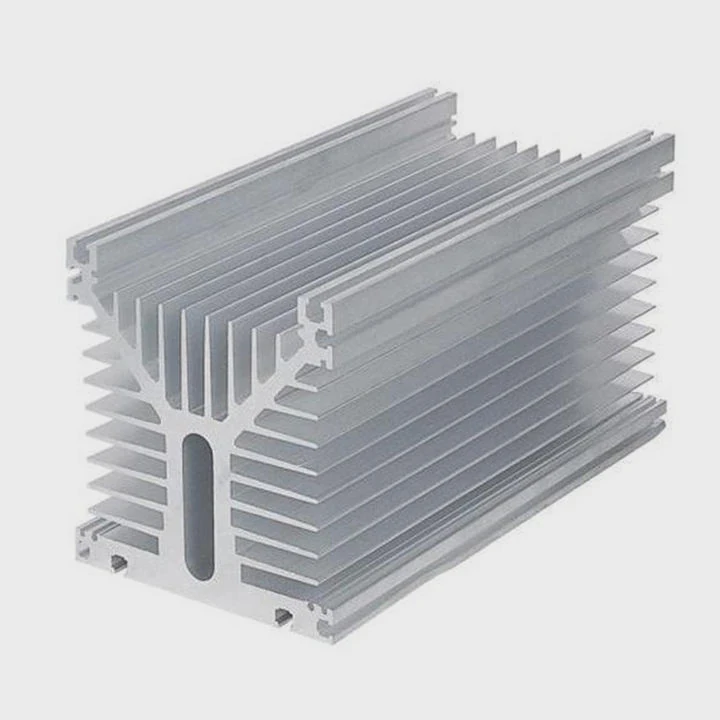
Extrusion remains one of the most popular methods for aluminum heat sinks. A custom extrusion die allows manufacturers to produce unique profiles at relatively low cost. While there are some design limits, extrusion provides an excellent balance between performance and price.
Extruded heat sinks work well when the design requires a consistent cross-section. Many power electronics systems, communication devices, and industrial control products use custom extrusions because they combine efficiency and scalability.
Skiving
Skiving cuts thin fins directly from a metal block. This method allows very high fin density and excellent thermal conductivity because the fins remain connected to the base material.
Designers often select skived heat sinks for applications with limited airflow space. The process creates taller and thinner fins than many traditional manufacturing methods.
Vacuum Brazing and Welded Structures
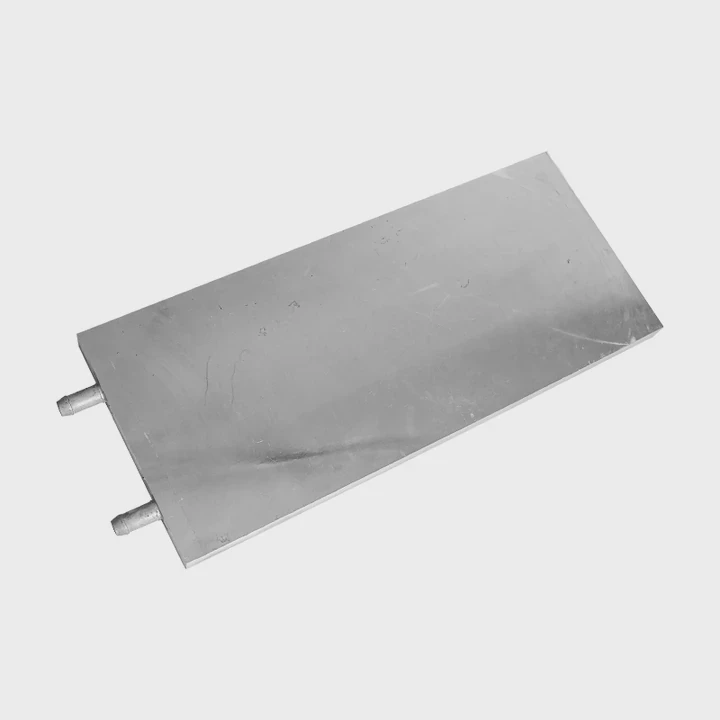
Many advanced heat sinks combine multiple components into one assembly. Vacuum brazing can join fins, cold plates, vapor chambers, and structural elements into complex thermal solutions.
This method is common in high-power applications where standard manufacturing processes cannot achieve the required performance. It also allows engineers to combine different materials into one integrated thermal system.
Choosing the Right Method
The best manufacturing method depends on several factors:
- Required thermal performance
- Available installation space
- Production volume
- Material selection
- Budget targets
- Lead time requirements
In many projects, the final solution uses more than one manufacturing process. A heat sink may start with an extrusion and then receive CNC machining for critical features. This hybrid approach often provides the best balance between cost and performance.
Do Complex Designs Affect Thermal Performance?
Many designers assume that more complex heat sinks automatically deliver better cooling. In reality, complexity alone does not guarantee improved thermal results.
Complex heat sink designs can improve thermal performance when they increase surface area, airflow efficiency, or heat spreading capability. However, excessive complexity may restrict airflow, increase thermal resistance, raise manufacturing costs, and reduce overall effectiveness.
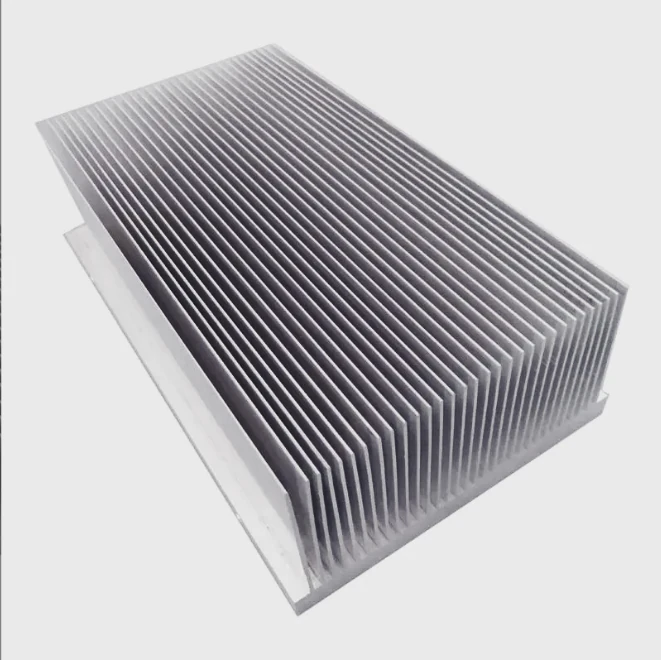
Thermal performance depends on physics, not appearance. A complicated design that looks impressive may perform worse than a simpler solution if airflow becomes restricted.
Why Complexity Can Help
Heat sinks remove heat through surface area and airflow. More fins often mean more cooling area. Special shapes can also direct airflow toward hot regions.
Some custom features that may improve performance include:
- Variable fin spacing
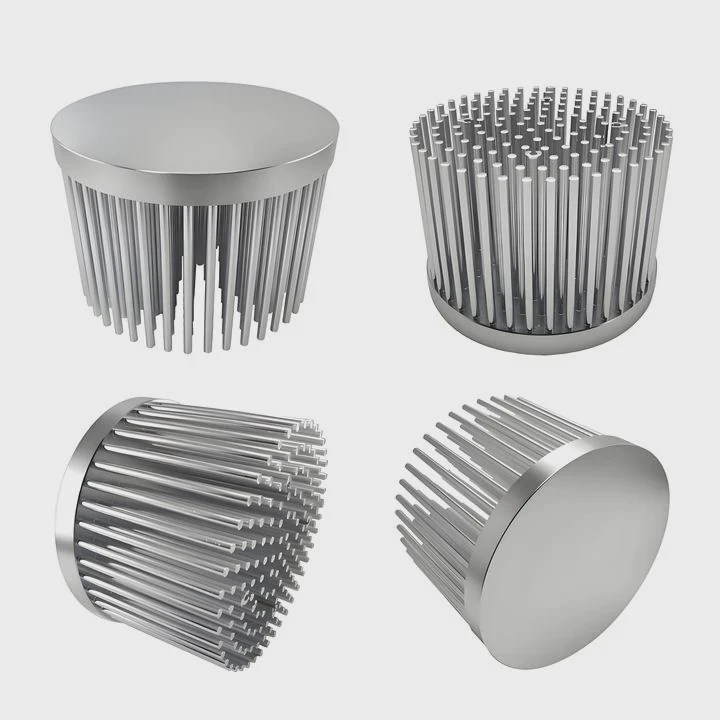
- Pin-fin arrays
- Curved airflow channels
- Integrated vapor chambers
- Heat pipe connections
- Multi-level fin structures
These features can improve heat transfer when they are designed correctly. They may also help distribute heat more evenly across the entire structure.
Why Complexity Can Hurt
Every design change creates trade-offs. A heat sink with extremely dense fins may trap air instead of improving airflow.
Common problems include:
Airflow Restriction
If fin spacing becomes too narrow, airflow resistance increases. Fans must work harder, and cooling efficiency may drop.
Manufacturing Limits
Very thin features may be difficult to produce consistently. Small variations can affect thermal behavior across production batches.
Increased Cost
Complex geometry often requires more machining time, specialized tooling, or multiple assembly steps.
Thermal Simulation Matters
Modern projects rely heavily on simulation before production. Thermal analysis helps predict how heat moves through the structure.
Engineers usually examine:
| Design Factor | Thermal Impact |
|---|---|
| Fin Height | Influences surface area |
| Fin Thickness | Affects heat conduction |
| Fin Spacing | Controls airflow |
| Material Selection | Determines heat transfer rate |
| Base Thickness | Influences heat spreading |
| Air Velocity | Affects convection efficiency |
Balancing Simplicity and Performance
The strongest designs often follow a simple principle. Every feature should serve a thermal purpose.
During one project, a team developed a heat sink with several complex fin patterns because everyone expected more fins to create better cooling. After thermal simulation and prototype testing, the results showed only a small improvement compared with a simpler design. The additional features increased production cost and manufacturing time without delivering meaningful thermal gains.
The final design removed several unnecessary structures. The heat sink became easier to manufacture, less expensive, and almost identical in thermal performance. This example shows why successful thermal design depends on engineering data rather than visual complexity.
Are Prototype Runs Needed for Custom Shapes?
Many companies want to move directly into production after completing a design. While this approach may save time initially, it often increases risk later.
Prototype runs are strongly recommended for custom heat sinks because they validate thermal performance, dimensional accuracy, manufacturability, assembly compatibility, and production readiness before full-scale manufacturing begins.
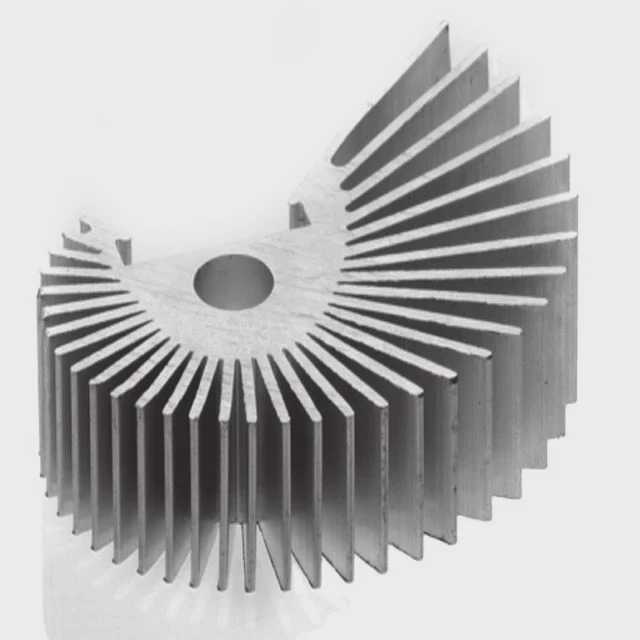
Custom heat sinks often contain unique features that have never been manufactured before. Because of this, prototype testing provides valuable information that computer models alone cannot fully predict.
Why Prototypes Matter
Even advanced simulations rely on assumptions. Real-world testing reveals how a design behaves under actual operating conditions.
Prototype evaluation can identify:
- Thermal bottlenecks
- Airflow issues
- Material defects
- Assembly challenges
- Mechanical interference
- Unexpected temperature variations
Many customers discover small design issues during prototype testing that would have become expensive problems during mass production.
Thermal Validation
The primary purpose of a prototype is verifying thermal performance.
Engineers usually measure:
Junction Temperature
This value shows how effectively heat leaves the source device.
Temperature Uniformity
Uneven heat distribution may indicate spreading problems.
Airflow Behavior
Smoke testing, airflow mapping, or sensor measurements reveal how air moves through the fins.
Design Optimization
Prototype testing often leads to improvements before production.
Examples include:
- Adjusting fin spacing
- Modifying base thickness
- Changing mounting locations
- Improving surface treatments
- Revising airflow paths
Even small adjustments can produce measurable thermal improvements. These refinements are easier to make before production tooling is finalized.
Cost Savings Through Testing
Some organizations avoid prototypes to reduce costs. In practice, prototype programs often prevent larger expenses later.
Consider the difference:
| Development Stage | Cost of Design Change |
|---|---|
| Prototype Phase | Low |
| Pilot Production | Medium |
| Full Production | Very High |
A design flaw discovered after thousands of units have been manufactured can become extremely expensive.
Prototype Quantities
The number of prototypes depends on project goals.
Common quantities include:
- 1-5 units for initial evaluation
- 10-20 units for engineering validation
- 20-100 units for pilot production testing
Building Confidence Before Production
Prototype runs also help customers gain confidence in the supplier’s process. Measurements collected during testing create valuable documentation for future production control.
Many successful projects follow a structured path:
- Design review
- Thermal simulation
- Prototype manufacturing
- Thermal testing
- Design refinement
- Pilot production
- Full-scale manufacturing
This process reduces uncertainty and improves the probability of long-term success.
How to Ensure Precision in Custom Heat Sinks?
A custom heat sink is only effective if it is manufactured accurately. Even a strong thermal design can fail when dimensions drift outside acceptable limits.
Precision in custom heat sinks is achieved through controlled manufacturing processes, tight quality systems, advanced inspection equipment, material consistency, process validation, and continuous measurement throughout production.
Precision affects more than appearance. It directly influences thermal contact, assembly quality, airflow behavior, and long-term reliability.
Start With Design for Manufacturability
Precision begins during design, not production.
Engineers should define:
- Critical dimensions
- Tolerance requirements
- Flatness specifications
- Surface finish requirements
- Inspection standards
When tolerances are unrealistic, manufacturing becomes more difficult and expensive. A practical design helps maintain consistency from prototype stage to mass production.
Material Quality Matters
Consistent material properties support consistent results.
Alloy Composition
Variations can affect machining behavior and thermal conductivity.
Material Flatness
Poor raw material quality creates challenges during machining and assembly.
For custom heat sinks, material quality often determines whether tight tolerances can be maintained throughout production.
Controlled Manufacturing Processes
Precision relies on stable processes.
Important controls include:
- CNC machine calibration
- Tool wear monitoring
- Fixture stability
- Process documentation
- Operator training
Manufacturers that maintain strict process controls usually achieve better repeatability and lower defect rates.
Inspection Throughout Production
Quality control should not occur only at the end of manufacturing.
Many manufacturers use inspection checkpoints during production.
Incoming Material Inspection
Raw materials are checked before processing begins.
In-Process Inspection
Critical dimensions are measured during manufacturing.
Final Inspection
Finished parts undergo complete verification before shipment.
Measurement Technologies
Modern facilities use advanced equipment to verify dimensions.
Common tools include:
| Inspection Tool | Purpose |
|---|---|
| Coordinate Measuring Machine (CMM) | Dimensional verification |
| Optical Measurement System | Feature inspection |
| Surface Roughness Tester | Finish measurement |
| Height Gauge | Precision dimensions |
| Laser Scanner | Complex geometry analysis |
Thermal Contact Surface Precision
One of the most important areas is the mounting interface.
A heat sink may have excellent fin performance. However, poor flatness at the contact surface can create thermal resistance and reduce cooling efficiency.
Critical factors include:
- Flatness
- Surface roughness
- Parallelism
- Hole position accuracy
These features directly affect heat transfer between the heat source and the heat sink.
Process Validation
Precision becomes sustainable when manufacturers validate their processes.
Validation typically includes:
- First article inspection
- Capability studies
- Process qualification
- Repeatability testing
- Production monitoring
These activities confirm that production can consistently achieve the required specifications.
Long-Term Consistency
Precision is not only about producing one perfect sample. It is about producing thousands of identical units over time.
In many industries, including renewable energy, rail transportation, medical equipment, and telecommunications, consistency is essential. Customers expect every heat sink to perform within the same thermal range. Strong manufacturing systems make this possible by combining process control, inspection, and continuous improvement.
Conclusion
Custom-shaped heat sinks are widely achievable through modern manufacturing methods. The best results come from selecting the right production process, balancing complexity with performance, validating designs through prototypes, and maintaining strict precision controls throughout manufacturing.