How Accurate Is Heat Sink Machining?
- Yongxing
- 21 Jul ,2026
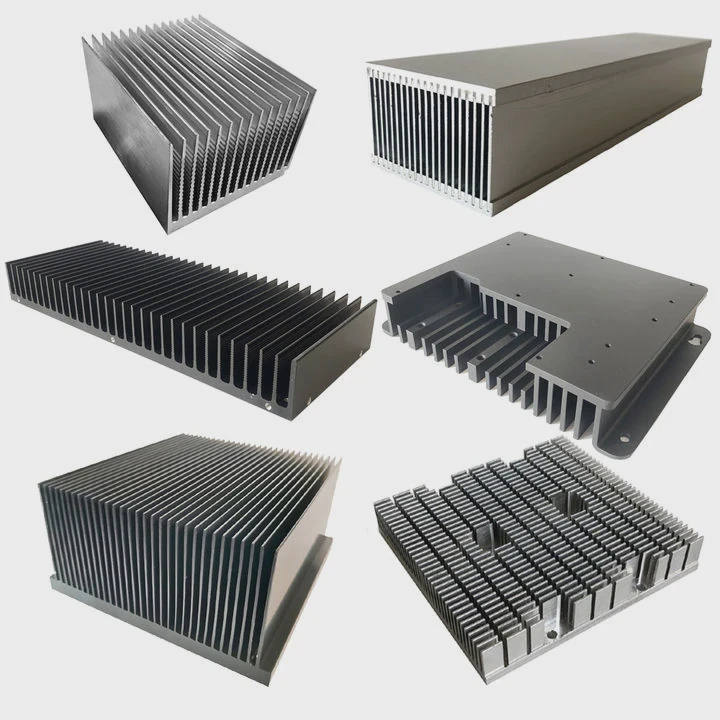
Heat sinks often fail because machining accuracy does not match thermal design needs. Small dimensional errors can create poor contact, higher thermal resistance, and lower system reliability.
Heat sink machining can achieve extremely high accuracy when the right process is selected. CNC machining offers excellent precision for most designs, while EDM provides even finer accuracy for complex features. Proper tolerances and surface quality directly improve thermal performance and assembly reliability.
Many engineers focus on material selection or cooling methods first. That makes sense. Still, machining accuracy is just as important. Even the best aluminum or copper heat sink cannot perform well if key dimensions are not controlled. Understanding how machining affects heat transfer helps avoid expensive redesigns and production issues later.
Do CNC or EDM Offer High Precision?
Heat sink projects often require complex shapes and strict dimensions. Choosing the wrong machining method may increase cost while reducing accuracy.
Both CNC machining and EDM deliver high precision, but they serve different purposes. CNC machining is ideal for most heat sink designs because it combines excellent accuracy, fast production, and lower cost. EDM is better for very small features, deep slots, and shapes that traditional cutting tools cannot produce.
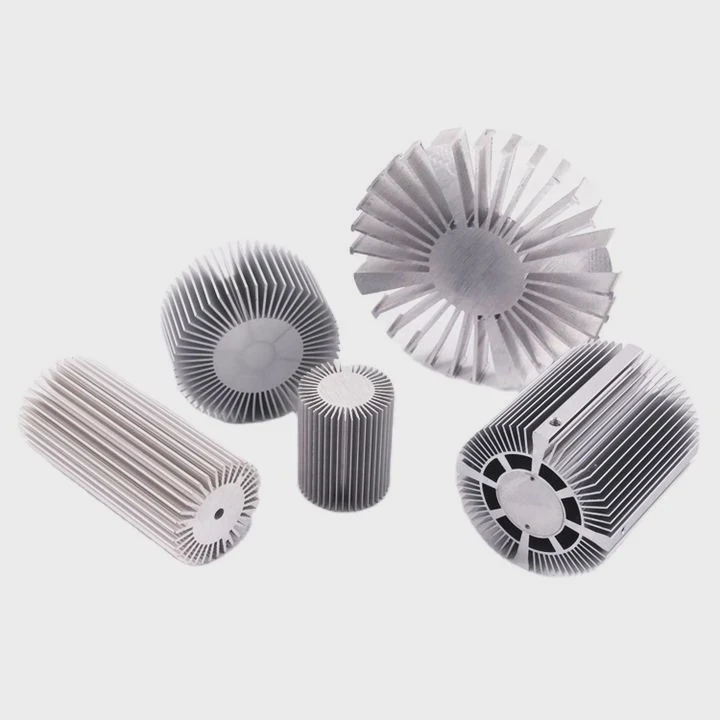
Many customers ask which process delivers better precision. The answer depends on the design instead of one process being better than the other.
CNC Machining Advantages
CNC machining removes material with rotating cutting tools. Modern CNC equipment produces consistent dimensions across large production runs.
Typical CNC capabilities include:
| Feature | Typical CNC Performance |
|---|---|
| General tolerance | ±0.05 mm |
| Precision machining | ±0.01 mm |
| Surface finish | Very smooth after finishing |
| Production speed | High |
| Cost | Moderate |
CNC machining works well for:
- Aluminum heat sinks
- Copper heat sinks
- Cold plate components
- Fin structures
- Mounting surfaces
- Custom electronic cooling parts
Most thermal management products use CNC because it provides an excellent balance between accuracy and manufacturing efficiency.
EDM Advantages
Electrical Discharge Machining removes material using electrical sparks instead of cutting tools.
This process becomes useful when the design includes:
- Extremely narrow slots
- Deep internal channels
- Sharp inside corners
- Very hard materials
- Features that cutters cannot reach
EDM usually produces tighter dimensional control than conventional machining. It also creates shapes that would otherwise require several manufacturing steps.
Which Process Is Better?
The best choice depends on the application.
If the heat sink has standard fins, mounting holes, and flat contact surfaces, CNC machining is usually the best option.
If the design contains micro channels, complex cavities, or very thin structures, EDM may provide the required precision.
Many advanced heat sinks actually combine both processes. CNC machining creates the main structure first. EDM then finishes only the critical features. This approach controls manufacturing cost while maintaining excellent dimensional accuracy.
Over many projects, this combination has proven effective because it keeps production efficient without sacrificing thermal performance. Selecting the right process early also reduces redesigns and shortens manufacturing time.
Are Tolerances Critical for Thermal Performance?
Many engineers think only large dimensional errors matter. In reality, very small deviations can significantly change heat transfer performance.
Yes. Tight tolerances reduce thermal resistance by improving contact between the heat source and the heat sink. Poor dimensional control creates air gaps that reduce cooling efficiency even when high-performance thermal interface materials are used.
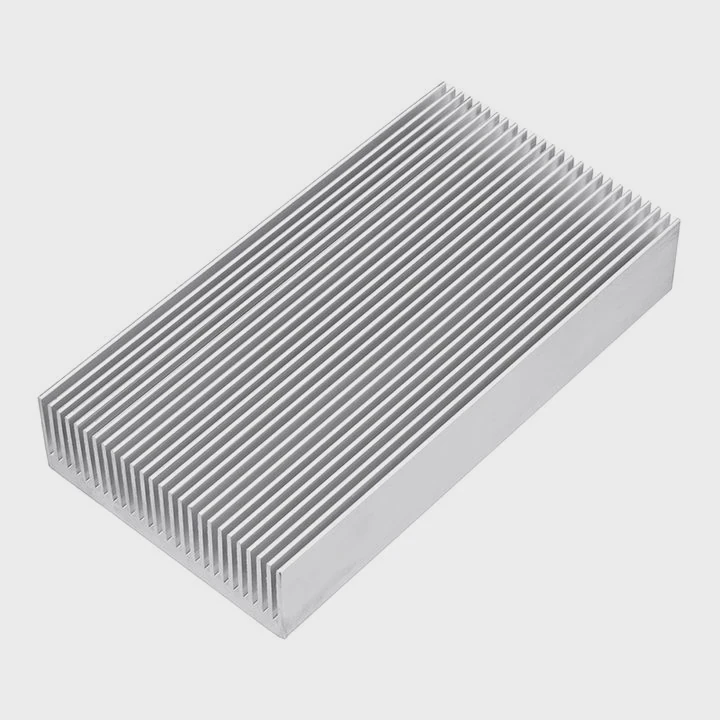
Heat always follows the easiest path from the electronic device into the cooling system. Every small gap increases resistance along that path.
Why Flatness Matters
The base of the heat sink touches the power device.
If the surface is not flat:
- Contact area becomes smaller.
- Air pockets appear.
- Thermal resistance increases.
- Device temperature rises.
Even a high-quality thermal interface material cannot completely fill large surface errors.
Mounting Accuracy Also Matters
Heat sinks usually include mounting holes, threaded inserts, or locating pins.
Poor positional accuracy may cause:
- Uneven mounting pressure
- Component stress
- Reduced contact area
- Assembly problems
- Lower product reliability
These problems become more serious in high-power electronics where every degree of temperature matters.
Typical Critical Dimensions
Not every feature requires the same tolerance.
| Heat Sink Feature | Importance | Typical Control |
|---|---|---|
| Base flatness | Very High | Very tight |
| Mounting hole position | High | Tight |
| Overall length | Medium | Standard |
| Fin height | Medium | Moderate |
| Cosmetic edges | Low | Standard |
This is why experienced manufacturers study engineering drawings before production begins. Tight tolerances should only be applied where they improve product performance.
Applying extremely tight tolerances everywhere increases machining time, inspection effort, and production cost without improving cooling performance.
Finding the right balance is an important part of heat sink manufacturing. Engineers should identify the features that directly influence thermal contact and mechanical assembly. These dimensions deserve the highest machining accuracy. Less critical features can use standard tolerances without affecting overall system performance.
Can Surface Finishing Affect Efficiency?
Many people think surface finishing only improves appearance. For heat sinks, the surface condition often affects thermal performance as well.
Yes. Surface finishing influences thermal contact, corrosion resistance, radiation performance, and long-term reliability. The correct finish depends on the cooling method and operating environment rather than appearance alone.
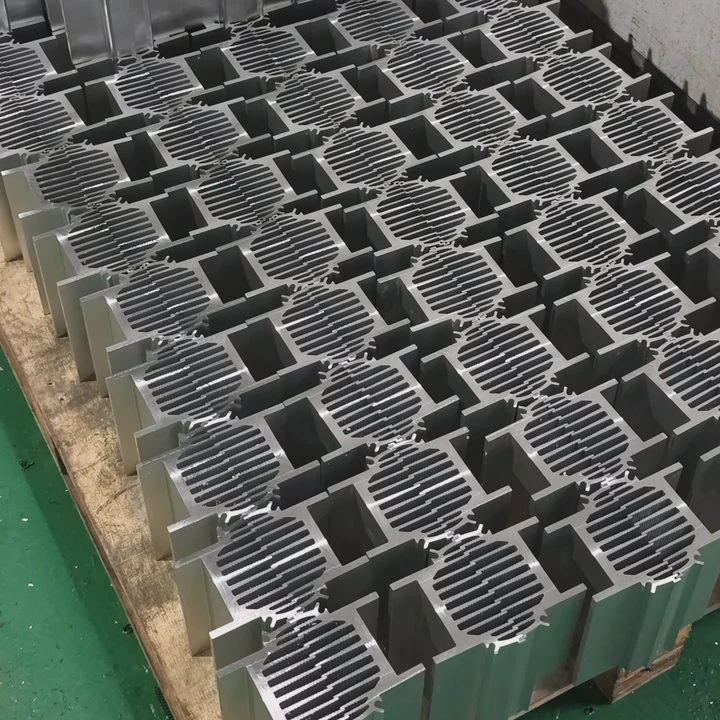
Surface finishing plays several different roles throughout the life of a heat sink.
Better Contact Surfaces
A smoother mounting surface creates better contact with:
- CPUs
- IGBT modules
- MOSFET packages
- Power electronics
- LED modules
Better contact reduces interface resistance.
Surface Treatments
Different finishes provide different benefits.
Common options include:
- CNC fine milling
- Grinding
- Polishing
- Sand blasting
- Clear anodizing
- Black anodizing
- Nickel plating
- Chemical conversion coating
Black anodizing receives attention because it improves thermal radiation. This benefit becomes more noticeable in natural convection applications where airflow is limited.
Corrosion Protection
Heat sinks often operate in harsh environments.
These include:
- Outdoor telecom equipment
- Railway systems
- Marine electronics
- Industrial automation
- Renewable energy systems
Protective coatings help maintain stable performance over many years.
Surface Roughness Balance
Extremely smooth surfaces are not always the best solution.
Some thermal interface materials perform better with a controlled surface texture because they spread more evenly across microscopic valleys.
Engineers usually specify surface roughness according to both the interface material and the mounting pressure.
For example, high-power semiconductor modules often require much smoother contact surfaces than general electronic enclosures.
Surface finishing should therefore be considered as part of the overall thermal design instead of the final cosmetic step. Selecting the proper finish improves cooling performance, increases durability, and supports consistent production quality throughout the product’s service life.
Which Designs Need Tight Dimensional Control?
Some heat sinks perform well with normal machining accuracy. Others require extremely precise manufacturing because even tiny dimensional changes affect cooling performance.
Heat sinks used in high-power, high-density, or liquid cooling systems require the tightest dimensional control. Complex assemblies and advanced thermal modules also depend on consistent machining accuracy for reliable operation.
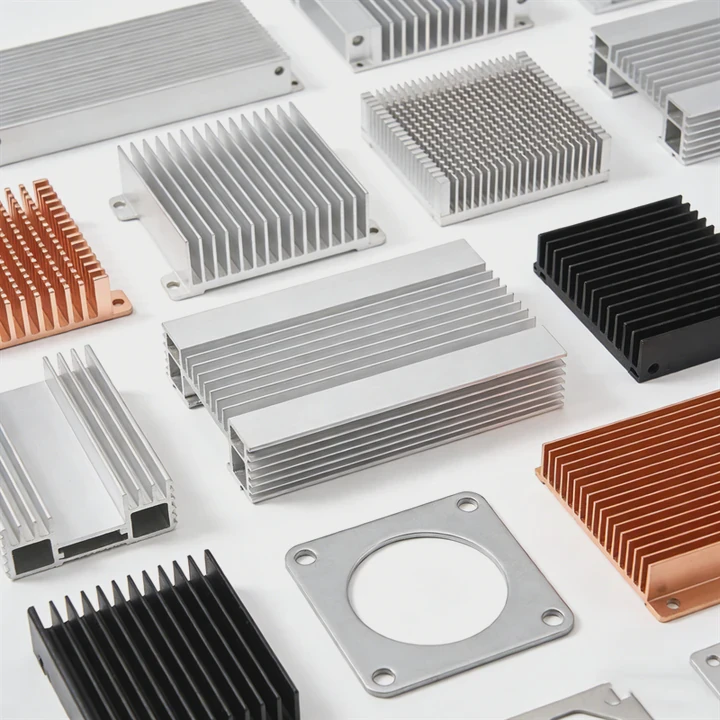
The required machining precision increases as thermal loads become higher.
High-Power Semiconductor Cooling
Applications include:
- IGBT modules
- SiC power modules
- Power converters
- Inverters
- Traction systems
These devices generate large amounts of heat within small areas.
Small errors in flatness or mounting position may significantly increase junction temperature.
Liquid Cooling Plates
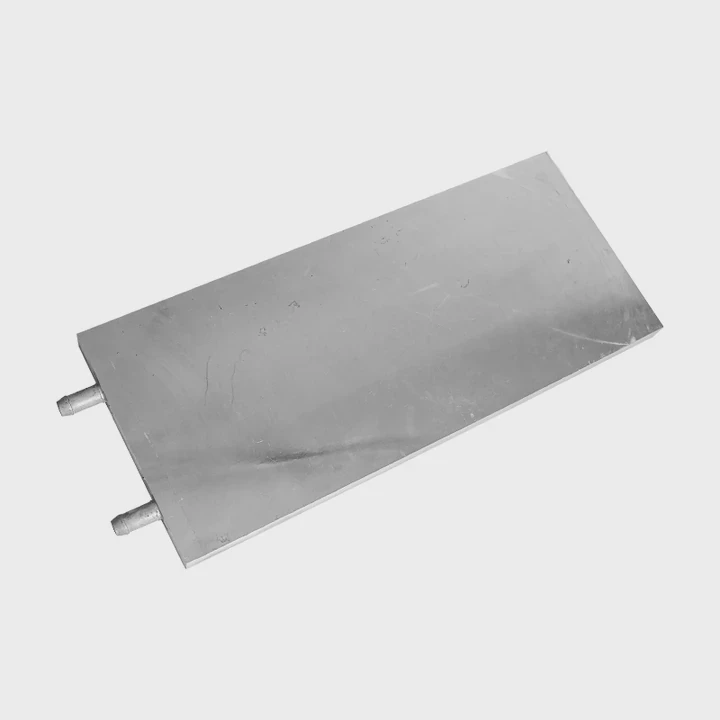
Cold plates contain internal coolant channels.
These channels require precise control because:
- Flow distribution must remain balanced.
- Pressure drop must stay within design limits.
- Sealing surfaces must prevent leakage.
- Welded joints must align correctly.
Even small dimensional variations may affect coolant performance.
Vapor Chamber Assemblies
Vapor chambers depend on accurate assembly between several components.
Critical dimensions include:
- Bonding surfaces
- Internal support locations
- Cover alignment
- Vacuum sealing regions
Maintaining dimensional consistency helps ensure reliable manufacturing.
Aerospace and Railway Equipment
These industries demand both precision and repeatability.
Products often operate under:
- High vibration
- Large temperature changes
- Long service life
- Strict certification requirements
Dimensional consistency becomes part of overall product reliability.
When Standard Tolerances Are Enough
Not every project requires extreme precision.
Many applications perform very well using standard machining tolerances, including:
- Consumer electronics
- Lighting products
- General industrial equipment
- Communication cabinets
Applying unnecessarily tight tolerances only increases manufacturing cost.
The best engineering approach starts with thermal requirements instead of machining capability. After identifying the critical thermal interfaces, designers can assign tighter tolerances only where they provide measurable improvements. This method keeps manufacturing practical while delivering reliable thermal performance.
Good communication between design engineers and manufacturing teams is also important. Reviewing drawings together helps identify features that truly require high precision and avoids over-specifying dimensions that have little influence on cooling performance. This balance improves quality, shortens production time, and controls overall project cost.
Conclusion
Accurate machining is one of the foundations of effective heat sink performance. CNC machining satisfies most applications, while EDM supports highly complex geometries. When tolerances, surface finishing, and dimensional control match the thermal design, heat sinks deliver better cooling, easier assembly, and long-term reliability.