Is aluminum stronger than steel?
- Yongxing
- 07 Apr ,2026

Many engineers assume steel is always stronger than aluminum. This belief often leads to poor material choices and overdesign in real projects.
Steel is generally stronger than aluminum, but certain aluminum alloys can match or exceed steel strength in specific conditions while offering lighter weight.
This question matters in real engineering. Strength alone is not enough. Weight, corrosion, and thermal performance all shape the final decision.
How does aluminum strength compare to steel?
Many people compare aluminum and steel using only one number. This approach causes confusion and wrong design choices.
Steel is usually stronger in absolute terms, but aluminum offers higher strength-to-weight ratio, making it more efficient in weight-sensitive applications.
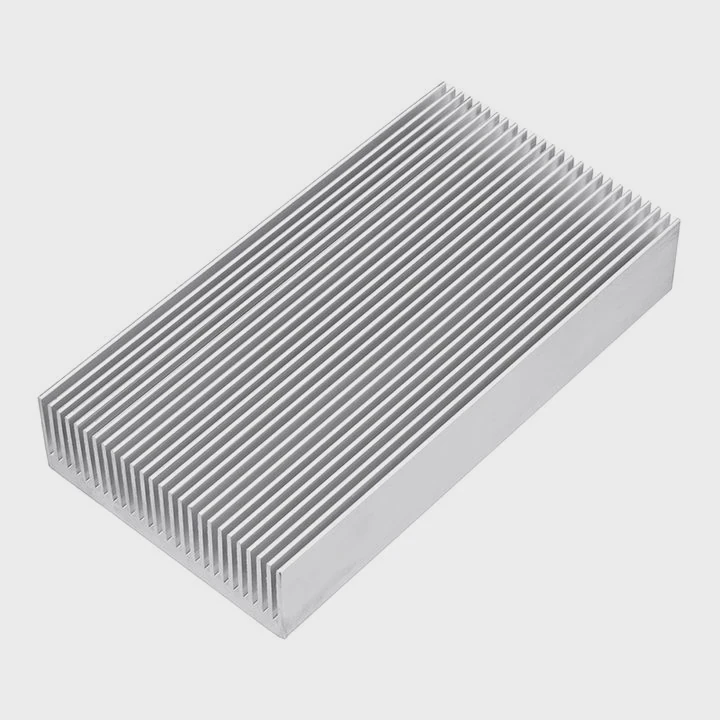
Strength is not a single value. It includes yield strength, tensile strength, and fatigue resistance. Aluminum and steel behave very differently in each area.
Basic strength comparison
Steel has higher density and stronger atomic bonding. This gives it higher absolute strength.
Aluminum is lighter. Its density is about one-third of steel. So even if it is weaker per unit volume, it can be stronger per unit weight.
Key property comparison
| Property | Aluminum | Steel |
|---|---|---|
| Density | Low (~2.7 g/cm3) | High (~7.8 g/cm3) |
| Tensile Strength | Medium | High |
| Strength-to-weight | High | Medium |
| Corrosion Resistance | Good | Needs protection |
Strength-to-weight advantage
This is where aluminum stands out. If a structure must be light, aluminum can outperform steel.
For example:
- Aerospace frames
- EV battery enclosures
- Heat sink structures
In these cases, reducing weight improves efficiency.
Thermal and mechanical link
In thermal management systems, weight and heat transfer both matter. Aluminum offers good thermal conductivity with lower mass. Steel is heavier and conducts heat less efficiently.
Real engineering view
A design should not ask, “Which is stronger?”
It should ask:
- What load is required?
- What weight is allowed?
- What environment is expected?
From experience, many overbuilt steel designs can be replaced with optimized aluminum structures. This reduces cost and improves system efficiency.
When is aluminum stronger than steel?
Many people think aluminum can never beat steel. This is not correct and can limit design innovation.
Aluminum can be stronger than steel when considering strength-to-weight ratio, and when using high-strength alloys under optimized conditions.

There are situations where aluminum clearly wins.
Case 1: Weight-sensitive structures
If two parts must carry the same load, aluminum can be made thicker without adding too much weight.
This leads to:
- Similar or higher stiffness
- Lower total mass
Case 2: High-performance alloys
Some aluminum alloys, like 7075, have very high strength.
- 7075-T6 tensile strength ≈ 570 MPa
- Some mild steels ≈ 400-550 MPa
So in some cases, aluminum matches or exceeds steel.
Case 3: Corrosive environments
Steel loses strength when it corrodes. Aluminum forms a stable oxide layer.
This means aluminum can maintain strength longer in harsh environments.
Case 4: Fatigue performance
Aluminum behaves differently under cyclic loads. It does not have a clear fatigue limit like steel, but with proper design, it performs well in lightweight structures.
Practical comparison
| Scenario | Better Material |
|---|---|
| Heavy load, small size | Steel |
| Lightweight structure | Aluminum |
| Corrosive environment | Aluminum |
| High stiffness needed | Steel |
Design insight
In heat sink systems, strength is rarely the only factor. The structure must support weight while managing heat.
Aluminum often becomes the better choice because:
- It is light
- It dissipates heat well
- It resists corrosion
So, in many real cases, aluminum is the stronger “system solution,” even if not the strongest material in isolation.
What alloys improve aluminum strength?
Pure aluminum is not very strong. Many people overlook how much alloys can change its performance.
Aluminum alloys improve strength by adding elements like zinc, magnesium, silicon, or copper, which enhance mechanical properties through solid solution and precipitation hardening.
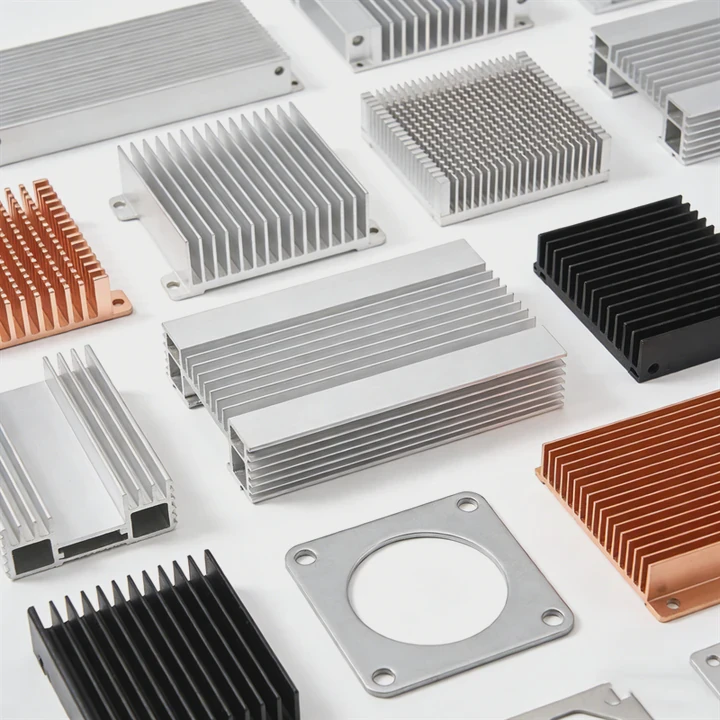
Alloying is the key to making aluminum useful in structural applications.
Main alloying elements
Different elements create different effects:
- Zinc → very high strength (7xxx series)
- Magnesium → good strength and corrosion resistance (5xxx series)
- Silicon → improves casting and wear (4xxx series)
- Copper → increases strength but reduces corrosion resistance (2xxx series)
Popular high-strength alloys
| Alloy | Key Feature | Typical Use |
|---|---|---|
| 6061 | Balanced strength | General engineering |
| 7075 | Very high strength | Aerospace, military |
| 5052 | Good corrosion resistance | Marine, enclosures |
Heat treatment effect
Strength is not only about composition. Heat treatment plays a big role.
- T6 temper → high strength
- Annealed → lower strength but better ductility
Microstructure control
Alloying changes the internal structure. Small particles form inside the metal. These particles block dislocation movement. This increases strength.
Trade-offs
Higher strength often means:
- Lower corrosion resistance
- Higher cost
- More difficult machining
So, the best alloy depends on the application.
Engineering application
In thermal systems, 6061 and 6063 are common. They balance:
- Strength
- Thermal conductivity
- Manufacturability
For extreme conditions, stronger alloys like 7075 may be used, but thermal performance must still be considered.
Why choose aluminum over steel?
Many projects default to steel without thinking. This often leads to heavier and less efficient systems.
Aluminum is chosen over steel for its light weight, corrosion resistance, thermal conductivity, and flexibility in manufacturing.
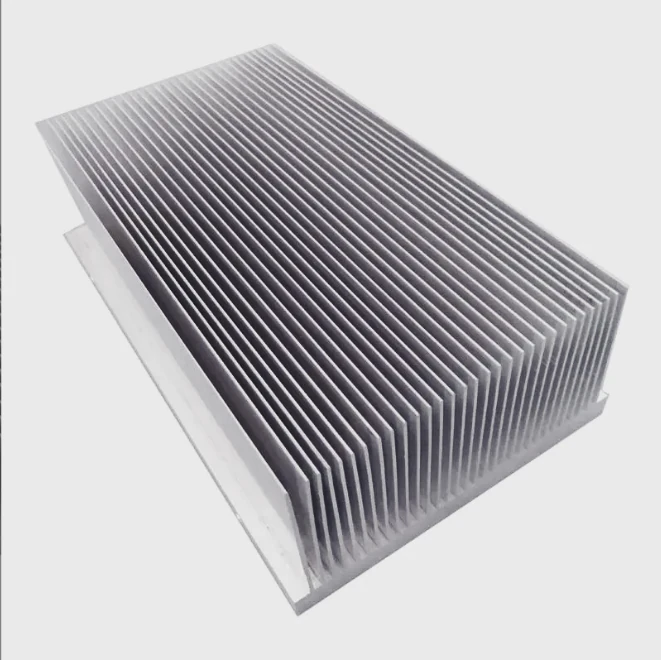
Choosing a material is about system performance, not just strength.
Weight advantage
Aluminum is about 65% lighter than steel. This reduces:
- Transportation cost
- Structural load
- Energy consumption
Thermal performance
Aluminum conducts heat much better than steel. This makes it ideal for:
- Heat sinks
- Cooling plates
- Electronic enclosures
Corrosion resistance
Aluminum naturally forms a protective oxide layer. Steel needs coatings or treatments.
Manufacturing flexibility
Aluminum is easy to:
- Extrude
- Machine
- Cast
This allows complex designs with lower cost.
Lifecycle cost
Even if aluminum is more expensive per kg, it can reduce total system cost due to:
- Lower weight
- Less maintenance
- Longer life
Practical comparison
| Factor | Aluminum Advantage |
|---|---|
| Weight | Much lighter |
| Heat transfer | Better |
| Corrosion | Natural resistance |
| Fabrication | Easier shaping |
Real-world insight
In many heat sink projects, switching from steel to aluminum improves both performance and efficiency.
A lighter heat sink reduces system stress. Better thermal conductivity improves cooling. This combination often leads to longer product life.
Conclusion
Steel is stronger in absolute terms, but aluminum offers better strength-to-weight performance. With the right alloy and design, aluminum becomes the smarter choice in many modern engineering applications.