Typical production lead time for heat sink batches?
- Yongxing
- 07 Jul ,2026
Order delays often create stress in electronics projects. Many teams wait too long and face missed deadlines. Lead time control becomes a real pain point.
Typical heat sink batch lead time ranges from 7 to 45 days. The time depends on design type, order size, and manufacturing complexity.
Lead time is not fixed. It changes with production load, design work, and supply chain conditions.
How does order volume affect lead time?
Order delays often increase when batch size grows. Many buyers expect linear scaling, but production does not work that way. Larger batches need more setup, inspection, and coordination.
Typical heat sink production time increases with volume because machining, extrusion, and finishing lines must run longer cycles.
Order volume also affects scheduling priority. Small batches can sometimes fit into gaps in production lines. Large batches often require dedicated scheduling blocks.
Volume impact explanation
Production capacity is not only about machines. It also depends on tooling time, labor shifts, and quality checks. When volume increases, each step must be repeated many times with strict consistency control.
High-volume orders often require:
- Longer material preparation time
- More extrusion or forging cycles
- Extended CNC machining hours
- Repeated surface treatment batches
- Extra thermal testing cycles
Low-volume orders move faster when tooling is ready because they can be inserted into existing production slots.
Table 1: Order volume vs typical lead time
| Order Volume | Typical Lead Time | Main Reason |
|---|---|---|
| 1-100 pcs | 7-12 days | Fast setup, simple scheduling |
| 100-1000 pcs | 12-25 days | Moderate machining load |
| 1000-5000 pcs | 20-35 days | Multiple batch runs needed |
| 5000+ pcs | 30-45+ days | Full production line allocation |
Large orders also increase the risk of bottlenecks in surface treatment and inspection stages. Even if machining is fast, finishing processes can slow down the full delivery cycle.
Scheduling pressure in real production
Production planning teams must balance multiple orders at the same time. When a large batch enters the system, it often shifts smaller jobs forward or backward. This creates a ripple effect across the schedule.
Another factor is material stock. Large orders sometimes require additional aluminum or copper procurement. If raw material is not ready, lead time increases further.
In real factory conditions, order volume is not just a number. It becomes a scheduling logic problem that affects every step of production. That is why lead time estimates always include a safety buffer for larger batches.
Do custom designs extend production time?
Custom designs often extend lead time because they require engineering work before manufacturing starts. Standard heat sinks follow ready-made tooling, but custom parts need design validation first.
Engineering changes affect every stage of production, from drawing to testing.
Custom work introduces extra steps like thermal simulation, structural validation, and prototype testing. These steps ensure performance but also increase total time.
Design workflow breakdown
Custom heat sink production usually follows a structured process:
- Requirement analysis
- Thermal simulation and modeling
- Structural design adjustment
- Prototype manufacturing
- Performance testing
- Final mass production approval
Each step adds time, but also reduces risk of failure in final use.
Why customization slows production
Standard products skip early design stages. Custom designs cannot skip these steps because each system has different heat loads, space limits, and airflow conditions.
Common reasons for delay include:
- New tooling requirement
- Non-standard extrusion profiles
- Complex CNC geometry
- Multi-material bonding processes
- Additional validation testing
Table 2: Standard vs custom lead time comparison
| Type of Heat Sink | Design Stage | Production Stage | Total Lead Time |
|---|---|---|---|
| Standard design | Minimal | Fast | 7-15 days |
| Modified design | Medium | Medium | 15-25 days |
| Full custom design | High | Complex | 25-45+ days |
Engineering validation importance
Custom heat sinks must pass thermal validation before mass production. This step ensures that the heat dissipation performance meets system requirements.
If simulation shows overheating risk, engineers must adjust fin density, base thickness, or material selection. Each adjustment restarts part of the validation loop.
This is why custom projects take longer. The process is not just manufacturing. It is also problem solving.
Are rush orders possible?
Rush orders are possible in many cases, but they depend on factory capacity and design readiness. Not all heat sinks can be fast-tracked safely.
Speeding up production usually requires skipping waiting time, not skipping quality steps.
Rush orders work best when designs are already confirmed and materials are in stock. If engineering is incomplete, rush production becomes risky.
Conditions for rush feasibility
Rush production depends on three main conditions:
- Existing tooling availability
- Ready raw materials
- Simple or standard design structure
When these conditions are met, production can be compressed significantly.
How factories shorten lead time
Manufacturers use several methods to reduce delivery time:
- Priority scheduling in CNC lines
- Overtime production shifts
- Parallel processing of sub-assemblies
- Pre-stocked aluminum blocks or profiles
- Faster inspection sampling methods
However, these methods increase cost and require careful control.
Risks of rush production
Rush orders may introduce quality pressure if not managed well. Thermal performance must still be verified, even under time constraints.
Common risks include:
- Reduced inspection time
- Higher defect probability
- Limited thermal testing cycles
- Stress on finishing processes
Fast delivery should never compromise reliability, especially in high-power electronics.
Production balance logic
Factories often balance rush orders with regular production. If too many rush orders are accepted, normal schedules may be disrupted.
That is why manufacturers usually set limits on how many urgent batches can be processed at the same time.
Rush orders are possible, but they are controlled, not unlimited.
Which factors influence manufacturing schedule?
Manufacturing schedule depends on many connected factors. It is not only about machines running time. It also depends on planning, materials, and technical complexity.
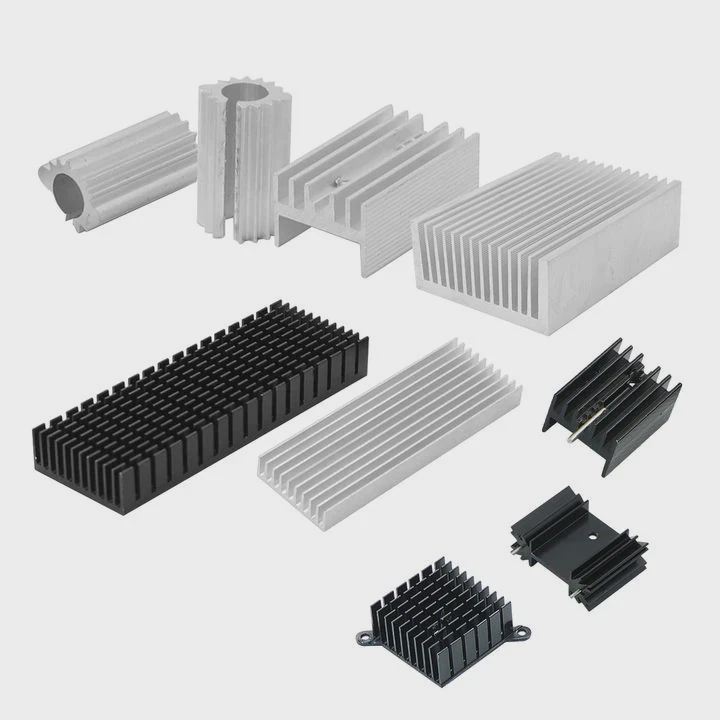
A single delay in one stage can affect the entire production chain. That is why scheduling is carefully controlled in heat sink manufacturing.
Key scheduling factors
Several main factors influence production timing:
- Material availability (aluminum, copper, etc.)
- Tooling readiness (extrusion dies, molds)
- CNC machine capacity
- Surface treatment queue
- Quality inspection workload
- Engineering change requests
Each factor can either speed up or slow down the full process.
Production stage interaction
Heat sink production is a multi-stage workflow. Each stage depends on the previous one.
For example:
- If extrusion is delayed, CNC cannot start
- If CNC is delayed, finishing cannot begin
- If finishing is delayed, inspection is pushed back
This chain effect makes scheduling complex.
Environmental and operational impact
Factory conditions also affect timing. Machine maintenance, power stability, and workforce availability all play roles.
Even small disruptions can shift delivery dates by several days.
Table 3: Factors affecting schedule and impact level
| Factor | Impact Level | Description |
|---|---|---|
| Material supply | High | Delays block entire production |
| Tooling setup | High | Required before machining starts |
| Machine capacity | High | Limits daily output |
| Design complexity | Medium | Affects processing time |
| Quality inspection | Medium | Can create backlog |
| Workforce shifts | Low-Medium | Affects speed flexibility |
Planning strategy in production
Manufacturing planners use forecasting to reduce delays. They estimate demand, allocate machines, and prepare materials in advance.
They also separate urgent and normal production lines when possible. This helps reduce conflict between different orders.
Good scheduling is not only about speed. It is about balance. Every decision must protect both delivery time and product reliability.
Conclusion
Heat sink batch lead time depends on volume, design type, urgency, and production factors. Clear planning and stable design reduce delays and improve manufacturing efficiency.