What Is an Active Heat Sink?
- Yongxing
- 13 Apr ,2026
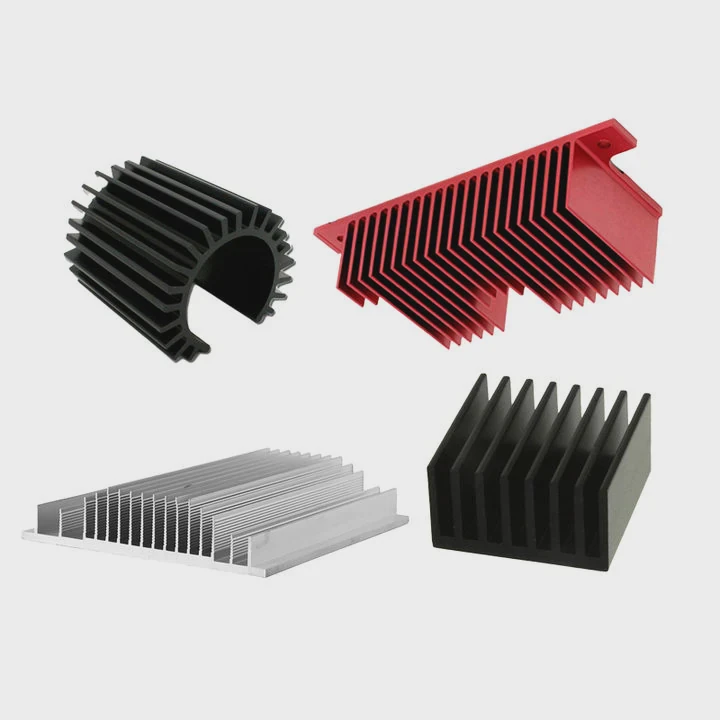
Heat problems destroy performance fast. Devices overheat, slow down, and fail. Many systems still rely on passive cooling, but that often cannot handle high power loads.
An active heat sink uses both a metal heat sink and a fan to remove heat quickly. It improves airflow, increases heat transfer, and keeps electronic components within safe temperature limits.
Many engineers face the same issue. Power density keeps rising. Space becomes limited. So, better cooling is no longer optional. It becomes a design requirement.
How does an active heat sink function?
Heat builds up fast inside modern electronics. Without control, temperature rises and damages components. Many systems fail because heat cannot escape efficiently.
An active heat sink works by combining a conductive material (like aluminum or copper) with forced airflow from a fan to accelerate heat dissipation.
The basic working principle
An active heat sink follows a simple process:
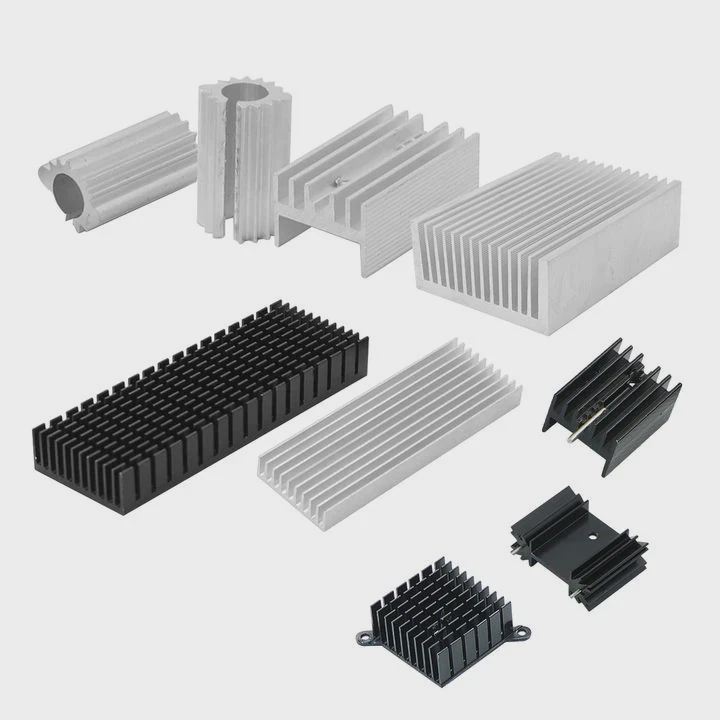
- Heat transfers from the chip to the heat sink base
- Heat spreads through fins
- A fan pushes air across the fins
- Heat leaves the system through airflow
This process improves heat transfer in two ways: conduction and convection.
Key components inside an active heat sink
| Component | Function |
|---|---|
| Base plate | Absorbs heat from the source |
| Fins | Increase surface area for heat dissipation |
| Fan | Forces air movement across fins |
| Thermal interface | Improves contact between chip and heat sink |
Why airflow matters
Passive heat sinks rely on natural air movement. That is slow and unpredictable. Active heat sinks force air to move. This increases the heat transfer rate.
The faster the air moves, the more heat it carries away.
Heat transfer improvement
Active cooling increases the convection coefficient. That means more heat leaves the surface per second.
Without airflow:
- Heat builds up around the fins
- Air becomes stagnant
- Efficiency drops
With airflow:
- Fresh air replaces hot air
- Temperature difference increases
- Cooling improves significantly
Real-world design thinking
In many projects, engineers first try passive cooling. It is simple and quiet. But once power goes above a certain level, passive designs fail.
At that point, adding a fan becomes the most direct solution.
Limitations to consider
Active heat sinks are not perfect. They introduce:
- Noise from the fan
- Power consumption
- Mechanical wear over time
Still, for high-performance systems, these trade-offs are acceptable.
Why include fans in heat sinks?
Heat sinks alone cannot always meet cooling demands. As power increases, natural airflow becomes insufficient. This creates a bottleneck in thermal performance.
Fans are included in heat sinks to force airflow, which increases heat transfer efficiency and prevents overheating in high-power systems.
The core reason: forced convection
Fans create forced convection. This is much stronger than natural convection.
Natural convection:
- Relies on temperature difference
- Slow air movement
- Limited cooling capacity
Forced convection:
- Uses mechanical airflow
- Moves air quickly
- Removes heat efficiently
Performance comparison
| Cooling Type | Air Movement | Cooling Efficiency | Application Level |
|---|---|---|---|
| Passive heat sink | Natural | Low to medium | Low power |
| Active heat sink | Forced | High | Medium to high |
Solving thermal bottlenecks
In many systems, the heat sink design is already optimized. Fins are thin, spacing is correct, and materials are high quality.
But heat still cannot escape fast enough.
This is where fans make a difference. They remove the thermal boundary layer that forms around the fins.
What is the thermal boundary layer?
When air stays still, a thin layer of hot air forms around the heat sink surface. This layer acts like insulation.
Fans break this layer and replace it with cooler air.
Fan placement matters
Fan position affects performance:
- Top-mounted fans push air downward
- Side-mounted fans create crossflow
- Dual fans increase airflow volume
Each design has its own use case.
Noise vs performance trade-off
Higher fan speed gives better cooling. But it also increases noise.
Engineers must balance:
- Cooling performance
- Acoustic limits
- Power consumption
Long-term reliability
Fans are moving parts. That means they can fail over time.
To reduce risk:
- Use high-quality bearings
- Add redundancy in critical systems
- Monitor fan speed
Practical insight
In many industrial designs, adding a fan is the fastest way to fix overheating during testing. It avoids redesigning the entire thermal structure.
Where are active heat sinks installed?
Many people think active heat sinks are only for computers. That is not true. They are used in many industries where heat control is critical.
Active heat sinks are installed in systems that generate high heat in small spaces, such as CPUs, power electronics, telecom equipment, and industrial devices.
Common application areas
Active heat sinks are widely used in:
- CPUs and GPUs
- Power supplies
- Inverters and converters
- Telecom base stations
- LED lighting systems
- Medical equipment
Why these systems need them
These systems share common traits:
- High power density
- Limited space
- Continuous operation
This combination creates serious thermal challenges.
Installation positions
Active heat sinks can be mounted in different ways:
- Directly on chips (CPU cooling)
- On power modules (IGBT cooling)
- Inside enclosures (system-level cooling)
Example: CPU cooling
In computers, active heat sinks sit directly on the processor.
They:
- Transfer heat from the CPU
- Use thermal paste for contact
- Push hot air away quickly
Without this, the CPU would throttle or shut down.
Example: power electronics
In power modules, heat sinks are attached to:
- MOSFETs
- IGBTs
- Rectifiers
These components generate large amounts of heat during switching.
Environmental considerations
Different environments require different designs:
| Environment | Design Requirement |
|---|---|
| Dusty areas | Filters or sealed fans |
| High humidity | Corrosion-resistant materials |
| High vibration | Strong mechanical mounting |
Space constraints
Many systems today are compact. That limits heat sink size.
Active cooling solves this by increasing performance without increasing size.
Integration with systems
Modern designs often integrate heat sinks into:
- Chassis structures
- Cooling modules
- Liquid cooling hybrid systems
This improves overall system efficiency.
Which systems need active cooling?
Not every system needs active cooling. Some can rely on passive heat sinks. But once power and density increase, active cooling becomes necessary.
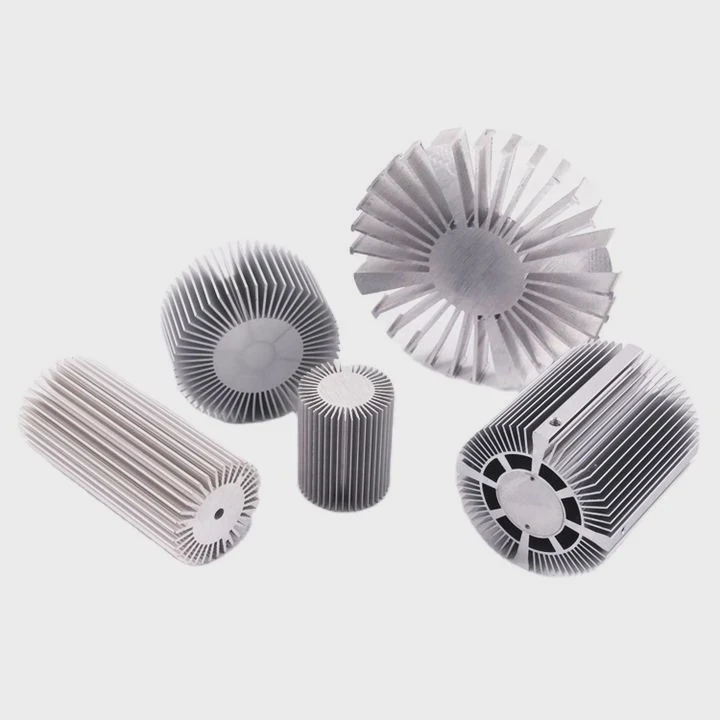
Systems that generate high heat loads, operate continuously, or have limited airflow require active cooling solutions.
Key indicators for active cooling
A system likely needs active cooling if:
- Power density is high
- Temperature limits are strict
- Airflow is restricted
- Reliability is critical
Typical industries
Active cooling is common in:
- Data centers
- Electric vehicles
- Renewable energy systems
- Industrial automation
- Aerospace electronics
Power threshold consideration
There is no fixed number, but generally:
- Below 10W → passive cooling works
- 10W–100W → depends on design
- Above 100W → active cooling is often required
Continuous operation systems
Systems that run 24⁄7 cannot rely on passive cooling alone.
Examples:
- Servers
- Telecom equipment
- Industrial control systems
These systems need stable temperature control.
Compact electronics
As devices shrink, heat becomes harder to manage.
Small size means:
- Less surface area
- Poor natural airflow
Active cooling compensates for this.
Risk of not using active cooling
Without proper cooling:
- Performance drops
- Lifespan shortens
- Failure risk increases
This leads to higher maintenance costs.
Decision-making factors
Engineers choose active cooling based on:
| Factor | Impact on Decision |
|---|---|
| Heat load | Determines cooling requirement |
| Space | Limits heat sink size |
| Cost | Affects design choice |
| Noise tolerance | Influences fan selection |
| Reliability | Drives redundancy design |
Hybrid cooling trends
Some systems now combine:
- Heat sinks
- Fans
- Liquid cooling
This creates more efficient solutions for extreme conditions.
Practical takeaway
In real projects, active cooling is often added after testing shows overheating. It becomes a necessary upgrade, not just an option.
Conclusion
Active heat sinks combine metal structures and fans to deliver strong cooling performance. They are essential in modern high-power systems where passive cooling cannot keep up.