What is the charge of aluminum?
- Yongxing
- 09 Apr ,2026
Aluminum shows up in many systems, but its charge often confuses readers. Many people mix up atoms, ions, and oxidation states. This gap causes mistakes in design and analysis.
Aluminum usually carries a +3 charge in compounds because it loses three valence electrons to reach a stable electron configuration.
This idea links basic chemistry with real engineering problems. Once this is clear, it becomes easier to design thermal systems, select materials, and predict behavior in harsh environments.
Why does aluminum form a three plus charge?
Many learners struggle with why aluminum does not form +1 or +2 ions. This confusion leads to weak understanding of bonding and material behavior.
Aluminum forms a +3 charge because it has three valence electrons, and losing all three gives it a stable, noble gas-like configuration.

Aluminum sits in Group 13 of the periodic table. This position matters because it tells us how many electrons are in the outer shell. Aluminum has three valence electrons. These electrons are in the 3s and 3p orbitals. They are not strongly held compared to inner electrons.
Electron configuration and stability
The electron configuration of aluminum is:
- 1s2 2s2 2p? 3s2 3p1
The outer shell has three electrons. When aluminum loses these three electrons, it reaches the same configuration as neon:
- 1s2 2s2 2p?
This state is very stable. Stability drives the process.
Why not +1 or +2?
It is possible, in theory, for aluminum to lose only one or two electrons. But this is not favorable in most conditions.
- Losing one electron → still unstable
- Losing two electrons → still not fully stable
- Losing three electrons → stable noble gas structure
So, the +3 state dominates.
Energy perspective
Ionization energy plays a key role. The first, second, and third ionization energies are high but still achievable in chemical reactions. The fourth ionization energy is extremely high. So aluminum stops at +3.
| Ionization Step | Energy Trend | Feasibility |
|---|---|---|
| 1st electron | Moderate | Easy |
| 2nd electron | Higher | Possible |
| 3rd electron | High | Still occurs |
| 4th electron | Very high | Not realistic |
Real-world meaning
In thermal management systems, aluminum often appears as Al3? in oxide layers. This thin oxide layer protects the material. It forms quickly and prevents further corrosion.
This behavior is not random. It comes directly from the +3 charge tendency. Understanding this helps when designing heat sinks, especially in high humidity or high voltage environments.
How does aluminum ion form in reactions?
Many engineers see aluminum in reactions but do not fully understand how ions actually form. This leads to wrong assumptions in corrosion or electrochemical systems.
Aluminum ions form when aluminum atoms lose three electrons during chemical reactions, often in oxidation processes with oxygen, acids, or salts.
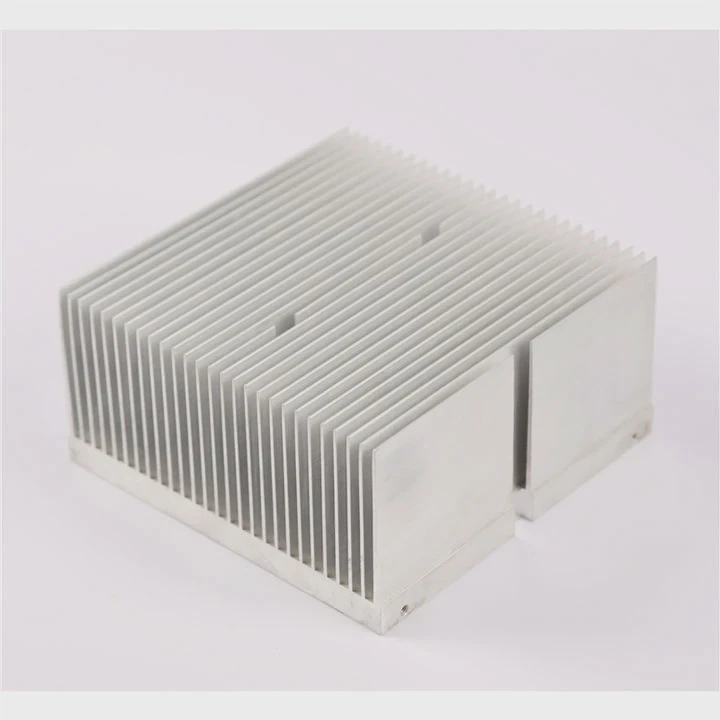
Aluminum ion formation is a redox process. Oxidation means loss of electrons. Aluminum is easily oxidized.
Basic oxidation reaction
The simplest reaction is:
- Al → Al3? + 3e?
This shows aluminum losing three electrons.
Reaction with oxygen
When aluminum reacts with oxygen, it forms aluminum oxide:
- 4Al + 3O? → 2Al?O?
Here, each aluminum atom becomes Al3?.
This oxide layer is very important. It is thin but strong. It protects the metal underneath.
Reaction with acids
Aluminum reacts with acids like hydrochloric acid:
- 2Al + 6HCl → 2Al3? + 6Cl? + 3H?
This produces hydrogen gas and aluminum ions.
Electrochemical behavior
Aluminum is active in the electrochemical series. It tends to lose electrons easily. This makes it useful but also reactive.
| Reaction Type | Example Outcome | Role of Al3? |
|---|---|---|
| Oxidation | Al → Al3? + e? | Electron donor |
| Acid reaction | Al + HCl | Forms ions in solution |
| Oxide formation | Al?O? layer | Protective barrier |
Surface behavior
In real systems, aluminum does not stay as free ions for long. It quickly forms compounds.
- In air → oxide layer
- In water → hydroxides
- In electrolytes → complex ions
This behavior matters in cooling systems. For example, in liquid cooling plates, water chemistry must be controlled. Otherwise, aluminum ions may form and lead to corrosion or scaling.
What is aluminum oxidation state?
Many people mix up “charge” and “oxidation state.” This causes confusion in both chemistry and engineering discussions.
The oxidation state of aluminum is usually +3, meaning it has lost three electrons in compounds or reactions.
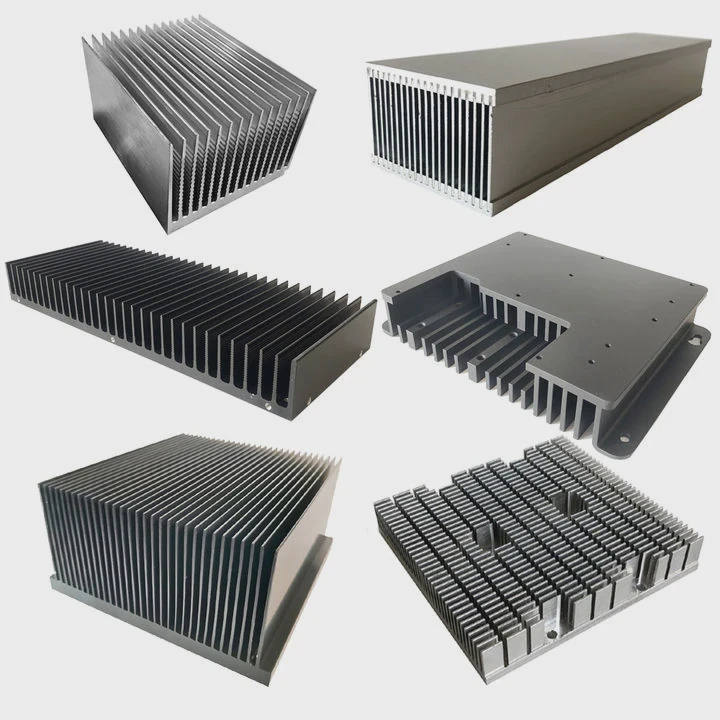
Oxidation state is a formal concept. It helps track electrons in reactions.
Definition and meaning
Oxidation state tells us how many electrons an atom has lost or gained. For aluminum:
- Neutral atom → oxidation state 0
- In compounds → usually +3
Common compounds
Aluminum appears in many compounds with +3 oxidation state:
- Al?O? (aluminum oxide)
- AlCl? (aluminum chloride)
- Al(OH)? (aluminum hydroxide)
In all these, aluminum is +3.
Why always +3?
This goes back to electron configuration. Aluminum prefers to lose three electrons. That becomes its stable form.
Rare exceptions
In some special conditions, aluminum can show different behavior. But these cases are rare and not stable in normal environments.
Comparison with other elements
| Element | Group | Common Oxidation State |
|---|---|---|
| Aluminum | 13 | +3 |
| Magnesium | 2 | +2 |
| Sodium | 1 | +1 |
This pattern follows the periodic table.
Practical impact
In heat sink design, oxidation state affects:
- Corrosion resistance
- Surface coating behavior
- Thermal conductivity stability
For example, anodizing creates a controlled oxide layer. This layer depends on aluminum staying in the +3 state.
This is why aluminum is widely used in electronics and power systems. The stable oxidation state gives predictable behavior.
How does charge affect aluminum chemistry?
Some people think charge is just a number. In reality, it controls almost everything in aluminum chemistry.
The +3 charge of aluminum strongly affects its bonding, reactivity, corrosion behavior, and compatibility with other materials.
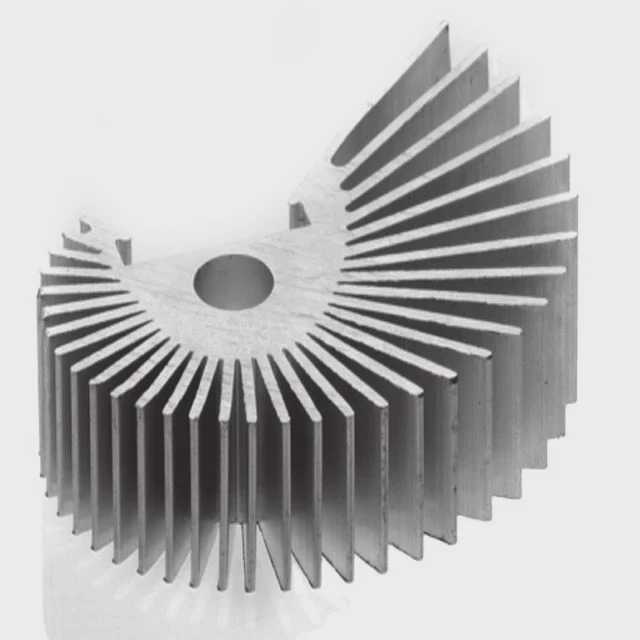
The +3 charge means aluminum has a high charge density. This leads to strong interactions with other atoms.
Bonding behavior
Aluminum ions form strong ionic and covalent bonds.
- With oxygen → strong oxide
- With chlorine → stable salts
- With water → hydrolysis reactions
Hydrolysis effect
Al3? reacts with water:
- Al3? + H?O → Al(OH)2? + H?
This makes solutions acidic.
Corrosion resistance
The +3 charge leads to fast oxide formation. This oxide layer:
- Is thin
- Is dense
- Stops further reaction
This is why aluminum does not rust like iron.
Thermal system relevance
In heat sinks and cooling modules, charge affects:
- Surface stability
- Compatibility with coolants
- Long-term reliability
Engineering comparison
| Property | Effect of +3 Charge |
|---|---|
| Bond strength | High |
| Corrosion behavior | Self-protecting |
| Reactivity | Moderate |
| Stability | Strong in compounds |
Design insight
When designing thermal solutions, it is important to consider:
- Electrolyte exposure
- pH conditions
- Coating methods
A small mistake here can lead to aluminum ion release. This can reduce performance and lifetime.
From experience, many failures in cooling systems come from ignoring chemical behavior. The +3 charge is not just theory. It directly affects product life.
Conclusion
Aluminum carries a +3 charge because it loses three electrons to reach stability. This charge controls its reactions, bonding, and performance in real systems. Understanding this helps improve material selection and thermal design.