
What is the MOQ for custom heat sinks?
- Yongxing
- 09 Jul ,2026
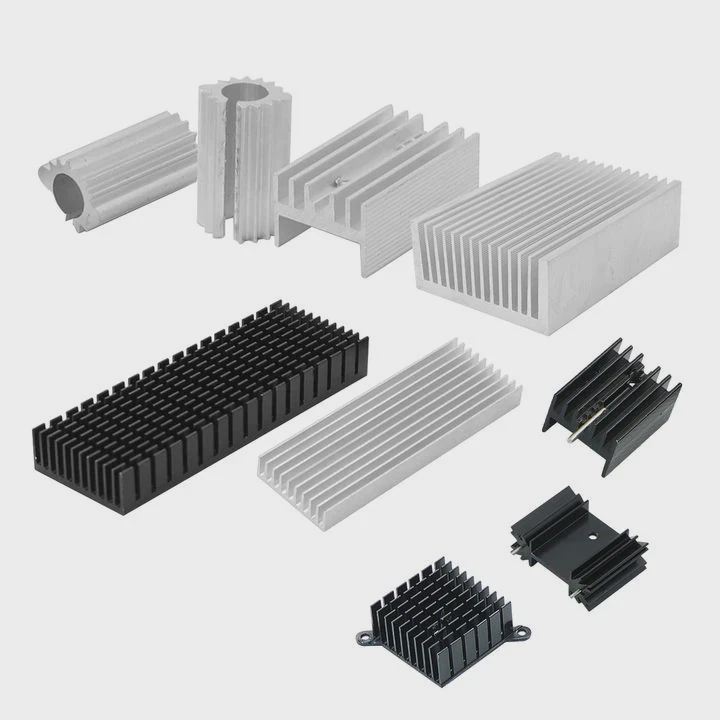
Many projects stall because suppliers ask for high MOQs. This creates cost pressure and slows early development, especially for engineering teams testing new thermal designs.
MOQ for custom heat sinks depends on process, material, and tooling cost. It can range from a few samples to thousands of units, based on manufacturing method and supplier policy.
This topic matters because MOQ directly affects budget, prototyping speed, and production planning decisions. Understanding it helps avoid delays and hidden costs.
Do manufacturers allow low-volume orders?
Many engineers face a problem when developing new thermal systems. Suppliers often set high minimum orders, which blocks early-stage testing and delays product validation.
Low-volume orders are possible, but they depend on production method, tooling cost, and supplier flexibility. CNC machining and 3D prototyping usually allow smaller batches, while extrusion and die-casting often require higher MOQ.
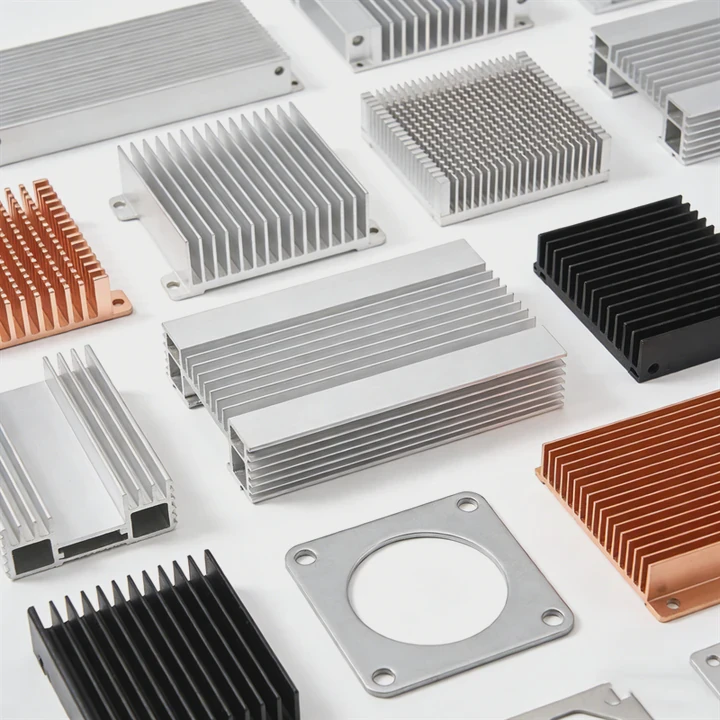
Low-volume production is common in early design phases. Manufacturers often accept small orders for CNC machined heat sinks because no hard tooling is required. Extruded heat sinks, however, require die setup, so suppliers usually ask for higher quantities to recover tooling cost.
Key factors affecting low MOQ acceptance
| Factor | Impact on MOQ | Explanation |
|---|---|---|
| Manufacturing process | High | CNC allows low MOQ, extrusion needs high volume |
| Tooling requirement | High | Mold cost increases minimum order |
| Material type | Medium | Copper parts often cost more per unit |
| Supplier strategy | Medium | Some focus on prototyping services |
Another important factor is supplier business model. Some factories specialize in prototyping and accept even 1-10 pieces. Others focus on mass production and avoid small orders due to setup inefficiency.
From a practical perspective, low MOQ is always a trade-off. Unit price increases significantly when order size is small. Setup time, machine changeover, and engineering adjustments are distributed across fewer units.
In real engineering workflows, low-volume orders are often used for validation tests. Engineers check thermal resistance, airflow behavior, and mechanical fit before scaling production. This step reduces risk in later mass production.
In many cases, suppliers also impose “soft MOQ,” meaning they technically allow small orders but with higher pricing. This creates flexibility but requires careful cost planning.
Can bulk orders reduce unit price?
Production teams often worry about cost control. Early procurement decisions can significantly impact final product profitability, especially in thermal system manufacturing.
Bulk orders almost always reduce unit price because fixed costs are spread across more units and production efficiency increases significantly at scale.
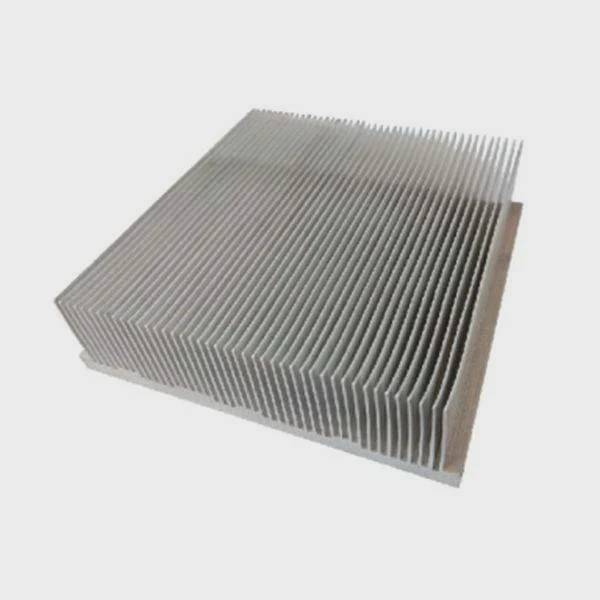
When order volume increases, suppliers optimize machine time, reduce material waste, and streamline labor allocation. This leads to lower cost per piece. The effect is especially strong in extrusion and die-casting processes where setup costs are high but marginal production cost is low.
Cost behavior across order volumes
| Order Quantity | Tooling Cost Impact | Unit Price Trend |
|---|---|---|
| 1-50 units | Very high | Very expensive |
| 50-500 units | High | Moderate |
| 500-5000 units | Medium | Lower |
| 5000+ units | Low | Best pricing |
Bulk orders also improve material purchasing power. Aluminum ingots, copper blocks, and thermal interface materials can be purchased in larger batches at lower rates. Suppliers pass some of these savings to customers.
However, bulk ordering also introduces risk. Design changes become expensive after mass production begins. If thermal performance is not validated, large inventory can become waste.
Why bulk pricing drops significantly
1. Fixed cost dilution
Tooling, setup, and engineering adjustments are fixed. Larger volume spreads these costs.
2. Production efficiency
Machines run longer without interruption, reducing downtime loss.
3. Material optimization
Bulk purchasing reduces raw material price volatility.
4. Logistics consolidation
Shipping and packaging costs decrease per unit.
In many industrial projects, bulk ordering is only recommended after prototype validation. Engineering teams typically move from sample stage → pilot batch → full production.
Are sample orders counted in MOQ?
New buyers often get confused when suppliers talk about MOQ. A common question is whether samples are included or treated separately.
Sample orders are usually not counted in MOQ because they are considered engineering validation units rather than commercial production quantities.
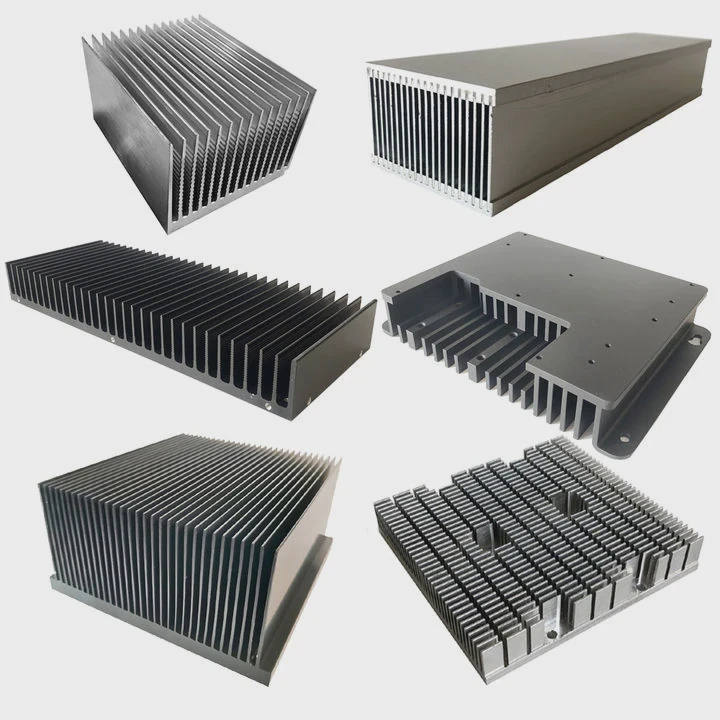
In most manufacturing environments, samples are produced with different pricing logic. Even if only one or two units are made, the cost is based on setup time, machining, and engineering effort rather than volume pricing.
Sample vs MOQ logic
| Item Type | Counts toward MOQ? | Purpose |
|---|---|---|
| Engineering sample | No | Design validation |
| Prototype batch | Sometimes | Pre-production testing |
| Mass production | Yes | Commercial supply |
| Trial order | Depends | Bridge between sample and production |
Samples are critical in heat sink development. Engineers use them to test thermal resistance, airflow compatibility, mounting accuracy, and vibration durability. These tests often reveal design changes before mass production.
Suppliers treat samples differently because each unit requires machine setup, tool alignment, and manual inspection. Even if production quantity is low, workload remains similar.
Why samples are excluded from MOQ
1. High setup cost per unit
Each sample requires full machine configuration.
2. Engineering customization
Samples often include design iterations.
3. Non-repetitive production
Samples are not produced in continuous batches.
In practice, sample orders are often charged separately and sometimes higher per unit than mass production. However, some suppliers later deduct sample cost from bulk orders as a commercial incentive.
Understanding this separation helps avoid confusion during procurement planning and prevents incorrect assumptions about MOQ fulfillment.
How to negotiate MOQ with suppliers?
Many procurement teams struggle with MOQ constraints when sourcing custom heat sinks. High minimum requirements can block early-stage projects or increase financial pressure.
MOQ can be negotiated by adjusting design complexity, production method, order planning, and long-term cooperation strategy with suppliers.
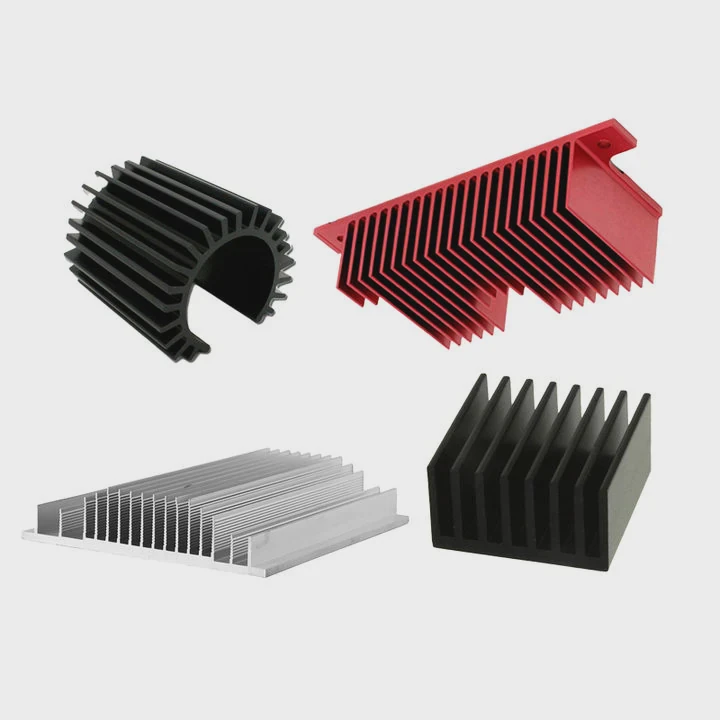
Negotiation is not only about price. It is also about aligning manufacturing efficiency with project needs. Suppliers are more flexible when they see long-term potential or reduced production risk.
Common negotiation strategies
| Strategy | Effect on MOQ | Risk Level |
|---|---|---|
| Simplify design | Reduces MOQ | Low |
| Accept higher unit price | Lowers MOQ barrier | Medium |
| Combine models | Shares tooling cost | Medium |
| Commit future orders | Strong MOQ reduction | Low |
One effective method is design simplification. When fins, cavities, or machining steps are reduced, manufacturing becomes easier and MOQ can drop significantly.
Another approach is combining multiple designs into one production run. This allows suppliers to reuse tooling setups and distribute costs.
Practical negotiation techniques
1. Start with prototype discussion
Early communication about testing needs increases flexibility.
2. Offer long-term cooperation
Suppliers prefer stable demand over one-time small orders.
3. Accept staged production
Pilot batch followed by mass production reduces supplier risk.
4. Share engineering responsibility
Providing detailed drawings and thermal data reduces supplier workload.
Negotiation also depends on transparency. When both sides understand thermal requirements, mechanical constraints, and production targets, MOQ becomes easier to adjust.
In many real cases, MOQ is not fixed. It is a flexible number influenced by trust, engineering clarity, and business potential.
Conclusion
MOQ for custom heat sinks depends on process, tooling, and production scale. Low-volume orders exist, bulk orders reduce cost, samples are separate, and negotiation plays a key role in flexibility.




