
Which Heat Sinks Withstand High Temperature Environments?
- Yongxing
- 27 Jun ,2026
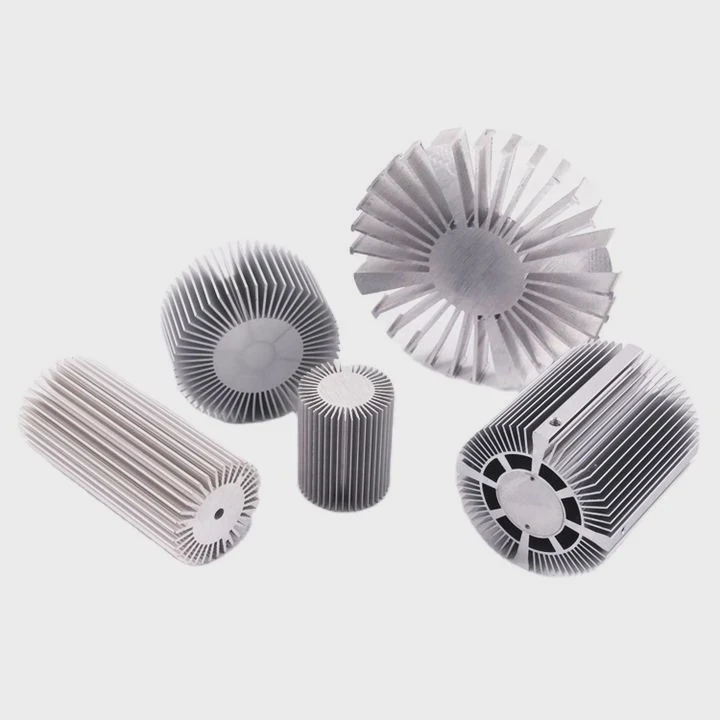
Many thermal systems fail when heat keeps rising. Parts crack, efficiency drops, and equipment stops working. High-temperature heat sinks solve this problem before it damages the whole system.
Heat sinks that withstand high temperature environments usually use aluminum, copper, vapor chamber structures, or liquid cooling systems with strong thermal stability, corrosion resistance, and low thermal resistance. The right design also depends on airflow, operating temperature, and long-term reliability needs.
Many buyers focus only on thermal conductivity. That is not enough. Real high-temperature environments also involve vibration, oxidation, pressure changes, and long working cycles. A heat sink must survive all these conditions without losing performance. That is why material choice, welding process, coating treatment, and structural design all matter in thermal management projects.
How to choose heat sinks for extreme conditions?
Extreme heat can destroy electronic systems faster than most engineers expect. Poor heat sink selection often causes unstable thermal performance, repeated maintenance, and unexpected downtime in industrial equipment.
The best heat sinks for extreme conditions combine high thermal conductivity, stable structural strength, corrosion resistance, and low thermal resistance under continuous high heat loads. Engineers should also consider airflow, mounting space, vibration, and environmental stress.
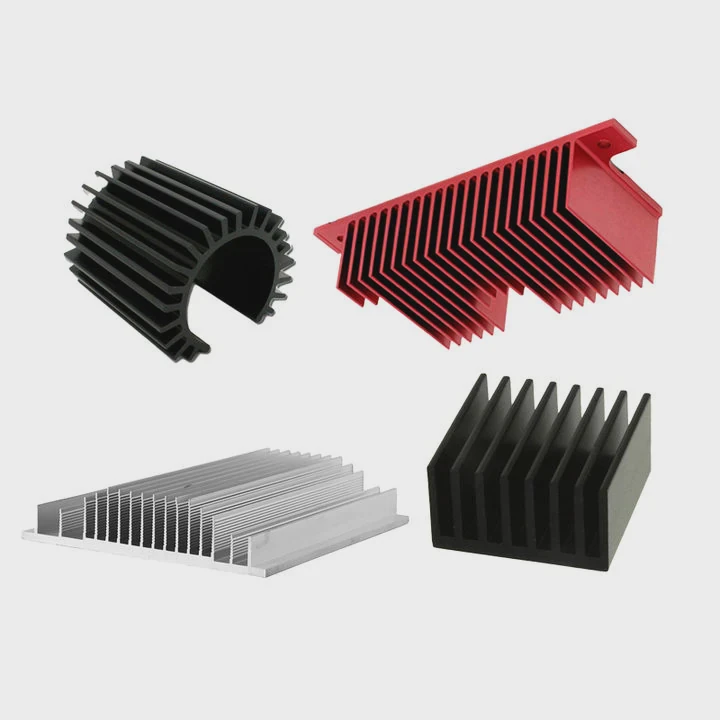
Choosing a heat sink for harsh environments is not only about maximum temperature. Many systems fail because buyers ignore the full operating environment. High heat usually comes together with dust, humidity, vibration, thermal cycling, or pressure changes.
Why operating temperature alone is not enough
Some buyers only ask for the maximum working temperature. This creates problems later. A heat sink working at 150°C in a laboratory may fail much earlier inside a railway cabinet or outdoor energy storage system.
The actual environment changes thermal behavior. Airflow may be weak. Dust may block fins. Thermal cycling may expand and shrink materials repeatedly. These factors reduce heat transfer efficiency over time.
Here are several factors that should always be checked:
| Selection Factor | Why It Matters |
|---|---|
| Continuous operating temperature | Determines material stability |
| Thermal cycling frequency | Affects fatigue and structural reliability |
| Corrosion exposure | Impacts surface durability |
| Vibration level | Influences mechanical stability |
| Available airflow | Changes cooling efficiency |
| Space limitations | Controls fin structure design |
In many railway and energy projects, thermal cycling becomes a hidden problem. Heat sinks repeatedly expand and contract during daily operation. Weak solder joints or poor welding processes eventually crack.
This is why vacuum brazing and friction stir welding are widely used in high-end thermal systems. These processes create stronger thermal structures with lower interface resistance.
Fin structure also affects survival
Many people focus only on material type. Fin design matters just as much.
Dense fins may improve thermal performance in forced-air systems. Still, they can trap dust in outdoor applications. Wide fin spacing often performs better in dirty industrial environments.
Different applications require different approaches:
Common fin design choices
| Environment | Recommended Structure |
|---|---|
| Dust-heavy industrial sites | Wide fin spacing |
| Strong forced airflow | Dense fins |
| Outdoor cabinets | Corrosion-resistant fins |
| High vibration systems | Reinforced thick-base structures |
| Compact electronics | Vapor chamber or heat pipe systems |
A large surface area improves cooling, but airflow must remain stable. Otherwise, heat accumulates inside the fin channels.
Thermal interface quality matters
Even the best heat sink performs poorly with weak thermal contact.
Many failures happen between the heat source and the heat sink base. Uneven mounting surfaces create air gaps. Air has very low thermal conductivity, so temperatures rise quickly.
This is why machining precision and flatness control are important in high-power systems.
In some projects, thermal grease alone is not enough. Engineers may use graphite sheets, phase-change materials, or liquid metal interfaces to reduce contact resistance.
Long-term reliability matters more than peak performance
A heat sink may show excellent test results for several hours. That does not guarantee stable operation for years.
Long-term reliability depends on:
- Material purity
- Welding consistency
- Surface treatment
- Structural stability
- Thermal fatigue resistance
Many high-temperature applications now require environmental and reliability testing before approval.
Common reliability tests
| Test Type | Purpose |
|---|---|
| Thermal shock test | Checks resistance to rapid temperature change |
| Salt spray test | Evaluates corrosion resistance |
| Vibration test | Confirms structural durability |
| Thermal cycling test | Measures fatigue resistance |
| High-temperature aging | Verifies long-term thermal stability |
In aerospace, rail transit, and semiconductor systems, reliability often matters more than initial cooling performance.
Do material types affect temperature resistance?
Some heat sinks perform well at first but fail after long exposure to high temperatures. Material selection is often the main reason behind this problem.
Yes, material types strongly affect temperature resistance. Aluminum offers lightweight and cost efficiency, while copper provides higher thermal conductivity. Advanced materials like vapor chambers and phase-change systems improve thermal spreading in extreme environments.
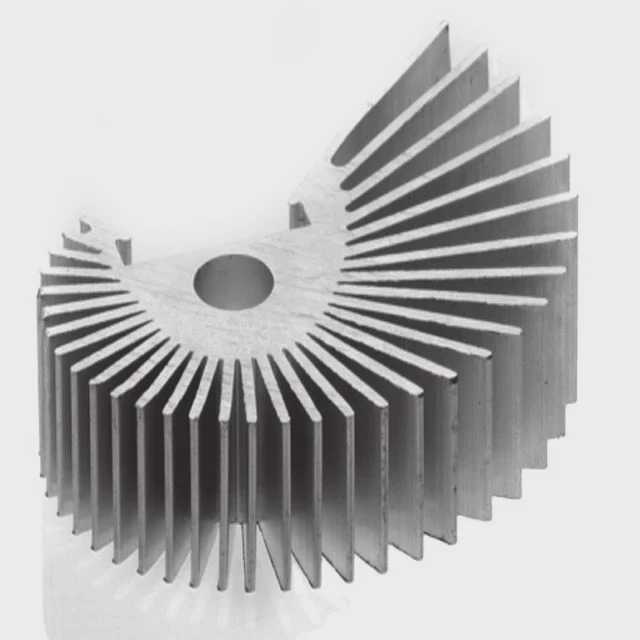
Different materials behave very differently under heat stress. Thermal conductivity is only one part of the decision. Mechanical stability, oxidation resistance, weight, and manufacturing compatibility also matter.
Aluminum heat sinks
Aluminum remains one of the most common heat sink materials. It balances performance, weight, and cost.
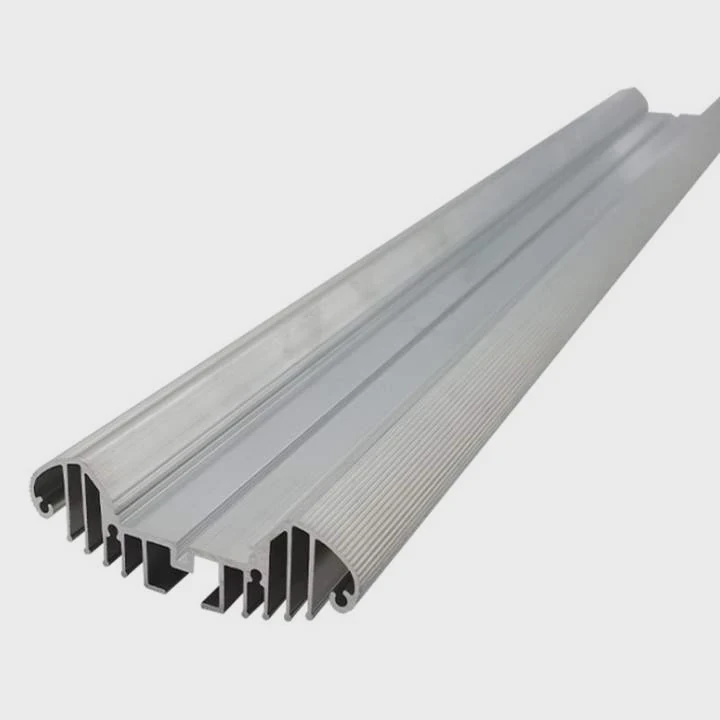
Many industrial systems use aluminum extrusion heat sinks because they are lightweight and easy to manufacture in large volumes.
Advantages of aluminum
| Property | Benefit |
|---|---|
| Lightweight | Reduces total system weight |
| Good thermal conductivity | Suitable for many power systems |
| Easy extrusion processing | Supports custom fin structures |
| Corrosion resistance | Good outdoor durability |
| Lower cost | Better for large-scale production |
Still, aluminum has limits in very high-temperature environments. Mechanical strength drops as temperature rises.
Some high-power systems also require faster heat spreading than standard aluminum can provide.
Copper heat sinks
Copper has much higher thermal conductivity than aluminum. It transfers heat faster and improves temperature uniformity.
This makes copper suitable for:
- High-power electronics
- Laser systems
- Semiconductor equipment
- Medical imaging systems
Copper vs aluminum
| Feature | Aluminum | Copper |
|---|---|---|
| Thermal conductivity | Moderate | Very high |
| Weight | Light | Heavy |
| Cost | Lower | Higher |
| Machining difficulty | Easier | Harder |
| Heat spreading | Good | Excellent |
Copper works well in compact systems with concentrated heat sources. Still, its weight and cost can become major concerns in transportation systems.
Vapor chamber and phase-change solutions
Traditional solid metal heat sinks sometimes struggle with localized hot spots.
Vapor chamber heat sinks solve this by spreading heat rapidly across a larger surface.
Inside the chamber, working fluid evaporates and condenses continuously. This transfers heat much faster than solid metal alone.
These solutions are common in:
- 5G communication systems
- AI servers
- Aerospace electronics
- High-density power modules
Composite thermal structures
Modern systems increasingly combine multiple materials together.
For example:
- Copper base + aluminum fins
- Vapor chamber + liquid cooling plate
- Graphite layer + aluminum housing
This balances thermal performance, cost, and weight.
Material purity also matters
Two aluminum heat sinks may look identical but perform differently.
Impurities inside metal reduce thermal conductivity. Manufacturing quality becomes very important in high-performance projects.
Some buyers only compare material grades. Real thermal performance also depends on:
- Grain structure
- Welding quality
- Surface flatness
- Internal void control
- Process consistency
High-temperature oxidation cannot be ignored
At elevated temperatures, oxidation becomes a major issue.
Copper may oxidize faster without coating protection. Aluminum naturally forms an oxide layer that protects the surface better.
Still, harsh environments may require extra treatment such as:
- Anodizing
- Nickel plating
- Ceramic coating
- Electrophoretic coating
These treatments help improve long-term durability.
Are coated heat sinks better for heat tolerance?
Many heat sinks fail because the surface degrades over time. Corrosion, oxidation, and contamination slowly reduce thermal efficiency even when the core material remains intact.
Coated heat sinks can improve heat tolerance by increasing corrosion resistance, oxidation protection, and surface durability. Some coatings also improve radiation heat transfer, especially in high-temperature or outdoor environments.
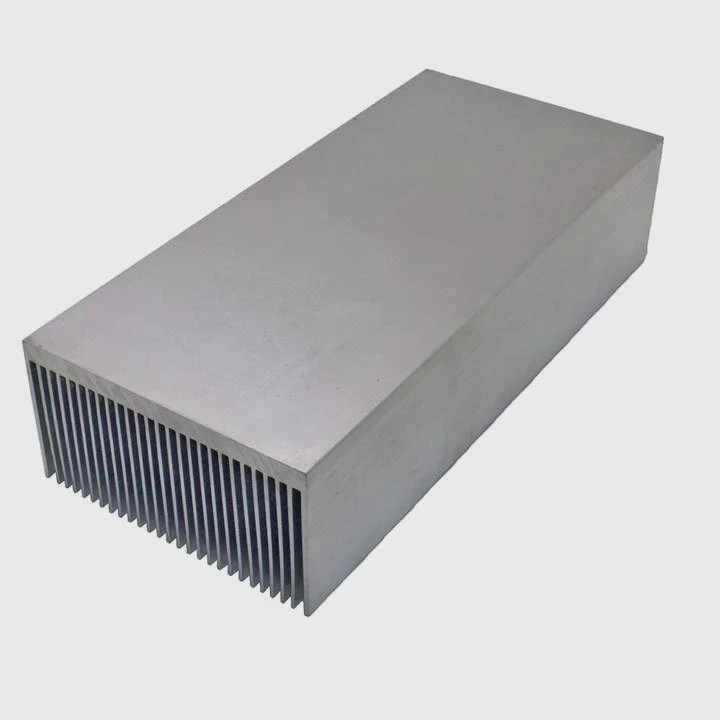
Surface treatment is often underestimated in thermal management design. Many engineers focus only on thermal conductivity values and ignore long-term environmental exposure.
In reality, coatings often determine how long the heat sink survives.
Why coatings matter in high-temperature environments
Metal surfaces react continuously with oxygen, humidity, chemicals, and pollution.
Without protection, this can cause:
- Surface oxidation
- Corrosion pits
- Reduced thermal contact
- Structural weakening
Over time, these issues reduce cooling performance.
Coatings help stabilize the surface and extend operating life.
Common heat sink coating types
| Coating Type | Main Benefit |
|---|---|
| Anodizing | Corrosion resistance |
| Nickel plating | Oxidation protection |
| Powder coating | Environmental durability |
| Ceramic coating | High-temperature insulation |
| Electrophoretic coating | Uniform surface protection |
Different coatings solve different problems.
Black anodizing and heat radiation
Black anodized heat sinks are very common in electronics.
Many people believe black coatings always improve cooling dramatically. The truth is more complex.
Black surfaces improve thermal radiation efficiency. This becomes useful in:
- Natural convection systems
- Outdoor cabinets
- Low-airflow environments
Still, radiation usually contributes less cooling than convection in forced-air systems.
When coating thickness becomes a problem
Thicker coatings are not always better.
Some coatings create thermal resistance between the metal surface and the surrounding air.
Poorly controlled coating thickness can reduce heat transfer efficiency.
This is why precision coating control matters in thermal manufacturing.
Coating selection depends on the environment
Different industries require different protection strategies.
Typical application matching
| Application | Recommended Coating |
|---|---|
| Outdoor telecom cabinets | Anodizing |
| Marine environments | Nickel plating |
| Rail transit systems | Electrophoretic coating |
| Aerospace systems | Ceramic coating |
| Medical equipment | Clean anti-corrosion coating |
Environmental exposure changes coating requirements completely.
Corrosion resistance supports long-term stability
Heat sink performance should remain stable after years of operation.
Corrosion damages:
- Fin surfaces
- Thermal interfaces
- Structural joints
This gradually increases thermal resistance.
Reliable coatings reduce maintenance costs and extend equipment lifetime.
Coatings also affect manufacturing processes
Some coatings work better with certain welding methods.
For example:
- Vacuum brazed structures may require post-treatment
- Laser welded areas may need oxidation repair
- Friction stir welded surfaces may need additional corrosion protection
Manufacturing compatibility becomes very important in customized thermal systems.
Surface treatment must match thermal design
A coating alone cannot fix poor thermal structure design.
The best results come from combining:
- Proper material selection
- Efficient fin structure
- Strong thermal interfaces
- Reliable welding
- Suitable coating systems
Thermal management always works as a complete system.
What applications demand high-temp heat sinks?
Many industries now generate far more heat than older cooling systems can handle. As power density rises, standard heat sinks often become unreliable under continuous thermal stress.
High-temperature heat sinks are widely used in aerospace, rail transit, renewable energy, semiconductor equipment, medical systems, and high-power communication infrastructure where thermal stability directly affects safety and performance.
Modern electronic systems continue becoming smaller while power output increases. This creates serious thermal challenges across many industries.
Rail transit systems
Railway power systems generate large thermal loads continuously.
Inverters, converters, and braking systems all require stable cooling under vibration and outdoor temperature changes.
These systems often face:
- Continuous vibration
- Wide temperature swings
- Dust exposure
- Long operating hours
Heat sinks used in rail systems usually require:
| Requirement | Importance |
|---|---|
| EN certification | Safety compliance |
| Thermal fatigue resistance | Long-term durability |
| Corrosion protection | Outdoor stability |
| Strong structural welding | Vibration resistance |
Liquid cooling and vacuum brazed structures are common in modern railway thermal systems.
Renewable energy and energy storage
Battery systems generate significant heat during charging and discharging cycles.
Poor thermal management can reduce battery life and create safety risks.
Energy storage systems now use:
- Liquid cooling plates
- Aluminum cooling modules
- Integrated thermal management assemblies
Thermal uniformity becomes critical because uneven temperatures accelerate battery aging.
Semiconductor manufacturing equipment
Semiconductor tools require highly stable temperatures.
Even small temperature fluctuations may affect manufacturing precision.
These systems often use:
- Copper heat sinks
- Vapor chambers
- High-flatness cooling plates
- Precision liquid cooling systems
Reliability standards are extremely strict in semiconductor environments.
Aerospace and defense systems
Aerospace systems face extreme conditions:
- High altitude
- Rapid thermal cycling
- Limited airflow
- Severe vibration
Weight reduction also matters greatly.
This creates demand for lightweight but highly efficient thermal structures.
Common aerospace thermal solutions
| Technology | Purpose |
|---|---|
| Vapor chambers | Rapid heat spreading |
| Lightweight aluminum alloys | Weight reduction |
| Friction stir welding | Structural strength |
| Phase-change cooling | Extreme heat control |
Reliability testing standards are usually very demanding in aerospace programs.
5G communication infrastructure
Modern communication systems generate concentrated heat in compact spaces.
5G base stations often operate outdoors in harsh weather conditions.
These systems require:
- Corrosion-resistant heat sinks
- High-efficiency airflow design
- Lightweight structures
- Stable thermal cycling performance
Large aluminum extrusion heat sinks remain popular because they combine cost efficiency with scalable manufacturing.
Medical and laser equipment
Medical imaging and laser systems require highly stable thermal control.
Excess heat may affect:
- Signal quality
- Precision accuracy
- Optical alignment
These applications often use:
- Copper cooling structures
- Liquid cooling systems
- Precision-machined thermal modules
Long-term reliability and cleanliness become extremely important.
Conclusion
High-temperature heat sinks require more than good thermal conductivity. Material selection, coating systems, structural design, and manufacturing quality all affect long-term thermal stability. The best thermal solution always matches the real operating environment, not just laboratory temperature ratings.




