Will Magnets Stick to Aluminum?
- Yongxing
- 10 Apr ,2026
Many people expect magnets to stick to all metals, but aluminum often breaks that expectation and causes confusion.
No, magnets do not stick to aluminum in normal conditions because aluminum is not ferromagnetic. However, strong magnetic fields can still influence aluminum in subtle ways.
This topic comes up often in real projects. Buyers, engineers, and even students assume all metals behave the same near magnets. That assumption leads to wrong material checks, poor sorting, and confusion in quality inspection. Once the basic physics is clear, the behavior of aluminum becomes easy to understand.
Why Do Magnets Not Stick to Aluminum?
Magnets do not stick to aluminum because aluminum is not ferromagnetic. Its atomic structure does not allow strong magnetic domains to form, so it cannot be pulled or held by a standard magnet.
When people think about metals and magnets, they usually think of iron. Iron sticks strongly to magnets. Steel often does too. So it feels natural to expect aluminum to behave in the same way. But aluminum belongs to a different group of materials.
What makes a metal magnetic?
To understand this, it helps to break the idea into simple parts. Magnetism in everyday life mostly comes from ferromagnetism. This property exists in metals like iron, nickel, and cobalt. These materials have internal magnetic domains. These domains can align in the same direction when a magnetic field is present. That alignment creates a strong attraction.
Aluminum does not have this kind of domain behavior. Its electrons do not align in a way that supports strong magnetism. So even if a magnet is placed next to it, there is no strong pull.
Types of magnetic behavior
| Type of magnetism | Example materials | Behavior near magnet |
|---|---|---|
| Ferromagnetic | Iron, steel, nickel | Strong attraction |
| Paramagnetic | Aluminum, magnesium | Very weak attraction |
| Diamagnetic | Copper, graphite | Very weak repulsion |
Aluminum is classified as paramagnetic. This means it reacts very slightly to a magnetic field, but the effect is too small to notice in daily use.
Why the effect feels like zero
In normal conditions, the magnetic force between a magnet and aluminum is extremely weak. It cannot overcome gravity or friction. So the magnet simply falls off or does not move at all. That is why most people say aluminum is “non-magnetic.” In practice, this is a useful simplification.
Common misunderstanding in workshops
In many factories, workers use magnets to sort materials. This works well to separate steel from non-ferrous metals. But it cannot tell aluminum from copper or stainless steel that is non-magnetic. I have seen cases where aluminum parts were mixed with other metals because someone relied only on a magnet test.
A simple way to think about it
If a magnet sticks strongly, the material likely contains iron. If it does not stick, the material might be aluminum, copper, or another non-ferrous metal. So the magnet test is useful, but it is not complete.
In daily engineering work, it is better to combine magnet testing with other checks such as weight, color, and conductivity. This reduces mistakes and improves material identification accuracy. Aluminum’s lack of magnetism is not a flaw. It is a natural result of its atomic structure, and in many applications, this property is actually an advantage.
Can Strong Magnets Affect Aluminum?
Strong magnets can affect aluminum, but not by sticking to it. Instead, they can create forces through changing magnetic fields, which can slow down movement or create resistance in aluminum parts.
This is where things become more interesting. Even though aluminum does not stick to magnets, it still interacts with magnetic fields under certain conditions. This effect is not obvious in daily life, but it becomes clear in physics experiments and some industrial applications.
The role of moving magnetic fields
When a strong magnet moves near aluminum, it can induce electric currents inside the metal. These currents are called eddy currents. They create their own magnetic field, which opposes the motion of the original magnet. This leads to a braking effect.
What does this look like in real life?
If a strong magnet falls through an aluminum tube, it does not drop freely. Instead, it slows down. It looks like the magnet is moving through thick liquid. But there is no contact. The effect comes from electromagnetic interaction.
Practical examples
| Situation | What happens | Why it matters |
|---|---|---|
| Magnet dropped in aluminum tube | Falls slowly | Eddy currents create resistance |
| Rotating aluminum disc near magnet | Rotation slows down | Energy is lost as heat |
| Magnetic braking systems | Controlled motion without contact | Used in trains and machines |
Industrial meaning
This effect is used in magnetic braking systems. These systems are found in trains, roller coasters, and some industrial equipment. They provide smooth and contact-free braking. There is no wear like in traditional friction systems.
Does this damage aluminum?
In most cases, no. The effect generates heat, but the heat is usually low unless the system is designed for high power. In controlled systems, engineers calculate the heat and ensure it stays within safe limits.
Important limits
This effect only becomes strong when:
- The magnetic field is strong
- The movement is fast
- The aluminum mass is large enough
A small magnet held still near an aluminum plate will not show any visible effect.
A simple way to understand it
Aluminum does not respond to a magnet by sticking. Instead, it responds to change. When the magnetic field changes, aluminum reacts. When the field is steady, aluminum appears almost unaffected.
This is why many people think magnets have no effect on aluminum at all. The truth is more subtle. The effect exists, but it needs the right conditions to become visible. Understanding this helps avoid confusion and opens the door to useful applications in engineering and motion control systems.
Is Aluminum Ever Slightly Magnetic?
Aluminum is slightly magnetic in a very weak way because it is paramagnetic. This means it is weakly attracted to magnetic fields, but the effect is so small that it is almost impossible to notice without special instruments.
This question often surprises people. After hearing that magnets do not stick to aluminum, they assume aluminum has zero magnetic behavior. But in physics, very few materials are completely non-magnetic. Aluminum does respond to magnetic fields, just not in a way that is visible in daily use.
What does “slightly magnetic” mean?
Paramagnetic materials like aluminum have unpaired electrons. These electrons align slightly with an external magnetic field. But the alignment is weak and disappears as soon as the field is removed.
Why we cannot feel it
The force created by this effect is extremely small. It cannot hold weight or create visible movement. Even a strong handheld magnet will not show a clear attraction.
Comparison with other materials
| Material | Magnetic type | Visible effect |
|---|---|---|
| Iron | Ferromagnetic | Strong attraction |
| Aluminum | Paramagnetic | No visible attraction |
| Copper | Diamagnetic | Very weak repulsion |
When can it be measured?
This weak magnetism can be detected using sensitive lab equipment. Scientists can measure how aluminum responds to a magnetic field under controlled conditions. But this is far beyond normal workshop tools.
Why this matters in engineering
In most applications, aluminum is treated as non-magnetic. This is correct for design and production decisions. However, in high-precision environments, such as scientific instruments or electromagnetic systems, even small magnetic effects may be considered.
Alloy differences
Different aluminum alloys may show slightly different responses, but all remain in the paramagnetic range. None will behave like iron or steel in terms of magnetism.
Practical conclusion
For everyday use, aluminum can be considered non-magnetic. The slight paramagnetic effect is real, but it does not affect handling, assembly, or standard testing.
This understanding helps avoid overthinking. Engineers do not need to worry about aluminum being “a little magnetic” in most cases. The effect is too small to cause problems in real products. Still, knowing the science behind it builds a stronger foundation and prevents confusion when unusual behavior appears in advanced systems.
How to Test Aluminum with a Magnet?
To test aluminum with a magnet, place a magnet near the material and observe if there is any attraction. If there is no sticking force, the material may be aluminum or another non-ferrous metal, but further tests are needed for confirmation.
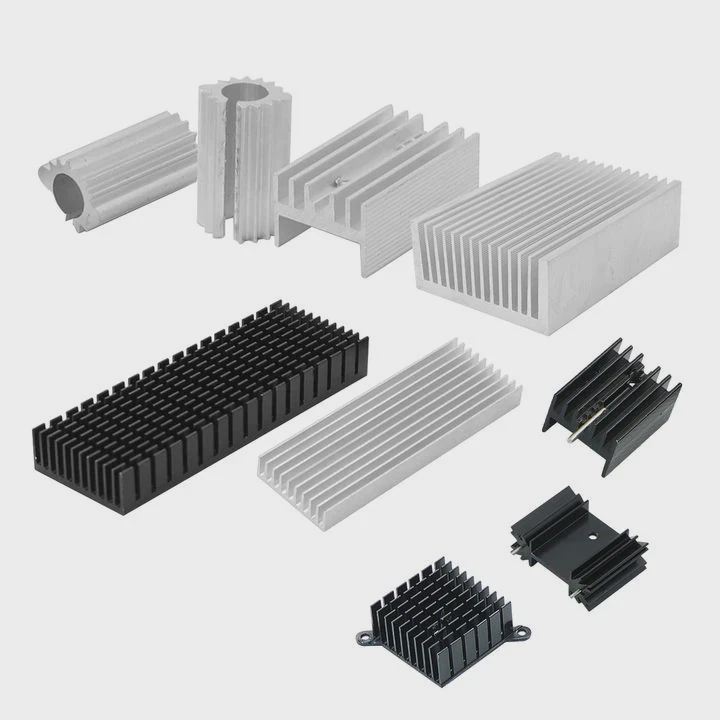
The magnet test is one of the simplest and fastest ways to check materials. It requires no power, no special tools, and almost no training. But it also has limits, and those limits should be clearly understood.
Basic magnet test steps
Step 1: Use a standard magnet
A simple handheld magnet is enough. It does not need to be very strong.
Step 2: Bring it close to the material
Place the magnet against the surface or very near it.
Step 3: Observe the reaction
If the magnet sticks strongly, the material likely contains iron. If there is no attraction, the material may be aluminum.
What this test can and cannot do
| Result | Meaning | Limitation |
|---|---|---|
| Strong attraction | Likely steel or iron | Cannot identify exact alloy |
| No attraction | Could be aluminum, copper, or some stainless steels | Not a unique result |
| Weak or unclear effect | Possibly mixed material or coating | Needs further testing |
Common mistakes
One common mistake is to assume that “non-magnetic” always means aluminum. This is not true. Copper, brass, and some stainless steels also show no attraction to magnets. So the magnet test should be seen as a first filter, not a final answer.
Another issue is surface coating. A steel part with thick paint or coating may reduce magnetic contact. This can confuse the result.
Better identification methods
To confirm aluminum, other checks can be added:
Weight check
Aluminum is light compared to steel. Holding the part can give a quick clue.
Visual inspection
Aluminum has a different surface look and color compared to steel.
Spark test (for metals like steel)
Aluminum does not produce sparks in grinding, while steel does.
Conductivity test
Aluminum conducts electricity well, which can help in more advanced checks.
Why simple testing still matters
In fast production environments, quick decisions are needed. The magnet test is still useful because it quickly separates ferrous from non-ferrous materials. This alone can prevent major sorting errors.
A practical mindset
It is better to think of the magnet test as the first question, not the final answer. It tells you what the material is not, rather than exactly what it is. From there, other simple checks can lead to a more accurate conclusion.
In many real cases, combining two or three simple methods gives enough confidence without needing expensive equipment. That balance between speed and accuracy is what makes basic testing valuable in daily work.
Conclusion
Magnets do not stick to aluminum because it is not ferromagnetic. Still, aluminum can interact with strong magnetic fields in subtle ways. Simple magnet tests help identify materials, but accurate results need a combination of methods.