
Products Details
When heat needs to be transferred at relatively low temperatures, such as within the range of -40°C to 20°C, copper heat pipes or copper vapor chambers using water as the working fluid cannot be used.
In contrast, multi-channel array superconducting plates using refrigerants or liquid ammonia as the working fluid operate under optimal conditions in this temperature range.
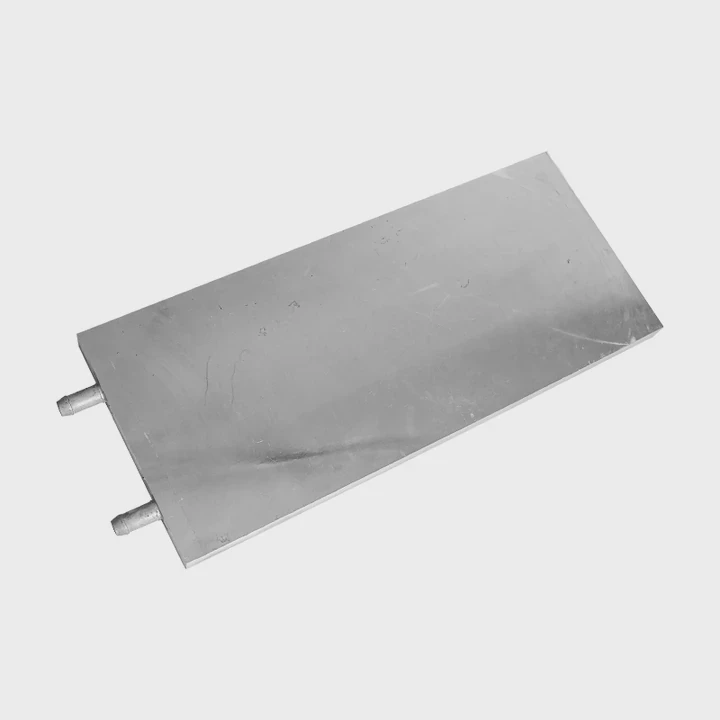
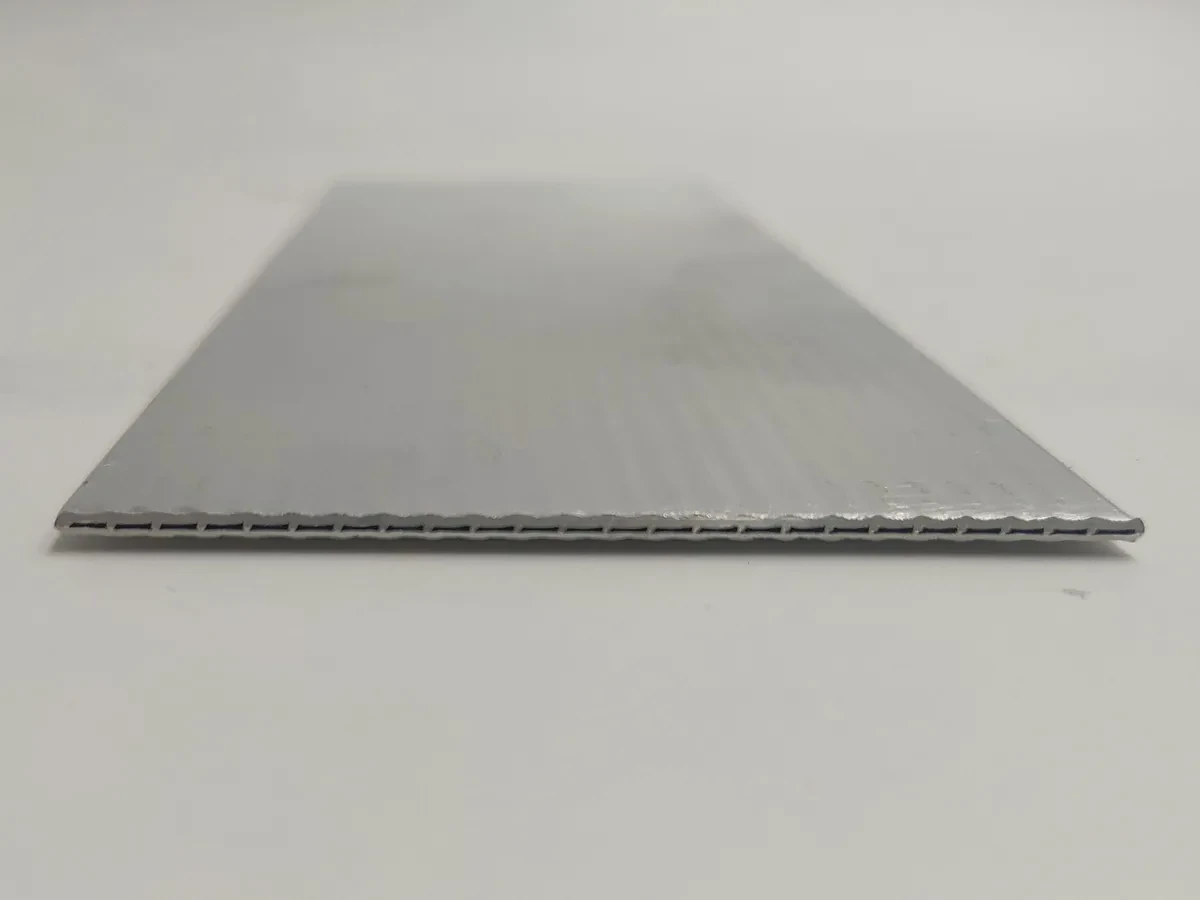
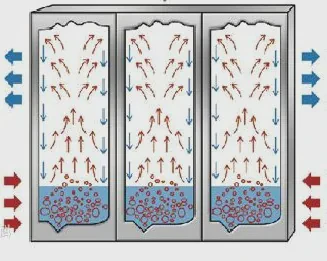
Structurally, the multi-channel array superconducting plate consists of multiple independent channels arranged side by side along the width direction.
This structure offers several advantages:
1. High reliability. The surface is divided into multiple independent sections, so damage to one section or channel does not affect the normal operation of others. Even if damaged (such as punctured), the thermal conductivity decreases but the product does not fail.
2. Excellent pressure resistance. The internal partition structure acts as a support under external force. Standard designs can withstand internal or external pressures exceeding 10 MPa, and reinforced structures can handle even higher pressures.
3. Mature and efficient manufacturing process. The product uses extruded aluminum as the raw material, with a mature, stable, and reliable process and high production efficiency.
4. Short inactive length. Our unique welding process reduces the inactive end length to as little as 1–3 mm, significantly shorter than the 5–9 mm of copper heat pipes. This provides clear advantages in compact spaces. Additionally, the welded ends are rounded, improving sealing reliability and avoiding sharp edges that could cause injury or damage.
5. Large heat transfer area and easy full coverage of heat sources. With widths ranging from 10 to 300 mm, the product can fully cover heating or cooling surfaces without requiring additional copper or aluminum spreader plates, enabling more direct heat transfer.
Compared with heat pipes:
1. Heat transfer capacity: In room temperature or sub-ambient environments, this product outperforms heat pipes. Combined with its larger width, which better covers the heat/cold source, its overall heat transfer capability is significantly higher than that of heat pipes under these conditions.
2. Cost: This product uses aluminum, which is less expensive than copper, offering a clear cost advantage in room temperature or lower temperature environments.
3. Operating temperature range: Copper heat pipes are typically suitable for 50–150°C, while multi-channel superconducting plates, with different working fluids, can operate across a wide range from -60°C to 300°C.
4. Performance at room temperature: Heat pipes have strong heat carrying capacity and are suitable for high-power, small-area heat sources; array-type superconducting plates are better suited for lower power, large-area heat sources.
Applications of multi-channel superconducting plates:
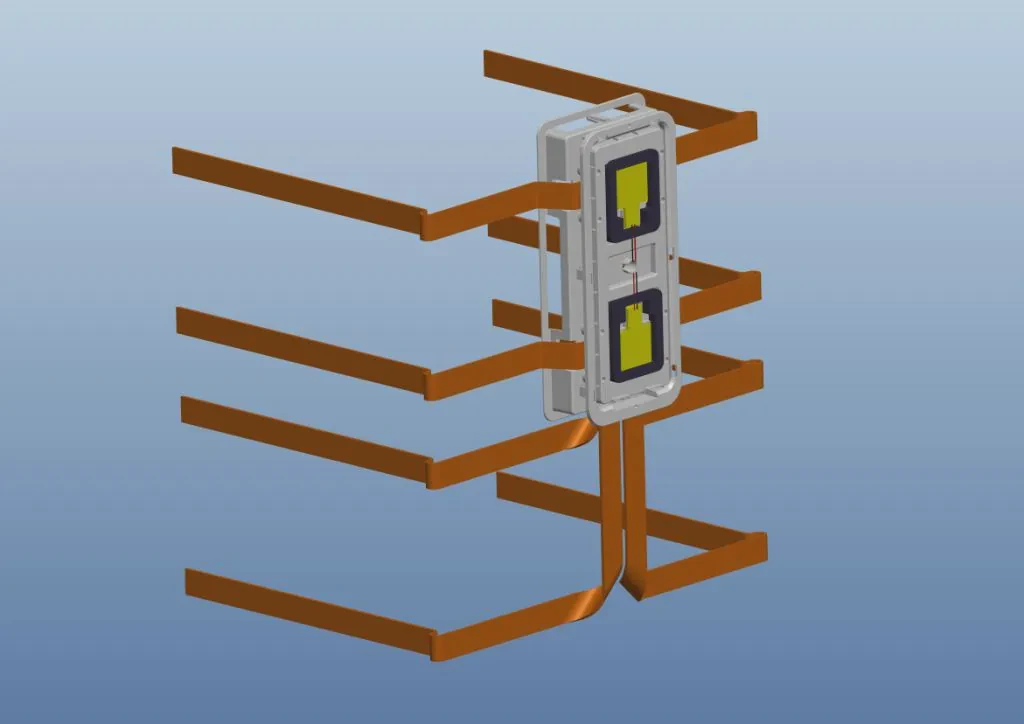
1. Used with thermoelectric cooling modules to spread cooling capacity across the cold surface, maintaining uniform temperature—such as in semiconductor wine coolers and vaccine transport containers;
2. Other environments requiring uniform temperature at relatively low temperatures, such as infrared calibration equipment.
Customization options for our multi-channel superconducting plates:
1. Materials: Commonly 1100 aluminum alloy, with options including 1060 or 3003 aluminum alloys;
2. Width: 10–300 mm;
3. Length: 100–2000 mm;
4. Operating temperature range: Multiple options covering -60°C to 300°C;
5. Surface treatment: Conductive oxidation, anodizing, hard anodizing, painting, etc.;
6. Lead time: 3 days for samples without tooling, 30 days with tooling; mass production delivery time to be negotiated.

FAQ
1.What is a cold transfer plate?
A cold transfer plate is a cooling device designed to transfer and distribute cold energy efficiently across surfaces.
2.How do cold transfer products work?
Cold transfer products circulate coolant or use conduction to absorb and transfer heat away from components.
3.What are the advantages of cold transfer plate cold transfer products?
Cold transfer plate cold transfer products offer efficient cooling, uniform temperature control, and reliable performance.
4.Where are cold transfer plate cold transfer products used?
Cold transfer plate cold transfer products are used in electronics, battery systems, and industrial cooling applications.
5.Can cold transfer plate cold transfer products be customized?
Yes, cold transfer plate cold transfer products can be customized for channel design and cooling requirements.
6.Are cold transfer plate cold transfer products energy efficient?
Yes, cold transfer plate cold transfer products provide efficient thermal management with optimized energy use.
7.Why choose cold transfer plate cold transfer products?
Cold transfer plate cold transfer products ensure stable cooling performance for high-load systems.
8.Do cold transfer plate cold transfer products require maintenance?
Cold transfer plate cold transfer products typically require minimal maintenance due to durable design.